Genre and Gender - Interview with Platinum Cicadas!
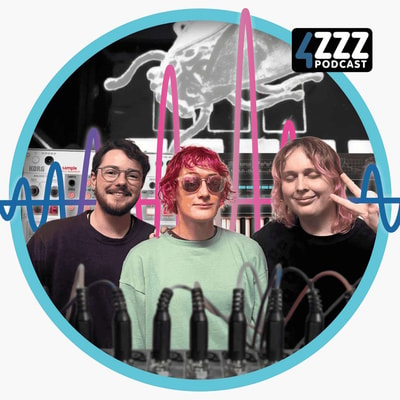
Today hosts Elliot (He/Him) and Hazel (She/Her) have a chat with Scout (They/Them), producer and musician behind Platinum Cicadas. Spanning genre, gender, and playful experiments with little electronic boxes. Explore the soundwaves on today's episode of Tranzmission
Transcript
At 4zzz, we acknowledge the traditional owners
Speaker B:of the land on which we broadcast.
Speaker A:We pay our respects to the elders, past, present and emerging of the Turbul and Jagera people. We acknowledge that their sovereignty over this land was never ceded.
Speaker B:And we stand in solidarity with.
Speaker C:Transmission on 4zzz, amplifying the trans and gender diverse community of Meanjin, Brisbane and beyond.
Speaker B:Hello and welcome to Transmission on 4zzz. So excited to have you here with us. My name is Hazel. My pronouns are she, her, and in the studio with me today, I also have Elliot.
Speaker D:My pronouns are he, him.
Speaker B:Hello, Elliot. And today we have a guest. I'm so excited for this guest as well. Platinum cicadas as well as the lead of 88 Talkamat. Would you like to introduce yourself?
Speaker A:Yeah. Hey. Sup? My name is Scout Jordan. Thay them pronouns. Yeah. Hello.
Speaker B:Wicked. It's so nice to have you here. I'm so excited to have a chat with you about your music and of course to do with, you know, genres and being transgender. There's a lot of opinions that go out about genres and trans identities and. And I'm really excited to unpack that. But before we get into it, we better hit our news and events, so we'll see you on the other side of that.
Speaker C:Enjoy the news this week in Community news and events for 15 June. In world news, Ghana passes new laws aimed at silencing LGBTQIA community. A new law has been passed in Ghana that targets both identifying members of the LGBT community and allies. The Human Sex, Sexual Rights and Family Values Bill criminalises LGBTQ activities deemed by law enforcement to be aimed at children and can infer sentencing as long as 10 years and also bans any organising and political support of LGBTQ communities. The law also makes it illegal not to report on LGBTQ activity when known about it, with non reporters facing up to three years in jail the same sentence for engaging in same sex relationships. Ghana joins Senate Senegal and Uganda as African nations ramping up penalties and creating new offences for queer communities in recent years. In national news, Queensland teens win right to launch class action lawsuit over gender treatment ban. The court has ruled a representative complaint by a young trans person representing LGBTI legal service can proceed. As a result of this decision, the Queensland government and Health Premier Tim Nicholls himself may now be sued by hundreds of teenagers affected by the controversial ban of gender care last year. The lawsuit is seeking a revocation of the ban, a private apology and another public one to all affected, as well as $50,000 for each affected teenager. For mental distress, harm and humiliation. We're proud to act for the brave young trans person and their family who brought this case, says Emma Bastabel of the LGBTI legal service Brisbane Pride Release Extra tables for the 2026 Queens Ball the 65th annual Queens Ball is just around the corner and has announced a release of extra tables and tickets. As the longest running LGBTQ event in the world, the Queens Ball is an icon of Queensland queer representation. The event is on June 20 and features awards recognising the efforts of a huge range of our community with Transmission's own EZ and Brody UP Volunteer of the Year as well as BET For Activist of the Year. You can grab tickets from the Brisbane Pride website brisbanepride.org and now for community events, A Night with the House of Lesedi from the Hudson then to the glittering waters of Brisbane's Bayside. Now ballroom culture continues to fight for black, queer and trans lives through voguing, pageantry and most importantly houses. Our families Fresh off their grand debut into Oceania's ballroom scene, the Kiki House of Lesedi invites you to indulge in the sweetest taboo and experience what their family has to offer. Tuesday 30th of June at Agatha Spielgate Spiegel Tent. Tickets are available from wyndhamfringe.com Mardi Grasberg Pride Party Celebrate Pride Month with us at Banshees for our Mardi Grasberg Party. Can't make it to the Queensbowl? That's totally okay. Mardi Grasberg is all about bringing Pride events to semi regional communities around Ipswich. This is a night for us to have a ball of our own. On June 20, local queer performers take the stage for us to dance, connect and party with bands and drag queens as well as DJs. This is sure to be a high energy night full of colour and whimsy. Come celebrate all the best parts of your community in an outfit that feels authentically you. You can grab tickets from bansheesbar.com and finally your favourite bookshop Shelflovers has a launch for the queerly beloved online book club which is starting in July 2026. If you would like to know more details about this online book club, you can head to the Shelf Lovers website or their Instagram Elflovers. My name is EZ and that's all in this week's community news and events Foreign.
Speaker B:And welcome back to the show proper. Thank you EZ for those news and events. And before we get into the topics of today's episode, we do have to handle something a little bit heavy and we need to address something that occurred on 612ABC Brisbane on their drive time slot with Ellen Fanning last Thursday. So in short, effectively they platformed a significant amount of very transphobic rhetoric. Comments from Clive Hamilton and did so without challenge for a significant time slot on the show.
Speaker D:Yeah, like a good. What you say, 10, 15 minutes. Yeah.
Speaker B:And we'll go over briefly what his comments were. He was signing up to attend. Elliot, what was the name of the.
Speaker D:If I just had a mind blank. Something about dangerous ideas. Like a conference of dangerous ideas or something like that.
Speaker B:Yeah, totally, yeah. And on signing the form he found that he could only say whether he was male identifying, female identifying or other. And he found himself thoroughly excluded by the fact that it did not simply just say male as an option for him.
Speaker D:He was made uncomfy.
Speaker B:Yeah. Made uncomfortable by a form, if you could imagine it. That sounds scary. Scary to me. Hope that never happens to me.
Speaker D:Oh, I can't relate.
Speaker B:Yeah. And this led to him writing a substack big article, the. A lot of opinions tucked into it and also this extended conversation where he and Ellen then went on to a broad range of subjects including trans women and women's sports, trans women and women's prison and a variety of other hot topic, incredibly tense trans issues with very little nuance. And whilst couching it in very polite language, often claiming he was an ally, constantly referring to us as sort of this coercive cabal of people bullying the normal gays, the LGB's talking about the
Speaker D:trans agenda, you know, that we're all sort of fighting to change the political climate and policy and speech as a collective group.
Speaker B:Yeah, it's. It's really disappointing. Disappointing to see this kind of stuff happening from ABC in their drive time slot with absolutely no challenging, you know, for a. For a media institution that's meant to be unbiased, no other opinions whatsoever and frankly, very little discussion about trans mascs.
Speaker D:Yeah. And trans men or intersex people. Like, you know, he did state, you know, that there was a lot of nuance about stuff, but then did not have any nuance in the conversation at all. Like there was, there was. He made remarks about the terms of assigned gender at birth and sort of said that. That it implied that doctors just flip a coin about choosing somebody's gender rather. And he said like. Rather than just like looking at the organs. But I mean a lot of people are born with intersex conditions that alter the way your external organs look or they have internal differences, or there's, you know, so many different things. And it completely disregards any kind of nuance there.
Speaker B:Yeah. Ignores that. And I think actually insults it by him declaring he had to tick other as his gender. I mean, that other slot is there for a reason. Because there are people who exist beyond that spectrum of male and female, whether that be through gender identity, which he, I feel, quite clearly does take issue with. Or genuinely, you know, born intersex, as many people are.
Speaker D:Yeah.
Speaker B:So just super, super disappointing, I would like to say, especially considering Ellen and Clive both made numerous comments about wanting nuance, how they were having a nuanced discussion, which they just obviously weren't.
Speaker D:Yeah.
Speaker B:You should consider when speaking on this community that you allow us to represent ourselves. Especially he's claiming that this is a huge issue for lesbians. I would love if there was perhaps a lesbian there to express this, which I'm sure there is. But this discussion was not representative of the communities that is, you know, meant to be having this debate.
Speaker D:Yeah.
Speaker B:And, you know, this is why community radio is so fantastic. We will speak directly to the truth. And I love the other hosts on transmission because despite the fact that we're often the subjects of this really heated discourse, we are very willing to dive into the nuance of it. We are very willing to give an open ear to the people who disagree with us because there is nuance. This is complicated.
Speaker D:Yeah.
Speaker B:We're not here transforming society for weird, nefarious purposes. We're here trying to exist and trying to exist with safety.
Speaker D:Yeah. Being inclusive of trans identities or alternate identities generally is inclusive of the biological realities that exist.
Speaker B:Absolutely.
Speaker D:It helps everyone.
Speaker B:It's making space for that reality.
Speaker D:Yeah. Nobody's put out by saying they're male identifying. Like, if you don't identify with being born male, then. Yeah, hit other. But, like, if you are born male and you identify with that, you are male identifying.
Speaker B:It's an accurate description of you.
Speaker D:It's completely accurate.
Speaker B:And, you know, I would encourage those who are listening now, who are similarly deplored by these comments, to make a complaint to the abc. If you look up for a complaint form submission to the abc, you will find that there is a form you can submit. There will also be a link available in the description of this episode. I will be making a complaint as well, because this is absolutely not how this topic should have been handled.
Speaker D:No. The ABC is supposed to be an unbiased media body and it's not.
Speaker B:It should hear from this community. I'm perfectly Happy for them to have a discussion about this. I think this is an interesting topic, but it was wasted.
Speaker D:It's important to have discussion like he, he does talk about in some of his writings that the importance of discussion and debate and, and nuance and you know, really clearly defining a lot of different things. I mean, some things you can't define, but still like really clearly doing what you can to, to do that. But in his discussions he kind of prevents that.
Speaker B:Absolutely. I also, I am worried about some of the opinions that were shared there. Genuinely.
Speaker D:Yeah.
Speaker B:He made comments that we're allowing the whims of a small amount of the population to transform society. As if that's an existential issue. It's really inflammatory and frankly, I would argue those words could have come right out of the mouth of an anti gay marriage voter totally just a decade and a half ago, you know, so very, very disappointed. Please make your voice heard about what the ABC is willing to broadcast on their drive time slots on, sorry, Thursday and you know, fight for our voices to actually be heard in genuine discussion, in expressing ourselves on all layers of the way that we should exist in society 100% rather than letting these other people with their large platforms talk about us and also talk on behalf of people. They're also not about disliking us. You know, we've got megahirs after this as well. They're feminists. They'll tell you exactly their feelings on the matter and I welcome everyone to listen to their opinions no matter what those opinions are. Yeah, because that's actual discussion there.
Speaker D:Exactly.
Speaker B:Well, thank you for listening to that little rant. A little, a little catechism about that.
Speaker A:How many genders are there?
Speaker D:I don't know.
Speaker B:I just got here and welcome back. You're listening to Transmission on for zzz. I'm Hazel.
Speaker D:My pronouns are she, her, I'm Elliot. My pronouns are he, him, and.
Speaker B:Who's with us in the studio today?
Speaker A:Scout Zytham.
Speaker B:Hello, Scouts.
Speaker A:Hey.
Speaker B:Yeah, good on you. They ying you're them this morning. I'm so excited to have a chat with you. We're talking about your music. Do you mind if I just hit you with the real basic. Who are you? What do you do?
Speaker A:I'm a musician. Yeah, no, I do a lot of. I do a lot of. Well, I've got two main projects at the moment, which is this thing Platinum Cicadas, which is like, you know, I mean, I refer to it as being my techno project, but it kind of, you know, it, it spans a bunch of electronic genres, just whatever I kind of feel like doing or like what, whatever just comes out of the machines when I'm kind of mucking about with them.
Speaker B:Love that.
Speaker A:You know, I, I, I've kind of started that as like a, as like a side project from 88 Talkamac, which is like a guitar band, which I've kind of just been doing for a bit. And I'm kind of giving a little bit more time to this as well now and trying to like, just sort of juggle both of those things.
Speaker B:That's really cool. Yeah, I, I am a huge fan of 88 Tokamak.
Speaker D:Oh, yeah. So good.
Speaker B:I just, I love the, the mix of genres. We'll talk more on 88 Tokamak soon. I, I'm a zealot. I tell people about 88 Tokamak all the time. But I was enthralled by the concept of Platinum Cicadas when I saw you posting all that stuff around, particularly because this is a niche that I love too, but I, and also one that I need to see more of in Brisbane. I also wanted to ask, where does that name come from? Platinum Cicadas?
Speaker A:Right. Well, so when I started doing this project, I didn't have a whole lot of machines to kind of do that with, like, and I was kind of, I was exploring like, hardware and stuff and I had like this old SP404SX, which is like a pretty basic sampler. It doesn't do a whole lot to the samples. It's got a fairly basic pattern sequencer and stuff. And I got this, this, this Volker fm, which is like, you know, it's just like a tiny little sort of calculator size dx7. And it just kind of like has all these, you know. It's really great, actually, because it can load just like any DX7 patch, of which there are thousands on the Internet. But this, but FM synthesis is a funny thing because it kind of like, it can be very harsh and sharp and kind of annoying. And I thought that it kind of sounded like cicadas. I was living in the Gap for a while and the cicadas would get very, very lo. And I thought that some of the patches that I was pulling up on this, on this thing sounded like cicadas. And so I don't know where Platinum came from. I think I just thought that that sounded ballin.
Speaker B:It just has sound cool, you know.
Speaker A:And so I just kind of threw those two words together. I'm like, there it is.
Speaker B:Yeah, I love that I also love that we're just diving straight into like the crazy names for all the tech stuff.
Speaker D:I have no clue what's going on,
Speaker A:but the seven is a, it's a very popular synthesiser from like the 1980s. It, like a lot of records you hear from the 80s have that kind of, that kind of, you know, it's a very, it's a very kind of cold, like twangy, kind of bright, sort of, I don't know, like, like there's a lot of watery sort of electric piano sounds and sort of some of those, those kind of like janky basses that show up on some of those, like those old 80s records. Like, DX7 was stupid popular. Like it was really, really popular.
Speaker B:Yeah, yeah. So it's like, it's the kind of thing that would have been, you know, layered a billion times in a Michael Jackson track.
Speaker A:Absolutely, yes.
Speaker B:I get the feeling then this is, it's probably one of those instruments where like, even if you're not familiar with it, if someone was to play a little bit of it, you'd be like, oh, that sounds like this song 100.
Speaker D:Yeah.
Speaker B:Let's say it must be a really fun one to explore within because of just the versatility of it and how many different things it does.
Speaker A:Yeah, no, that's, that's actually why I really like it. And the fact that it can load like, you know, it can only load 32 sounds at a time, but it can, but like there are thousands of patches that have just accumulated on the Internet over the years and so you can get some really interesting stuff.
Speaker B:Yeah, well, and speaking of that, obviously that gets a lot of use in electronic music. And I want to get onto something that I feel like listeners who are thinking about transgender musicians may have already flashed in their mind. Right. And that's, you know, trans femmes, electronic music, trans masks, light folk music. You know, like there's these, there's these sort of like common stereotypes. I want to know, do you have thoughts on that? Do you think that those are trends? Do you think it's just, you know, broad stroke in the community? What's your feelings there?
Speaker A:First of all, I wasn't aware that this was like a thing that people were talking about. I mean, like, you know, it, it's, it's sort of like from a non binary perspective. It's just kind of like, I'm not really sure I get it. Like, like, I, I, I mean, look, I, I don't know a lot about folk music. I know that Sophie is a Is a, is a big trans producer who may have influenced many people, I think. Yeah, yeah. You know, yeah, there's, there's, there's a couple of. Yeah, look, I don't know about like kind of, I think people can kind of just make whatever music they want. Really?
Speaker B:Totally.
Speaker A:I mean, it's just sort of, I, I get the impression that, I mean, like, so what, is this something people are talking about on the Internet?
Speaker B:Oh, yeah, absolutely.
Speaker A:Right. Those people got to get off the Internet.
Speaker B:Yeah, like, I mean, that's the best take.
Speaker A:The Internet is useful for some things, but you know, I, I think that, look, as a non binary person, I, I, I tend to kind of notice a lot when I see people trying to put things in boxes because I'm constantly trying to get out of the box.
Speaker B:Yes.
Speaker A:And you know, like, it's just, it's
Speaker B:introducing like a new gender binary.
Speaker A:There's another binary going on there and I'm just like, I'm like, oh, come on, folks.
Speaker B:Yes, totally.
Speaker A:I got time for that. Yeah. So it's like, I mean, so if like, I mean, if it on one hand, like if it brings people together, I'm not opposed to it. But also it's just kind of like, I don't know if, I don't know if more boxes are gonna, are gonna help. I think like when I was figuring myself out, I think I tried some boxes but I quickly realised that it's just kind of like, I don't know, like just, you know, just let yourself be free and just like, you know, don't worry about the boxes.
Speaker B:I love that fly, fly free. Like a cicada, perhaps?
Speaker A:Exactly.
Speaker B:Yeah. I've always, I've always felt like there's a nice connection between cicadas and transness. I don't know, something about those two things stick together with me. The idea that you can sort of shed something and become something different. I like how ephemeral they are. You know, they're strange life cycle. They're just here for little windows of time quite randomly. I don't know. I've got cicadas tattooed on my body. I'm obsessed with cicadas. I probably should have admitted that before interviewing for some reason that makes me feel creepy.
Speaker A:No, you're good.
Speaker B:Well, since we're talking about, you know, transgender, gender non conforming people within music, we're talking about genres. There are stats showing that transgender non binary people and gender non conforming people are overrepresented in the arts industries. You know, per capita, we're Way more likely to be working in arts industries than other people are. Why do you think that there's this association between the arts and people who are not conforming to the gender binary?
Speaker A:I think that's got a lot to do with the industry. I think it's just kind of like, I mean, you know, the. The arts is a. Is a complicated beast. But, you know, I think that. That in terms of. In terms of it being a place where people can kind of just relax a little more in terms of, like, whether they're sort of, you know, like. I don't think that there is as much expectation for people to behave in a very specific way in the arts as. I mean, I guess it depends on which facet of the arts we're talking about here. Yeah, we're talking about the facets of the arts that I participate in. People are pretty chill. There's just a lot. People are just. It's a little bit more chill than maybe if you were trying to, you know, work like, you know, the stock market, certainly, or like, you know, if. If you were kind of. I mean, I would like to. To say that. That all industries could just be just like this, and. And maybe one day, you know, maybe one day we could have, you know, all these industries, you know, across. Across the entire workforce where everyone's just, like, super chill. But I think, like, for. What I can say from. From the perspective as an artist is that it's just like artists tend to be just a little bit more accepting of one another, and that. That kind of, I think, bodes really well for a group of people who, you know, may. May find it hard to go outside otherwise.
Speaker B:Yeah, absolutely. I agree. In my. In my experience in doing arts in an Arami engine and back in my hometown of Ipswich in Tolma, that, yeah, the arts is a space that has always been, for me, way more ready to accept just who I am at face value long before I'm ready to accept who I am at face value, frankly. And I think, yeah, you're right. It's sort of space is made for people in an industry where you have to already be wearing your heart on your sleeve and presenting yourself authentically. I really would love to see more industries open up a little bit as well.
Speaker D:Yeah, totally.
Speaker B:I feel like most of the trans people I know, they tend to be working in arts or they tend to be working in, you know, social justice stuff surrounding transgender people.
Speaker D:Yeah. I think the only other industry that I know of that is a bit more saturated. Saturated is it. And I Think that that's also because of. Similarly, a lot of IT folks are historically, you know, nerds, so they know what it feels like to be marginalised and.
Speaker B:Yeah, yeah, yeah. So maybe it's something to do also with, you know, fringe communities. Yeah, yeah, yeah, that makes sense. I also want to talk about. When we talk about trans artists, there's a lot of association with sort of being on the bleeding edge of certain things. You know, we've got, famously, when it comes to electronic music. Wendy Carlos, who is a trans woman and composed the soundtrack for Tron and Switched On Bach, which is one of the first, like, Moog modular synthesiser albums, all the way over to, like, Cave Town, which is just innovating the pop industry from that transmasc perspective. Do you have trans musicians that you particularly look up to or that you think influence you?
Speaker A:Well, look, I mean, like, Fever Ray was a huge inspiration and when I found out that they were also non binary, you know, that was. That. That was a. That was a good day. That was a nice day for me.
Speaker B:Did you tell me a bit about
Speaker A:that artist, Fever Ray? Karen Drezier, who also has done work with the Knife, is the singer. And. And one of the main. Because the Knife is like a Swedish duo who have collaborated with an awful lot of artists and kind of made some really interesting music. They started out in kind of electro pop kind of territory. We'll say synth pop kind of territory. And then they kind of went further and further into, like, experimental kind of sound territory. And then they had this remarkable record in 2013 called Shaking the Habitual, which was like. It sounds like. I don't know, it sounds like it could. It could be like. You know, I was watching that movie Tenet last night. Yeah, it sounds kind of like it could have been. Some of the music sounds like it could have featured in the soundtrack for 10. Like, really hectic, experimental kind of like electronic stuff. And there's a lot of noises and a lot of kind of like. Yeah, yeah, no, it's. This is full on. It's full on. It's serious listening. But also Fever A is kind of. It's just a solo project and it's kind of like. It's just a different take. It's a little bit less dance oriented and it's a bit more kind of. It's a bit more atmospheric. But then it get. Then it gets into, like, more dancy stuff as well. And they came out with the Salt, this solo project, in 2009, and they're still doing stuff now. And yeah, it's just. It's just very, very. It's very clever. It's just. It's just really, really clever production and songwriting and touches on like some issues which, you know, I lack the nuance as a lyricist to really get into. But yeah, no, they're like one of my faves of all time.
Speaker B:That sounds really cool. And you're not alone. We actually had a text in from Gerard just then saying that they love the knife cover of Heartbeats. I don't know if that strikes true to you.
Speaker A:That is. I think my understanding was that that was the original.
Speaker B:Whoa. Okay. We have conflicts.
Speaker A:I mean, Hang on a sec. Where's my bag?
Speaker B:It's okay. I'll quickly fact that if we look
Speaker A:it up because Jose Gonzalez did a version of it as well. My understanding was that it was a knife track that Jose Gonzalez covered.
Speaker B:Yes, that's correct. I've just fact checked it. Wow, Gerard, you're a fake fan. I'm sorry, I don't mean that. Thank you so much for texting in. And whilst I'm on this topic, by the way, I would like to thank the anonymous subscriber that subscribed whilst we were chatting. Thank you for subscribing, folks. If you would like to support 4zzz, we're a community organisation and we thrive off of your subscriptions. You can do [email protected] au support. And you can do it for as cheap as $25. If you've got a pet. And you can go all the way up to doing a passionate subscription or a Super sub for $500, you get that warm inner glow. But you also keep us keeping the lights on, you know, and allow us to talk to amazing people like Scout, who's sitting in front of us.
Speaker D:I always do a passionate sub because I love getting the tees.
Speaker B:Yes, the T shirts are amazing. Yeah, I've got like 5, 4 triple Z T shirts. I cannot stop getting them. Mainly because I like the baggy T shirts. And Gerard has also just said, love to be corrected.
Speaker A:I love to be corrected too. It's a wholesome world.
Speaker B:Yeah, absolutely. Hi, we're Worm Girls and you're listening to Transmission.
Speaker D:That's right.
Speaker B:You are listening to transmission on 4zzz. My name's Hazel. My pronouns are she, her.
Speaker D:My name's Elliot. My pronouns are he, him and Scout here.
Speaker A:Yeah, they, them, pronouns.
Speaker B:We have been talking music. We've been talking music you create under the moniker Platinum Cicadas. And we've been talking a Lot about sort of how being trans players in tour. But I wanted to tackle the other side of that, which is you use a lot of technology. Earlier you alluded to the fact that you sort of. You make noises with the machines and you just kind of like let, you know, let, let whatever sound comes out of them guide you when it comes to creating the music. I was curious, do you have any like, particularly experimental techniques for making those sounds? Like what are some, some big leaps you've taken?
Speaker A:The. You know, I was thinking, I was thinking about like kind of, you know, what, what, what, what am I doing when I'm making these things anyway? Because like a lot of the, A lot of the techniques that I use aren't that experimental. But there is this one. I mean like, kind of like when I use really experimental techniques, it's not on purpose. It kind of, I think the, the most, the most off the cuff stuff like, tends to just be kind of. It tends to be the result of happy accidents. I'm. I'm a huge advocate of happy accidents in the songwriting and production process in general. And there's this one track which I am working on at the moment, which is. I had this sample of this song and like, I think I was messing around with different kind of different sort of means of, of slowing the track down. Yeah, like slowing the sample down. One of them was using the 404 SX and one of them was using. Was using Rape.
Speaker B:Yeah.
Speaker A:Which is. Yes, the very popular digital audio workstation software. No, I wasn't slowing it down. I was speeding it up. That's what I was doing. Speeding it up. Yeah, speeding up the sample. And so if anyone who's listening has heard, has heard any of that kind of like, like late 90s, early 2000s hip hop stuff like especially Mad Lib J Dilla. There's this kind of crunchy sort of granular kind of sound that happens with some of these sampler when the samples are sped up or slowed down. It's, it's pretty gnarly. It's a pretty kind of gritty sound and it's not, it's not particularly faithful to the, to the, the fidelity of the audio. The way that like, you know, the master tempo function on like a CDJ or, or an audio workstation tries to protect that. It kind of makes it all kind of. And I, I kind of. I have these two different versions because I was just exploring like, what, what do I want to do here? Do I want to have this thing kind of like, do I want it slow. Do I want to sped up like in the. In the door, or do I want to use the crispy sound? And I ended up with both. And I think that's what I did. I can't remember exactly like, how I ended up with two different layered versions of the same thing with different, like, stretching algorithms on it.
Speaker B:Yeah.
Speaker A:But like, it kind of sounded even more bent when I had these two layers going on at the same time. I think that's what ended up happening. It was. It was a little bit of time ago and I'm trying to remember what happened, but like, it just sort of. It. It sounded even more nasty than the 404's pitch time stretch algorithm. And I was like, this sounds so sick. I'm gonna use this in like the B section of this song and then just like put like a wicked filter on it and. And yes. So, you know, like, I mean, hopefully that track, you know, makes it onto the record I'm working on right now. Because I do need to talk to Nintendo because the sample is actually like, from a game that they release.
Speaker B:Right, Right.
Speaker A:I didn't know that when I was. When I was sampling, I just like had this sample laying around as a big, big thing of sample packs. But like, I got. I gotta get in touch with Nintendo. I gotta do it so I could
Speaker B:be like, you know, they're great about that stuff. I'm sure Nintendo's. No, I mean, but, you know, sampling is a. Is a special art form that does have its legal protection. I'm sure there's some way you can use it.
Speaker A:Yeah, well, I mean, like, it's. It's not as though I expect this track to go like gangbusters on Triple J or something. It's like. I mean, really, it's. It's just kind of like I was talking to this engineer I was working with kind of like on finishing touches on another track, and I was just like, what you reckon should I do? Like, is. Is it the right thing? Like, I mean, is it kind of. Does it. Does it matter how big or small an artist you are? Like, should I just like, get in and just like, kind of just. Just be like, hey, what. What y' all reckon? Nintendo?
Speaker B:Yeah.
Speaker A:And he was like, look, it's. It's worth doing. It's. It's worth doing, like, even if it's not gonna be like gangbusters or whatever, it's just worth worth doing.
Speaker B:It's the right thing to do, though. I mean, cuz, like, famously, with Frontier Psychiatrist Avalanches, you Know like that that whole album got. Had to be reworked entirely from the ground up because so many of those samples were legally owned and, and they, they faced a lot of conflict with the receiving revenue from those songs.
Speaker A:Well, that's, that's. It always becomes a problem when revenue is involved and I guess I shouldn't assume that, that I'm not going to get any revenue. I like to.
Speaker B:Don't be down on yourself.
Speaker A:I like to assume that.
Speaker B:I mean, who knows, maybe Platinum Cicada is the next flume, you know, you'll restructure. No, I really need to hear that. That sounds really, really cool. I love screwed up techniques. Like in, in my personal fiddling. I've. I've always loved stretching stuff out until it becomes unrecognisable and then creating synthesisers out of that just because like, nice, you know, all sounds, all sounds can become other sounds and it's. I love that.
Speaker A:Indeed they can.
Speaker B:And I, I guess you've kind of stumbled onto what I was going to ask next, which is, you know, like what's that composition process like? But it's playful, right? You just sort of.
Speaker A:It has to be. Yeah, I think that it's really important that like fun comes into the process. For me anyway, like, I'm not saying that this has to be the same process for everybody, but I know what gets results. I've been doing this for a while and like it's just. Yeah. Like, I mean I have a lot of. I have a lot of software and, and kind of groove box devices and things. And honestly like what I've. What I often find is that the tracks start on, on these, on these little, little machines that, that you can't really finish a track on. But.
Speaker B:Right.
Speaker A:But that like they're really fun to kind of just like get a start with because they tend to just be fairly simple and straightforward and the limitations are quite fun. But it's also just kind of like sometimes they've got a very characteristic sound about them. I got with me right here a box, a Korg Volker sample which I think may be plugged in. Yeah, let's go.
Speaker B:You make some sounds, I'll start turning it up so we don't blast people's ears off.
Speaker A:Yeah, that should be cool.
Speaker B:Here we go.
Speaker A:So this is like. I think that this hopefully provides a bit of an insight into like what kind of what the process is like because I loaded in a whole bunch of samples that I just felt like I wanted to use onto this. So like all the samples on Here are kind of like.
Speaker B:I love this. It's making me feel immediately nostalgic. Is there, like. Is there, like, stuff from old game consoles? Like, where are you getting these sounds from?
Speaker A:Well, I got a lot of sample packs and things. And there's like, you know, my man Matt Cook pointed me in the direction of, you know, I think it was a particular type of sample synth. It was the. I think the Roland. Roland. Is it JX 1080 or something? 80. 1080. I think it's a JX 1080.
Speaker B:Anyway, it very well could be.
Speaker A:I am gonna cheque that later. But like. But yeah, there was like, this. This. This great producer called LEGO Velt who does like all this. This stuff makes all these sample packs of all these great synthesisers and there's. And I think because. Because Matt was pointing out, I was like, that it had like a lot of the cheese machine sounds and he'd heard a couple of my, like, improv electronic sets.
Speaker B:Yeah.
Speaker A:And said, you'd probably like this synthesiser. And I said, yes, yes, I do. Yeah. Old video. I mean, it's a funny thing, like old video games. Like, I mean, kind of. Because I don't know if y' all ever played that Mega Man X on the Super Ness.
Speaker B:I did not play. I. I started off with 64.
Speaker A:Right.
Speaker B:But tell me about X. What's. What's. What's going on there?
Speaker A:So Mega Man X is a really like. I mean, kind of like. I don't know if I ever played it on. On the Superness, but. But like, it's just kind of like, you know, it's, It's. It's got such a gnarly soundtrack. Is. It's like sort of the. The first track is like. The opening stage is like. It's meant to be like, guitar music. It's meant to be like, like cool, cool blazing guitar music, but it's like on a super nest. So it. It's all janky and sort of not quite like. They're doing their best with the. With the synthesisers to make it sound like guitars.
Speaker B:Yeah.
Speaker A:And honestly, it's just so cool, like the note choices and everything. I just thought that it was a really, really great song. And I think that, like, you know. You know that like some of the early Sega Genesis, Sonic the Hedgehog games they use so that one of the main synthesisers in the Genesis or the Mega Drive is an FM synthesiser. And so a lot of these kind of sounds that I kind of lean into actually kind of actually sort of show up in similar forms on some of these early console devices, the same tools. And you know, I don't know what the through thread is between like, you know, 64 and PlayStation and kind of some of these early consoles and some of the early, early techno stuff from Detroit, like late 80s, early 90s. It like I am hearing a through thread in, in some aspects. I mean, like, I know that Juan Atkins is super influential and, and all of that gang who just did like the, you know, who did some of this really, really interesting kind of like super early techno music like when they were working with devices which hardly even kind of like, you know, you hardly even get a beat out of the thing, but they somehow managed to make it kind of really, really go.
Speaker B:Yeah.
Speaker A:And yeah, like, I mean, I'd be interested to know if any of the composers of these, these early game soundtracks were influenced by Detroit techno because like, I do hear a similarity. But you know, maybe like, who am I? But like, you know, but I think talking about this groove box, I mean, like, I'm not exactly sure like what this is going to sound like because this is just like kind of a. Well, I'll give you a couple more examples of just like some. More like just. Yeah, like if I, if I go through here and just sort of. Hang on a second. If I load one of these. Okay. And just like go through. Yeah, that's. That's a good one.
Speaker B:Yeah, I like that.
Speaker A:What I also like about this sampler is that it kind of sample. It loads things in like at a, kind of at a. At a crispy 32 kilohertz sample rate. So it's not CD quality audio.
Speaker B:Ah, it's got a little bit of that lo fi crunch to it. Yeah, I. Oh yeah, I really like this. This always makes me feel like I'm like scrolling through menus and hitting the wrong button too many times.
Speaker A:It's a beautiful thing. I don't know what, like I can't even remember what tempo. I even wrote this. Like some of this.
Speaker B:Oh, get out.
Speaker A:I'm just like. Cause you gotta set like the tempo and swing for each individual thing on this. Like, it's definitely not for finishing tracks, but it's just kind of like.
Speaker B:Let me, let me just give you guys a visual here. Scout in front of me has this little white box with a row of grey squares on it and LEDs chasing down those grey squares. Anyone who knows sequences will know what I'm describing. And yeah, after cycling through all those sounds, has just pressed play on this preloaded Set.
Speaker A:And this is just something I'm working on. This is just, like, one of the beats. It's perfect. It's fun. It's kind of. What's. What's another one of the beats? Like, I mean, I can't remember. Like, I just.
Speaker B:Okay, nice.
Speaker A:I think this one doesn't have swing on it, and it's like, kind of a bit more like this sort of thing. This. This one's. Yeah, I can't even. Yeah, I don't know about that one. I don't know about that one. Let's. Let's try it. Let's go this one.
Speaker B:Whoa.
Speaker A:I think this one's meant to be a bit faster.
Speaker B:I love this. This is making me think of Silent Hill.
Speaker A:Because I was. I was. I got really sick recently, like. Like last month, and I just. And I had only just gotten this. This machine.
Speaker B:So you've been. You've been like.
Speaker A:This was keeping me company while I was sick.
Speaker B:Oh, that's good. Well, that's productive. When I got sick, I just binge watched all of the boys. So this is definitely a better use of your time than what I was doing. I'm loving it. And what we're hearing right now, these are, like, elements of what's gonna be in this next album that you're talking about.
Speaker A:No, no, this is some other stuff. I kind got this box just for fun, like, a lot.
Speaker B:Ah, that's cool. The little crunchy sounds.
Speaker A:But yes, like, this is just kind of like. So I often start just with, like, with a beat. It's just. It's just loops, just mucking about, like. And, I mean, sometimes it's on this machine, sometimes on another machine. This is my most recent machine that I got. And, you know, because I just thought that this would be good for, like, providing an insight into the initial process that I go through. But sometimes I'll do it on another machine. Very rarely will I do it on a computer. But. Yeah. No, the EP that I've got is stuff that's from a little while back, actually, because, like, I kind of was focusing a lot of Tokamax music.
Speaker B:Yeah.
Speaker A:And getting that released and making sure everything was all groovy with that. So I kind of just put these sort of. These tracks that I had done, like, a few years ago just, like, sort of on the shelf to deal with later. And now I'm dealing with them. So I did a lot of that on, like, the. The 404 SX with, like, the Volker FM DX7 sounding thing. But I also kind of. I finished the tracks all in, like, Ableton. Well, they're, they're, they're mostly finished. I just. I got to do, like, kind of one more round of mixing at Alchemyx with Marley, and then. Then it'll. Then it'll probably be done.
Speaker B:That's so exciting. Do you. I mean, I. I won't make you commit to anything here, but do you have, like, a rough timeline for listeners who like your sound? Should they look forward to anything in the near future?
Speaker A:Well, yeah. Like, I mean, my. My initial plan was to have this stuff, like, out sort of mid year, and that's, that's coming up pretty quick. Yeah, look, it's. It's probably gonna be like, if I can get this thing out in the winter, that'll be awesome. Like, I'll kind of get, like, enough of the assets together to be like, okay, this is. This is ready. And like, probably, you know, maybe a month or two out. So, like, there's a good chance it'll probably be, like, August, September by the looks of it.
Speaker B:Like, amazing.
Speaker A:I've got this one track which is pretty much finished, and I'm actually doing, like, a video for that, and I'm gonna release it as a video. The video is going to be one of the other members of Tokamak, Tom Keast, who does all of our VFX live vfx. But the thing is, we're working on a talkamac video as well, so. So the Platinum Cicadas video is a bit easier to put together.
Speaker B:All the workflows already there. You just have to.
Speaker A:Well, it's, it's just. It's a simpler concept because it's. It's not going to involve quite as many, you know, props and costumes and. And, you know, locations and things. It's a lot more of an abstract kind of piece. Yeah, but I want to release that and then the EP a little bit after that. But, like, it's, you know, it's. It's. It's coming together. I kind of have, like. Because I got a Tokamak EP I'm working on as well. So. Yes, there's, like. There's a couple of. There's like a. You know, essentially for each of these projects, there's like a. There's like an EP and there is a standalone track as well, separate from that. And then there's also a video associated with one of whatever those tracks are. So there's. So there's. There's two videos, two singles and two EPs. That I'm working on. So it's. It's kind of.
Speaker B:It's a big work.
Speaker A:You know, I'm. I'm doing. I'm doing my best to stay on top of that particular thing, but, you know, if I can get this stuff out, like August, I reckon that'd be sick.
Speaker B:Yeah. You've inadvertently got me quite excited about Tokamak releasing new stuff as well.
Speaker A:Oh, yeah, yeah, That's. That's. That's a lot of fun, that. That's, you know, it's. It's a. It's a pretty serious sounding record, but it's excellent. Oh, yeah, no, but we're. We're gonna release a standalone track as well before we release that ep.
Speaker B:Love it. I'd also like to quickly get onto. You talked about how you do live VFX for 88 tokamak. Yeah. I saw you guys release Telescopes out at the roller disco and I was very moved by the sort of collection of CRT TVs with live feeds and all kinds of augmentations happening to the video feed through them. What's the thought process there, like? I feel that link between the sound and the visual, but I would love to know how you land on that as a band.
Speaker A:That's Tom. That's. That's. That's my man. You know, he's. He's very good at what he does. He's, you know, like a lot of what. Because. Because, you know, Tom had been, you know, coming to a bunch of our shows and. And he's been doing work around town for. For a while and just doing, like, lots of great videos for bands. And just like, he's. He's got an eye. He's got an eye for the stuff. And, you know, he. He just kind of mentioned to me one time that, like, he was getting this. This. This video synthesiser kind of thing, which basically just kind of creates colours, patterns, shapes, various things and that he was keen to kind of, you know, to jam like, with like, you know, music with that and, And I was like, you know, hell, yeah. And then we kind of. We kind of just like, I don't know, like, basically he's in the band now and sort of like just grabs these, kind of, like. Yeah, just grabs these. These shapes and sort of, you know, like, we, we talk a little bit about what the. What the kind of, you know, what the colour palette of a song might be or kind of like what the sort of, like the vibe might be for a song. But quite often, you know, it's Just kind of, you know, he's constantly expanding his workflow and kind of the things that he's capable of including. I think he's found some, like, some cool, like, stock footage.
Speaker B:And I love that. That's like, two parallel artistic explorations that are linked together in how they're expressed to an audience.
Speaker A:Oh, it's. It's great because, honestly, like, I'm so focused on the guitar so often that, like, I tend to sort of forget about the visual world sometimes. And it's great having someone just, like, so dedicated to that medium who gets it. Honestly, like, the coolest thing about working with Tom is he gets it.
Speaker B:Yeah, I love that. And that's really special. Collaboration, I think, is one of the best things about the local music scene. And I love to see artists who are collaborating across disciplines as well. You know, like between visual, between sonic, between everything. We also did have a text in from Gerard with a question for you. Scout.
Speaker A:Yeah.
Speaker B:Jirard says, is Scout a fan of the album End Traducing by DJ Shadow made on an Akai mpc?
Speaker A:Oh, yeah. Wait, wait, that's the. That. So I think that's the one with the. That's the one with the front covers. He's wearing the bucket hat, I think.
Speaker B:Right?
Speaker A:I think.
Speaker B:Wait, that was new to me.
Speaker A:I'm gonna look at this real quick.
Speaker B:I will say drought. An Akai NPC is like, a dangerous thing to say around me because I want one of those things.
Speaker A:Like. Because I'm pretty sure that the album that we're talking about here is like. Yeah, like, I actually really got into this. This particular.
Speaker B:This is your thing record.
Speaker A:Is this the one that. I'm thinking maybe it's different. Maybe it's. Maybe it's a.
Speaker B:Maybe this is like some recommended listening
Speaker A:for you, you know, because I haven't listened to all of the DJ Shadow stuff, so maybe I'm gonna have to just, like, kind of. Yeah, I'm gonna have to sit myself down and kind of get. But I think I would have heard
Speaker B:some of these tracks for sure.
Speaker A:I'm just looking at the track listing now, and I'm like. But, yeah, no, like something like an album made entirely on an NPC sounds. That sounds like something that DJ Shadow would do, and it also sounds like something that I would listen to. So thank you, Gerard, for this recommendation.
Speaker B:It sounds like you two are cut from the same cloth, so thank you for. Thank you for all your insight as well, Gerard. I've been very appreciative of that.
Speaker A:Subscribe It's a Triple Z. Subscribe, your band will get ahead. Subscribe. Subscribe to Triple Z. Subscribe, subscribe, subscribe, subscribe, subscribe.
Speaker B:You should subscribe to four Triple Z.
Speaker D:Yeah, It's a good move.
Speaker B:Yeah. Yeah. I've felt. I've never felt better in my life than when I subscribed to 4ZZZ.
Speaker D:It's really fulfilling.
Speaker B:And I've been chasing that high by resubscribing every year, and one of these days, I'll feel good. That kind of good again. You're listening to Transmission on four Triple Z. My name's Hazel. My pronouns are she, her.
Speaker D:My name's Elliot. My pronouns are he, him, scout.
Speaker A:They, them.
Speaker B:Hell, yeah, Scout. And I've really, really enjoyed hearing your frankly, very, very deep insight to the world of electronic music. And I'm. I'm very thankful for you to be, you know, lending your time, opening us up into your little world. And I guess I just. I'm always happy to see trans artists really pushing and mixing genres and creating sounds that you just aren't really hearing much of. And I think Brisbane especially has a lot of great music, but it can definitely use a lot more of the stuff that you're putting out. I'm really, really loving it.
Speaker A:Oh, that's very nice of you.
Speaker B:I would love to wrap this episode up and in doing so, how can we support you, Scout? What's. What's. What's going on? Give us a. Give us everything. What's the details?
Speaker A:Well, yeah, I mean, like, so I got. Got a couple of shows coming up, so there's one that I got happening with. With the cicadas on the 25th of July, that is with go barrel Long. I don't know where it is, though.
Speaker B:Love the mystery.
Speaker A:But, you know, I'll have more details soon. Tokamak is playing at the Logan Pride March on the fourth of July. That's very exciting. We haven't done a Pride march yet, so this is the first Pride march we've played at.
Speaker B:That's so exciting. I love that.
Speaker A:Very, very excited. And we're also playing with Red Velvet rascal on the 31st of July, so that. So it's. It's actually like, it's gonna be a busy July, kinda like, I mean, I wasn't gonna be doing loads and loads of shows during July, but, you know,
Speaker B:like, let's come back around.
Speaker A:Yeah, like. Well, I mean, like, it's kind of. We're gonna do a little bit of this stuff. I mean, we've Mostly just been in the studio, just working on these records, you know, like, so look for all the, like, details and stuff of what's. What's about to happen. You know, you can. You can find platinum cicadas and tokamaka on Instagram and stuff. And, you know, we're just usually kind of, you know, posting, you know, mostly inane things, but. But then we're going to be posting this really serious stuff because, you know, like. Like I think I was mentioning just a little bit earlier, it's like, you know, like, each of these projects has, like, has a. A standalone track and an ep. Yep. Coming out, as well as each of them have a video coming out. And so there's, There's. There's going to be a lot of noise. I'm gonna be making a lot of noise about it.
Speaker B:Amazing.
Speaker A:Yeah, you definitely, like, I'll be coming back into, like, four Triple Z and, like, and yammering on about.
Speaker B:Yeah. Banging your drum.
Speaker A:These. These projects and things. But, like, in the meantime, I'm just, like, gonna be getting ready for these shows and. Yeah, so that, that's, that's gonna be really cool. I'll be posting about that and. Oh, yes.
Speaker B:So in summary, you've got a variety of shows happening through July and big releases coming up for both 88 tokamak and platinum cicadas. If people want to follow you, they can do so. That is just simply Platinum Cicadas on Instagram and Bandcamp. And I think the same. Just simply 88tokamak on Instagram. And that's T O K a M A K. Right.
Speaker A:Like the fusion reactor.
Speaker B:Oh, my gosh. Is that what that's been this whole time?
Speaker A:Yeah, yeah. No, we named ourselves after the Toray Supra Tokamak, which opened in 1988 in France.
Speaker B:Brilliant. Well, that's. That's a lovely detail that I didn't know and I think just the cherry on top to finish off this episode. Lovely folks. You've been listening to transmission on 4 ZZZ support for ZZZ support community music support artists like Scout. Transmission is here every week. You can also listen to us on Spotify and wherever else you can get your podcast guests. It's been an absolute pleasure having you all along with me. I've been. Hazel.
Speaker D:I'm Elliot.
Speaker A:Oh, Scout.
Speaker B:And I think with luck, we'll continue being Hazel, Elliot and Scout long after we've left your eardrums. So take care, people. You have a lovely, lovely day ahead of you. We'll see you guys next time.
Speaker C:Thanks for listening to Transmission. Catch us Every Monday live on 4zzz from 10am or listen to our podcast on the community radio plus applied.
Host: Elliot (He/Him) and Hazel (She/Her) w/ Special Guest Scout (They/Them)
Today hosts Elliot (He/Him) and Hazel (She/Her) have a chat with Scout (They/Them), producer and musician behind Platinum Cicadas. Spanning genre, gender, and playful experiments with little electronic boxes. Explore the soundwaves on today's episode of Tranzmission
🔗 If you'd like to listen back to the unedited episode - with the music - head to our On Demand website. And don't forget to follow our socials at Facebook and Instagram. Timestamps and Links:
Timestamps and Links:
- 00:00 - Acknowledgement of Country
- 00:20 - Welcome to Tranzmission
- 01:32 - Community News and Events - Links in notes
- 13:32 - Scout - Platinum Cicadas
- 17:43 - Scout - Stereotypes and Sophie
- 20:11 - Scout - Cicadas and Representation
- 24:12 - Scout - Influences: Fever Ray, The Knife
- 27:07 - [Support us by Subscribing to 4zzz![(https://4zzz.org.au/support)
- 28:26 - Scout - Tech-Niques and Happy Accidents
- 35:00 - Scout - Playing w/ Korg, Roland, and Cook
- 42:51 - Scout - Future and 88 Tokamak
- 48:57 - [Support us by Subscribing to 4zzz![(https://4zzz.org.au/support)
- 49:45 - Scout - Upcoming Events - Links in notes
Community News :
- QNews: Ghana passes new laws aimed at silencing LGBTQIA+ community by Andrew M Potts
- QNews: Hundreds of trans youth to join class action against Qld Government by Jordan Hirst
- QNews: Brisbane Pride release extra tables for the 2026 Queens Ball by Dean Arcuri
- ABC: Ellen Fanning Interview w/ Clive Hamilton - Timestamp: 01:37:57 - 01:50:18 - ABC Complaint Form
Community Events:
- A Night with the House of La Shade @Augathella Spiegeltent, Tuesday 30 June - 7:30pm
- Mardi Gras-Burg Pride Party @Banshees Bar, Saturday 20th June - 6:30pm
- Shelf Lovers - Queerly Beloved Online Book Club
- Platinum Cicadas and Gobarralong @Unknown, Saturday 25 July
- 88 Tokamak and Red Velvet Rascal @Unknown, Friday 31 July
- Logan Pride March 2026 @Logan River Parklands Saturday 4 July, 10am-2pm
Support Services
- QLife - 1800 184 527
- QC LGBT Mental Health Services
- Open Doors Youth Services Inc.
- LifeLine - 13 11 14
- Beyond Blue - 1300 22 4636
- How to Support Transgender & Gender-questioning Youth
- Transgender Map
Get Involved
4ZZZ's community lives and creates on Turrbal, Yuggera, and Jagera land. Sovereignty was never ceded.
Produced and recorded by Hazel for Tranzmission at 4zzz in Fortitude Valley, Meanjin/Brisbane Australia on Turrabul and Jaggera Country and edited by Tobi for podcast distribution for Creative Broadcasters Limited.