Esther Skyscraper Interview!
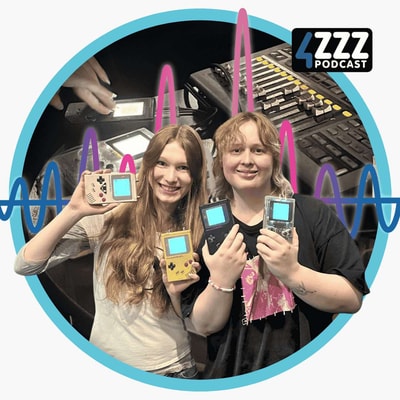
Today Esther Skyscraper (@esther.skyscraper and @margaretisaband) (She/Her) joins host Hazel (She/Her) to provide an incredible insight into the world of GameBoy composition and performance!
Transcript
At 4ZZZ, we acknowledge the traditional owners of the land on which we broadcast. We pay our respects to the elders past, present, and emerging of the Turrbal and Jagera people. We acknowledge that their sovereignty over this land was never ceded, and we stand in solidarity with them.
Speaker B:Transmission on 4ZZZ, amplifying the trans and gender diverse community of Meanjin, Brisbane and beyond.
Speaker A:Good morning, you're listening to Transmission on 4ZZZ. My name's Hazel, my pronouns she/her. You're listening to Transmission, but it's not just me in the studio today. Announce yourself, please.
Speaker B:Hi everyone, my name is Esther Skyscraper. Yeah, I'm here in the, in the 4ZZZ studio. I'm going to be playing a live set for you guys.
Speaker A:Let's go!
Speaker B:Soon, yeah! I'm gonna be getting interviewed. I'm here with Hazel, and yeah, we're gonna be bringing you guys some awesome tunes, so lock down your aerial.
Speaker A:Amazing. Sorry if you said it and I missed it, but what are your pronouns?
Speaker B:Oh, she/her.
Speaker A:Thank you very much. Um, that's right, you said it, we're doing a live set. Can you believe it, folks? Um, for those who don't know, Esther is an incredible musician of many talents, but the one that will be presented today is— I don't know what the succinct way to say this— live Game Boy orchestration?
Speaker B:What do you do? I'm going to be DJing on 4 Nintendo Game Boys, programming the sound chips in them, playing you guys, yeah, some songs that I've made on them. And yeah, hopefully you guys enjoy.
Speaker A:That is amazing. And look, folks, I know you're as excited as I am, but before we get into all of that, I've got to do some news first. So here it comes, folks. This week in community news and events for September 14th, brought to you by Gender Health Australia. In national news, trans parents targeted, charity worker sued. Sorry, this is This is international news. My bad, my bad. Trans parents targeted. Charity worker sued over dangerous fetish claim. A staff member from the UK charity breastfeeding.org is being sued after publicly describing breastfeeding by trans mothers as a dangerous fetish. The comments were made by volunteer coordinator Sarah Carter, who claimed that trans women nursing infants posing a risk to children and should be treated as safeguarding concerns. Her statements sparked immediate backlash from LGBTQ+ advocates, medical professionals, and parents, who noted that induced lactation is a safe, evidence-based practice used by cisgender and transgender women alike. The lawsuit argues that Carter's remarks were defamatory, discriminatory, and harmful to trans families who rely on accurate health information and support. The charity has distanced itself from Carter, stating that her comments do not reflect its values or evidence-based guidance. Health experts emphasize that trans mothers undergo breastfeeding medically supervised protocols, that framing— sorry, and that framing their care as a fetish fuels stigma rather than protecting them. The case highlights the broader climate of hostility faced by trans parents and raises urgent questions about misinformation, professional responsibility, and the safety of LGBTQ+ families seeking perinatal support. Giggle founder loses final appeal in landmark trans discrimination case. The founder of Giggle for Girls app, Sal Grover, has lost her national appeal in a landmark discrimination case brought by transgender woman Roxanne Tickle. Grover had refused Tickle access to the app, which markets itself as a safe space exclusively for, quote, biological females, and publicly misgendered her online. Australia's Full Federal Court upheld earlier rulings that Grover's conduct amounted to unlawful discrimination under the Sex Discrimination Act, confirming that trans women are protected from gender identity-based exclusion in digital services. The decision marks one of the most significant legal affirmations of trans rights in Australia to date. The ruling also means Grover must pay damages and comply with orders recognising Tickle's gender identity. Legal experts say the judgment sends a clear message that platforms cannot exclude or vilify trans women under the guise of female-only spaces. The case has drawn national attention amid ongoing debates about digital safety, gender identity, and discrimination laws. For trans Australians, the outcome represents a powerful affirmation of dignity, legal recognition, and the right to participate fully in public and online life. Calling transgender Tasmanians, Monash study seeks community voices through art. Trans and gender-diverse Tasmanians, there's an important research project underway, and Monash University is calling for your voices. The study is called TGD: Art for Health, and it's all about understanding the experiences and perspectives of trans and gender diverse people to help shape more inclusive and affirming healthcare in Australia. Doctoral researcher Majella Jones, alongside a team of clinicians and academics, is exploring what truly makes healthcare accessible, respectful, and safe for our communities. If you're a trans or gender diverse adult living in Australia, you can take part. The, uh, the study involves submitting artwork of any kind, joining an optional artwork workshop either in person or online and taking part in a one-on-one interview or completing an online survey if that suits you better. The team hopes your insights will help improve healthcare and experiences and influence future training for health professionals. Artwork submissions close October 15th. You can find all the links to participate on the Working It Out Tasmania Instagram page or visit the study website at tgdartforhealth.my.canva.site. You can also email Majella directly at [email protected]. if you have questions or want to get involved. And for your events, we have the Help Make a Trans Community Quilt for Melt Festival. That's at House Conspiracy, 42 Mollison Street, West End. It's on Sunday, 5 PM, the 20th of September, and it's free admission. The Trans Justice Miangin are working with Collab Brisbane to make a trans community quilt for Melt Fest. The maker session is free to join on Sunday, the 20th of September, from 5 PM. Help make gorgeous pieces of art of trans community Sorry, help make gorgeous pieces of trans art with community at its heart. That is all for your news and events. You'll find links in the show description and on the description on Spotify. And welcome back, you're listening to Transmission on 4ZZZ. My name's Hazel, my pronouns are she/her. Who's with me today?
Speaker B:My name's Aster, my pronouns are she/her.
Speaker A:And we're gonna move into a little bit of a chat, Esther.
Speaker B:Oh my God.
Speaker A:Do you feel up to chatting?
Speaker B:Yeah, 100%.
Speaker A:So I'm just gonna go with something obvious, forgive me, but for the listener, who is Esther Skyscraper? Tell us who you are and what you do.
Speaker B:Um, well, basically, um, I'm, I'm 20. Um, and I'm 5'10.
Speaker A:That's good. Um, we're gonna start with the dating profile basics.
Speaker B:Yeah. Um, yeah, and I like electronic music. I like visual novels. I like to play those a lot. I like the color orange.
Speaker A:This is all good stuff.
Speaker B:Yeah, that's who I am, I think.
Speaker A:This is a really deep personal cut.
Speaker B:I like that a lot.
Speaker A:Do you have like, just off the dome, when it comes to like visual novels, like do you have like a go-to? If someone wants to start visual novels, what's the game they have to play?
Speaker B:Oh my God. No, I'm too embarrassed to say.
Speaker A:Okay, nothing that you would put on the record.
Speaker B:No.
Speaker A:Fair enough. Well, when we talk about Esther and we're talking about you musically, what do you do? How would you define your musical pursuits?
Speaker B:I think my musical pursuits are very much about taking something that is, you know, maybe not meant to make music or meant to make music in a very simple way, and kind of like trying to, I don't know, modify it, program it, do whatever I can to it to kind of make it almost more than kind of the sum of its parts, more than what it was originally intended for, and kind of, yeah, express my own, I don't know, vision through that. And yeah, a lot of the time I do that with old technology like Nintendo Game Boys. I've got some Commodore 64s that I just did a set with recently.
Speaker A:Mm-hmm.
Speaker B:And, you know, old Yamaha FM synths and stuff like that. So yeah, yeah. That's really cool.
Speaker A:So the fun for you is breaking the sort of rigidity that these systems are for and turning them into something more.
Speaker B:100%. Yeah, like kind of giving them a new life through like creativity, I think.
Speaker A:Yeah. That's really, really cool. So do you do any sort of art outside of music or is it strictly music?
Speaker B:No, I pretty much just do music. I don't really do other art. I mean, I do make a bunch of like pixel art on like the Commodore 64s because they have this like, like, you know, on computers now there's like ASCII, like, you know, like ASCII art and stuff. But obviously like that didn't exist like back in the '80s. So they had like this super like primitive version called like PETSCII and it's like super quirky. Like there's all sorts of like cute little symbols and everything. So it's kind of like a cross between like pixel art and ASCII art. It's just like really fun.
Speaker A:Interesting. like a pre-standardized symbols for representation on a computer screen.
Speaker B:Yeah, it was just like, um, just standard for like the Commodore computers. But like, yeah, a lot of different brands had like their own kind of standards before it was all like one thing.
Speaker A:That's super interesting. I love that. So, so in the, in the realm of visual art, it's very much the, the exact same vibe that you're bringing to music as well.
Speaker B:100%. Yeah.
Speaker A:You're finding ways to rework what original hardware was capable of doing. Yeah, I love that. So obviously you've got this real affinity for retro, and forgive me, older listeners, for saying this, but vintage hardware and equipment. First of all, I just wanted to ask, like, is it particularly hard to source functional things like Commodores and Game Boys? Like, how do you go about that?
Speaker B:Well, the first, like, piece of gear that I ever got was my first Commodore 64, which I got from my grandfather, who he used to teach Microsoft BASIC at TAFE in the '80s.
Speaker A:Wow.
Speaker B:And yeah, he just like had it in like his house and it was broken and he was like, oh, you can try and fix it up. And I was like, oh, okay, cool. And then I got like one of my other family members, like my uncle, he had like this old It's basically like just a worse version of a DX7. Maybe some people will know what that is, but like an old Yamaha FM synth that was also broken. It's also like kind of 8-bit microcomputer era. And he was like, oh, if you can fix it, you can have it. So then I fixed that up and then other stuff. So yeah, a lot of stuff from my family, other stuff off like Facebook Marketplace. Like I'm on Facebook Marketplace every single day.
Speaker A:It's an addiction.
Speaker B:Yeah.
Speaker A:Wholesale Marketplace.
Speaker B:And apart from that, there's also like websites and stuff that I use to just buy like kind of, I guess they sell like e-waste essentially.
Speaker A:Hmm.
Speaker B:And it's just like, yeah, old like Game Boys, old like random stuff that's broken. A lot of them are in like Japan. And normally I aim like when I'm like, you know, buying Game Boys off of those websites, I normally aim for like a 3 to 2 like Game Boy conversion ratio. Like I order like 3 Game Boys and then try to like Frankenstein them into like 2 working ones.
Speaker A:That makes total sense.
Speaker B:But it's like really cheap. Like the prices on Facebook Marketplace are crazy. People sell them for like $500.
Speaker A:'Cause they know it's desirable for a functional one.
Speaker B:Yeah. So yeah.
Speaker A:Oh, that's great. I mean, so the, really the primary method here is you get the broken stuff and you put it back together.
Speaker B:Yeah. Yeah.
Speaker A:So interesting. 'Cause that's a whole extra skillset on top of the composition as well to get into this art form.
Speaker B:I suppose so. Yeah, I don't know. That's kind of almost half the fun to me is just like, you know, modifying stuff. I mean, I'm also super into like circuit bending. I've got like a whole bunch of old like Casio tones and stuff that either, you know, came from my family or I just found for really cheap that I've like modified to just make them do like crazy stuff. So yeah. Love that.
Speaker A:So obviously you like this older hardware, you like fixing up old stuff. You have this affinity for the retro vibe, which kind of reminds me of talking to you about sort of online spaces. You've got this very selective approach to being online, and especially when it comes to things like AI. I was just kind of curious what motivates your feelings with that? What's driving this philosophy online?
Speaker B:I mean, I definitely like— I'm not like super crazy about sharing the stuff that I do. Like, you know, if I can play it to some people who are interested in it, then, you know, that's great. But I just don't really feel any need to, you know, post it online or try to, I don't know, promote it. I mean, this is kind of a funny thing to say while I'm like about to do a live set on the radio.
Speaker A:But it's ephemeral, right? Like it's got that same thing where it's gonna be here and gone.
Speaker B:Yeah, exactly. And yeah, I don't know. I just personally don't feel a need to do that. And then part of it also comes from just like, I just want to be esoteric. Like, I just want to be like fleeting. And it's like, oh, Esther Skyscraper. Yeah, I saw her once and never again.
Speaker A:Yeah, totally.
Speaker B:It was the best Game Boy DJ set of my life.
Speaker A:I love that. And I really like how that plays into the hardware you're using as well. There's this idea of it's like all the limitations, you know, this is not something that you're capturing completely in its moment. It's an experience that you're just going to have. Within you, and it's gonna be degraded as memories get degraded, but it's not something that's gonna be kept in like pristine 1080p.
Speaker B:Yeah, yeah.
Speaker A:For the rest of time.
Speaker B:Yeah.
Speaker A:I really, really like that approach.
Speaker B:Thank you.
Speaker A:And do you mind if we talk about some inspirations for your sound as well?
Speaker B:Oh, yeah, absolutely.
Speaker A:I see that you're wearing an Aphex Twin shirt.
Speaker B:Yes. I mean—
Speaker A:Was that an intentional prompt, or where does that sit in your, in your library of influence?
Speaker B:I wouldn't, I honestly wouldn't say I'm really very influenced by Aphex Twin. I think his music is like pretty cool. But I think it's like, I don't know, it almost feels like, you know, when people say like, oh, like don't remix Daft Punk because like they're too like classic that it's like, you know, you shouldn't like touch that. I kind of feel like it's like the same kind of thing of it's like, I almost like don't even want to try to like create anything like that.
Speaker A:Gotcha.
Speaker B:Because it's just like, it's a bit too holy.
Speaker A:Yeah, it's too much on a pedestal.
Speaker B:It's not for you to tear apart.
Speaker A:Yeah. Interesting.
Speaker B:But yeah, yeah, I think, I don't know, I like wearing this shirt as well because like everyone knows Aphex Twin as well.
Speaker A:Right. It's a good icebreaker.
Speaker B:Yeah, exactly. Like, talk to me about my shirt. Yeah, kind of thing.
Speaker A:So in terms of what does influence you artistically though, what you like to work with, What comes to mind?
Speaker B:I think like the biggest influence on my music is like 2010s Flash game music.
Speaker A:Oh wow. That's such a big swing. I like that.
Speaker B:Yeah, that was like when I first started like enjoying music, like playing on like CoolMathGames, like in like grade 5 or something. I remember like, oh, what was some— I really liked the soundtrack for Run 2. That was my favorite one where you're the little alien jumping around.
Speaker A:Very good, yeah, totally.
Speaker B:That one is incredible. I still listen to it all the time. There was this other one called Space Is Key, which had like, I think it was the first time I'd ever listened to like a chiptune song. Like I didn't like know what chiptune was, but I was like, wow, this is like crazy.
Speaker A:I had a very similar experience. 'Cause when you don't know what chiptune is and you hear it for the first time, it just like, it's like fireworks were going off in my brain. I was like, this is something. I don't know what this is, but there's something happening here.
Speaker B:Yeah.
Speaker A:I remember I downloaded like an app that served as some sort of aggregate for chiptune musicians, and I didn't know what it even was. I think I was just curious what this app was, and I downloaded it. And so then I just had this like singular place for all of this chiptune music whilst having absolutely zero idea what chiptune music was, that there was even a scene. And then like for years after, I just still didn't know what it was because it was just like this moment in time where I was like, I just have this app that has cool music and that's that.
Speaker B:Yeah, 100%. It's like so weird because especially when you're like a kid and you don't really like think of music as like genres, you just think of it as music. Even then, like, I think stuff like, you know, the Flash game music or chiptune or whatever just like stands out so much like from a stylistic perspective. Totally.
Speaker A:That's very true.
Speaker B:It's so different from like a lot of other music. It's just instantly recognizable. So yeah.
Speaker A:Absolutely. Hi, we're Worm Girls and you're listening to Transmission. Dang straight you are. Um, my name's Hazel, my pronouns are she/her. Go on.
Speaker B:My name's Esther, my pronouns are she/her.
Speaker A:Hello, Esther.
Speaker B:Hi, Hazel.
Speaker A:Folks, you just listened to the track Strange Romance by Self. For That Black Metal by Ancient Channels, we're talking to Esther Skyscraper today, and shortly we'll be listening as well. Oh my god! Uh, but we've just been talking about what you do, how you do it, and I want to tap in a little bit more into the musical side of things. So obviously, as we said before, and for anyone who's just tuned in, you do all of your performances on modified Game Boys. Sorry, this performance. You have a number of other pieces that you use as well.
Speaker B:Yes.
Speaker A:Can I ask why Game Boys specifically for this setup? What about the Game Boy makes it a fun tool?
Speaker B:Well, they're easy to modify. They were all made back when you know, the computer PCBs were all pretty simple. It's, you know, not the tiny little components. So yeah, super easy to kind of just see exactly what's going on. There's nothing kind of like, you know, hidden or anything.
Speaker A:Yeah.
Speaker B:Also, you know, very, very big kind of homebrew scene for the Game Boys, of course, in terms of like software that people are making for them, flash cartridges. just because they've been around for so long. You know, people have reverse engineered these things completely, so very well documented platform.
Speaker A:That is such a good point. I— if I can, if I can speak on my own for a little here.
Speaker B:Yes, of course, of course.
Speaker A:I found myself over the past year getting a fixation on modifying PSPs.
Speaker B:Oh, cool!
Speaker A:And I found that it was a similar journey Uh, but so there was like 2 things, right? Which is that the PSP is an older console by some standards today.
Speaker B:Mm-hmm.
Speaker A:Um, but it's nowhere near as old as, as some other devices that have been about. And I did have that little like feeling where I would be looking into modifying the PSP and some of these modifications get pretty niche and you're like, I'm sure you've done this a lot, like scrolling through forums, looking for like the one other person who's had the specific issue you've had.
Speaker B:Yeah.
Speaker A:And the best you can find is like 3 lines of text about how to fix it.
Speaker B:Oh yeah.
Speaker A:Um, and then I found that when I was doing all of that searching, I would often like bump into like, uh, DS modifiers and stuff like that, which had this gigantic community. And I remember being like, God, I wish I, I wish I had this much material. So the Game Boys are on that side of things where there's just a huge legacy of modification.
Speaker B:Yeah. And it's, I mean, it's pretty much, you know, the further back you go in time, kind of the more modifications there are for things.
Speaker A:Totally.
Speaker B:Because, I mean, you know, the Game Boys, there's TANs, the DS, you know, circuits are a bit closer together. It's a little bit harder to do, a little bit more complex. But, you know, people have still gotten in there and done some crazy stuff. But it's like, you know, you never really hear about anyone modifying their Nintendo Switch or like anything like that, you know, because it just gets to a point where everything is kind of so obscured that, um, it's almost impossible for the user to actually understand how the technology is working.
Speaker A:That is really true. Yeah, I feel as well there's perhaps a bit of a change in the philosophy of the video games industry for how accessible the tools for gaming should be.
Speaker B:100%.
Speaker A:Uh, the, the level of accessibility even just 10 years ago you get out of my experience with the PSP is just completely different to the level of alienation you get from like current consoles where that you just, you open it up and there's next to no idea how any of it functions. So many things in place to prevent you from opening it up and still, you know, be able to use it in future.
Speaker B:100%, yeah.
Speaker A:Yeah, so the Game Boys are sort of representative to you to like a peak of that sort of modifiable, self-owned era of gaming.
Speaker B:Yeah, yeah.
Speaker A:And if I'm not mistaken, the Game Boy in particular has a big legacy of being a tool for music as well, right?
Speaker B:100%. Yeah, I'm absolutely not the first person to do this. So yeah, yeah.
Speaker A:So I'm wondering, how does your approach to composition and music and performance change when you're using something like a Game Boy?
Speaker B:Hmm. It's kind of a funny question because it's less that my approach to composition changes when I use a Game Boy and more that it changes when I'm not using a Game Boy because I just do so much stuff on the Game Boy, like—
Speaker A:This has become your normal.
Speaker B:Yeah, this is just like what's normal to me. It's kind of like, you know, I don't know, it's almost like a completely different way of thinking. Like, you know how there's like kind of different areas of like maths or whatever, like this, like, I don't know, like calculus. And then there's like, I don't know, linear algebra that kind of like a lot like completely different. And it's kind of like it almost feels like it's using like a different part of my brain.
Speaker A:Totally.
Speaker B:when I'm, I don't know, writing a song on like a keyboard or something like that.
Speaker A:Yeah, well, I like this angle then. What do you lose when you're not using the Game Boys? Like what makes that a hard change?
Speaker B:Actually, determinism. I think about this a lot. The Game Boys are completely deterministic.
Speaker A:Do go on.
Speaker B:Everything that— that's what I love about them. Everything that happens on the Game Boy, you know, since they're so simple, there's not that much there. to control. Like, you know, the programs are all just written in assembly, the interface is all hexadecimal. Like, it's literally write, pushing stuff into the CPU. I know exactly everything that's going on when I'm using a Game Boy. I know every single— down to like the CPU ticks. I know everything that's happening. Everything's predictable. Everything's set out perfectly compared to like, you know, if I'm, um— you know, playing a synthesizer patch and then I turn on like a reverb pedal, technically like I don't really know what's gonna happen, right?
Speaker A:Right.
Speaker B:Like I know probably how it's gonna sound, but like on the Game Boy I'd have to program in the individual little like echoes and stuff. So yeah, it's kind of different in that way that it's like everything is completely predictable and controlled, which I like. I like getting to control everything.
Speaker A:You're a precision instrument.
Speaker B:Yeah.
Speaker A:So the— obviously like it comes with an extra workload, but you're saying like when you do things, effects like reverb and everything like that, you're manually writing the reverberations?
Speaker B:Yeah, yeah. So it's like, you know, I do this classic one where it's like you put down, you know, you have your note that's like playing as like a square wave or whatever at a certain volume, and then you go to like, you know, 3 semitones, 3, I'm honestly, I'm blanking, but 3 steps. Yeah, 3 steps later on the sequencer and then put another one slightly quieter and then 3 steps later, put another one slightly quieter. And that's like, you know, how you program that kind of stuff in or whatever. So yeah.
Speaker A:That's amazing. And so I imagine that comes with like a ton of extra effort and a ton of extra like forethought and planning. that's what you like out of it. You like that you can have a complete comprehensive image of what you've created rather than letting chance take over any elements.
Speaker B:For sure. Well, I mean, it's like, you know, what if when I'm programming in the reverb or the echo, I want it to, you know, become a brighter sound as it echoes, then I can control that on the Game Boy by changing, you know, the wave shape, obviously to a very simple degree, but I can control it. But, you know, on like a regular kind of, I don't know, delay pedal or something, it might just not have a knob for that. And I just can't do that. It's just the limitation of the hardware. So it's kind of funny that like the Game Boy as such a limited piece of hardware is actually so much more malleable.
Speaker A:It opens things up.
Speaker B:Yeah, yeah.
Speaker A:Because I guess, you know, when nothing is left to chance like that, everything becomes a viable tool for creation. So the complexity gets way larger.
Speaker B:Absolutely.
Speaker A:That's super interesting.
Speaker B:And yeah, and that is, I, you know, across all, you know, kind of things that I do, the Commodores, the, you know, Super Basic Synths, all of that, I feel like that's what draws me to all of them. They're all so predictable.
Speaker A:Yeah, that's really, really interesting. I like that a lot. So you also mentioned the idea of like playing a synth or playing other instruments. Do you have any other sort of musical background or arts background? Like, obviously you found your journey through tech to these, but do you do other music Well, in terms of my background, I don't have any.
Speaker B:I didn't even do music at school.
Speaker A:Right.
Speaker B:I've never been— I think I went to like one piano lesson one time. And I was like, I thought genuinely, I was like, I don't like how the piano only makes one sound. So I stopped. I stopped going because I thought it was kind of boring.
Speaker A:There's just not enough options for you.
Speaker B:Yeah. Not to hate pianos, incredible instrument, you know.
Speaker A:Of course.
Speaker B:Not trying to diss, no shade.
Speaker A:A lot of range within skilled hands, but—
Speaker B:100%, yeah.
Speaker A:I know what you're saying. Like, for you, your capacity to play a piano has developed through the ability to interact with synthesizers, hey?
Speaker B:Yeah, yeah. And then kind of in terms of at the moment, I'm also in a band where I kind of, you know, I use the Game Boys, I use synthesizers, I use all sorts of crazy setups and stuff. We're called Margaret and we're kind of, I don't know, a bit hard to pin down, a bit hard to describe. A lot of people have compared us to the Adventure Time soundtrack. Oh, that's so good. Which is an honor.
Speaker A:Yeah, this has got me so pumped. I mean, I was already keen to look into Margaret, but that's got me pumped.
Speaker B:But yeah, kind of a bit of a mix between, I don't know, kind of folky, kind of electronic, a lot of stuff in between.
Speaker A:It's always been such a good combination as well.
Speaker B:Yeah.
Speaker A:So I mean, we're talking about Game Boys, right? And we're talking about video games as a result of that. You mentioned as well that when you were younger, it was Flash game music that was inspiring you. What about video games are such like, make them such a hotbed for inspiration for you?
Speaker B:Hmm, I think that probably specifically actual video games, like, you know, just playing them doesn't really inspire me that much because I really don't play too many video games.
Speaker A:Oh.
Speaker B:But I think that it's often, yeah, like video game soundtracks, just, you know, especially a lot of, you know, video game soundtracks that work within limitations or, you know, kind of chiptune styles or things like that, you know, are really trying to create an effect and a feeling with like a kind of very limited kind of, you know, asset. And I really appreciate that. I think that's really cool. So I think that's what has kind of drawn me to like video game soundtracks.
Speaker A:So it's more of a spiritual connection?
Speaker B:Yeah, yeah. But in terms of actual video games, I don't know, I mean, I play Minecraft, I guess. I like the Minecraft soundtrack, it's actually really good.
Speaker A:Oh, it's an incredible soundtrack.
Speaker B:Yeah, yeah. I think that definitely influenced me as well, like Xbox 360, like on the weekend when I was a kid. Yeah, yeah.
Speaker A:Oh my God, so many hours spent on that. And, and like, the— I think you would have to search far and wide to find like a single person, uh, of our generation at least, who hasn't been deeply impacted by the Minecraft soundtrack. It's beautiful collection of music. It's like, it's almost like a, like, culturally universal thing for, for our age group at least. It's just like you can play the Minecraft music anywhere and people are gonna know that that's like good music and where it came from.
Speaker B:And it's so weird because really it's like quite a strange genre of music of like ambient electronic. Like, you know, most people, you know, they like the Minecraft music, but they probably wouldn't listen to anything else in that kind of genre, I feel like.
Speaker A:It's a very good point.
Speaker B:So yeah, I think it's kind of wonderful that, I don't know, that's in a lot of people's tastes, even if it's just a little bit.
Speaker A:Yeah, it's like a boundary pusher in that way.
Speaker B:Yeah, 100%.
Speaker A:And so, you know, this may be a blunt question. We're on transmission. There's this overlap, I feel, between, you know, the industry of gaming and the transgender community, the art form of games creation. Take a quick glance at Zed Games here on Free Triple Zed and you'll see the same thing. I'm wondering, do you have any thoughts on that connection? Do you have any thoughts into why there might be such a strong link between gaming and the transgender community?
Speaker B:I mean, as someone who isn't really much of a gamer, I don't really know specifically. I mean, I would guess it's probably, you know, the same kind of thing as like, you know, a lot of trans women are really into like electronic music kind of stuff. I feel like You know, there's a lot of, I don't know, kind of incentive to just stay in a safe place indoors when you're trans. Because, you know, if you go outside, go out in the city, like, you know, there's a pretty high chance, you know, you're gonna get harassed or like, you know, people are gonna, you know, do something mean. And so I feel like that kind of, you know, leads to a lot of— I mean, it's definitely led to me, but— and my friends, I think it leads to a lot of trans people kind of like, you know, staying inside a bit more, staying in a place where they know they're safe. And I think, you know, when you're inside and you're kind of trying to, I don't know, grapple with gender dysphoria and mental illness, and all you've got is your computer in front of you, I think it makes sense that people would want to make art on it and find some way to fulfill themselves, even if it's, you know, they're just in their bedroom. So yeah, I think maybe a similar kind of thing is happening with gaming. I can't really speak on it because I'm not too much of a gamer, but that's what I would suspect.
Speaker A:I think it's a very beautiful take on it.
Speaker B:Oh, thank you.
Speaker A:That makes a lot of sense. It's that avenue to community that we find ourselves uniquely able to access when we feel so, you know, restricted and unable to go about. I definitely recall one of the more— one of the episodes of Transmission that got a lot of responses was about seeking community and how to find other trans people. And the answer is, as much as there's wonderful physical places to do that, it's online spaces that we really find a lot of ourselves and find a lot of people that are like-minded to us.
Speaker B:Mm.
Speaker A:And that— I think you're right. It just has a strong overlap with artistic pursuits, with music and with gaming and all that way that's connected and the self-representation you can do with that.
Speaker B:Mmm. My name is Iris, and you're listening to Transmission on 4ZZZ. Subscribe or donate to keep community radio alive.
Speaker A:Amen, folks, you're listening to Transmission on 4ZZZ. You can subscribe if you go to 4zzz.org.au/support. There's a number of different subscription tiers. You can also enter yourself in to win various prizes. Folks, supporting Triple Z is easily the best thing I do every year, and I heavily recommend you do it too, because this station being kept on the air is why we're able to bring you incredible artists like Esther Skyscraper.
Speaker B:Oh, stop!
Speaker A:We have a live set primed and ready to go. So listeners, just so you have a visual, in front of me on, on the desk here, I have Esther standing in front of 4 differently colored, some see-through Game Boys, cables strewn about like the world has just ended, and a big mixer with all kinds of things plugged in and out of it. And Esther is going to turn all of this into amazing music. which I'm just beyond excited about. Can you hear this sound, guys?
Speaker B:One second.
Speaker A:There you go. I don't know if you caught that. That's the Game Boy's turn it on. Folks, we're about to kick off. So you're about to listen to a good 30 minutes or so of some of the best electronic music you can possibly hear in the Mianjin area. So folks, please, please give it up silently in your own space to Esther Skyscraper. Wow. Oh my God, Esther! Holy cow! God, how do you even— okay, so, um, folks, that was an amazing live set from Esther Skyscraper. If you're just tuning in, that was performed exclusively on 4 Game Boys strung together and plugged into a mixer. Holy cow, it completely flummoxes me how you could have made all of those sounds with just 4 Game Boys. Was that like a voice generator in there as well?
Speaker B:Yeah, yeah, the Game Boys can actually do like super, super crunchy low-resolution samples because they have a wavetable. So you can get the, you know, text-to-speech kind of thing that they had in like 1985 going on them because it's like super simple waveforms and stuff.
Speaker A:That was crazy, folks. I'm sure you were all going crazy listening to that at home. I had the— the studio was I was practically shaking with the way that Esther was jumping around and the way that I was banging around because that was just phenomenal. Just exceptional, exceptional performance. I loved that.
Speaker B:Thank you guys for tuning in. Yeah, I hope you guys enjoyed that. If there's any people who like chiptune music out there, yeah, hope you guys enjoyed that.
Speaker A:I certainly did. We had a subscription from Volanda from Thornleaf.
Speaker B:Oh my god!
Speaker A:Thank you for subscribing!
Speaker B:Thank you for subscribing.
Speaker A:Esther, that's your subscriber, that one. Oh my God, that's my baby.
Speaker B:Yes.
Speaker A:Oh my goodness. And we also had a text in from Sam saying, oh my God, I saw Esther play with Margaret a couple weeks ago, but this set is everything.
Speaker B:Thank you, Sam.
Speaker A:Uh, we also had Aria saying, listening in from J-Car, buying bits to mod my own Game Boy. So people want to say that—
Speaker B:Shout out, Aria.
Speaker A:People want to say that being trans is a social contagion. No, no, no, Game Boy modification is a real Exactly. Social contagion. And finally we had Ducky saying, it's reset my nervous system, I'm so leveled up.
Speaker B:Oh my god, thank you guys for texting in.
Speaker A:The reviews are in, that was an exceptional performance. Man, personal highlights for me, I really liked the COVID of F My Computer. That was fantastic. As soon as the bassline came pumping in, I was like, no way!
Speaker B:Yeah!
Speaker A:Okay, so Oh gosh, let's try and relax.
Speaker B:Yeah, um, I'm all sweaty.
Speaker A:Um, dear listeners, if you happen to be a podcast listener, that was a live exclusive performance. So just like the beautiful Esther in the studio right here, it was ephemeral. It is for now and to be enjoyed by those who were here for it. Um, and I've just got nothing more to say than how blown away I was by that. Obviously, throughout the set you've got 4 different Game Boys all producing 4 different things at once. There were slowdowns and there were speedups. How are you managing that between the 4 devices?
Speaker B:Well, basically, listen now, you probably can't see this at the moment, but basically Game Boys, they have this little thing called a link cable which used to be used to play like multiplayer Zelda, I'm pretty sure, and to trade Pokémon between the Game Boys. And essentially that cable, it has a pin that goes right to, you know, the clock of the Game Boy. So you can use it to synchronize the tempo between 2 Game Boys. So that's how I kind of like, you know, synchronize some Game Boys and then I beat match some other ones. I slow stuff down, I speed it up. So yeah, all that kind of stuff.
Speaker A:So they're 2 pairs?
Speaker B:Yeah, they're 2 pairs. So I've got, Each song uses 2 Game Boys working together. So that means I've got a total of 4 square waves, 2 super low resolution wavetables, and 2 channels of white noise that I can work with in one song.
Speaker A:It's crazy because it sounds like so much more than that. It sounds gigantic. And it's just, yeah, and the way you use the mixer as well, the way everything sort of melts together. That was, that was phenomenal. That was so full of life and energy. I thank you very much for sharing your performance with us in the studio today.
Speaker B:Thank you for having me on, and thank you for everyone who's listening.
Speaker A:So, I mean, we're approaching the end of the show. It's been absolutely amazing listening from you, your experiences, and hearing you, but also hearing your music as well. I just would love to know Where can we find you?
Speaker B:Plug yourself. I'm not really on the internet too much, but my Instagram is esther.skyscraper, and Esther is spelled E-S-T-H-E-R. I post my music stuff occasionally there. Apart from that, oh yeah, I also post whenever I have like DJ performances or shows on there. Yeah, apart from that, you'll probably just have to catch me in the wild. That's where most of my music is.
Speaker A:Just try and find a wild Estelle there.
Speaker B:Yeah. You know, I maybe, you know, if you ever see a girl like riding a train on the Cleveland Line with 4 Game Boys in her lap, that's probably me. So yeah. Yeah.
Speaker A:That'll be the place. And you're also in the band Margaret.
Speaker B:Oh, yes.
Speaker A:Where can we catch Margaret?
Speaker B:Margaret is a band on Instagram. That's the handle. Yes, I honestly, I'm pretty bad with scheduling. I'm pretty sure our next show is on the 24th, and I don't remember where it is, but you can go find us on Instagram if you want. Yeah, we're kind of like, imagine like all of this, but then it's also like beautiful folk music as well.
Speaker A:I am practically exploding out of my skin to catch a show of that. That sounds Absolutely phenomenal to me.
Speaker B:Thank you.
Speaker A:Yeah, that was, that was mind-melting. I really, really enjoyed it. And folks, this is the beauty of 4ZZZ. This is the beauty of the trans community. As you spoke to before, Esther, music and art and games and whatever, like, this is what connects us and this is what allows us to uplift each other and to enjoy the world as it is. It has been an absolute pleasure to bring your music onto air today. 4ZZZ is all the better for it.
Speaker B:It's been a pleasure to be here.
Speaker A:But folks, if you want to catch more of that, if you want to catch different and amazing artists just as good as Esther, you can do so by listening in to us on 4ZZZ. And folks, I'll say it again, if you want to support local community music and art, and if you want to support the trans community here in the world of music and creation, you can do so if you subscribe to 4ZZZ. You can do that at 4zzz.org.au/support. You can subscribe for as cheap as $25 if you've got a pet, or you can subscribe for a full or even maybe a super sub for $500, which gets your name written in gold on a wall downstairs. Pretty exciting, huh?
Speaker B:Mm.
Speaker A:We already had one sub today. I'm sure there are plenty of people just itching to support local music who would happily subscribe. So do so if you liked what you heard today.
Speaker B:Um, and if I could say something as well, just because this is, um, the trans radio show, um, at least for me, being trans is something that's really, really difficult. And, you know, something that, you know, it can really be a massive struggle. So I just want to say, you know, to any, you know, trans people who are listening right now, um, you know, don't give up. And life can be so beautiful and you're so valued and you're so loved. And for any, you know, people who maybe know a trans person or you're related to a trans person or you're friends with a trans person, you know, things are like, you know, pretty difficult for us. So yeah, just, you know, if you have a loved one who's trans, you know, just watch out for them. Yeah.
Speaker A:That's really sweet. And you're right, it means the world to me to be able to see so many vibrant and happy trans people living their full life. which I get to through doing a show like this. We're out there, we're here for you. Again, also, if you need access to any helplines or support lines, they're available in the show notes and in the podcast description. Folks, we've got to wrap it up. You've been listening to Transmission on 4ZZZ. We've had the amazing Esther Skyscraper. Thank you again. Bye! Bye!
Speaker B:Thanks for listening to Transmission. Catch us every Monday live on 4ZZZ from 10 AM, or listen to our podcast on Community Radio Plus app.
Hosts: Hazel (she/her) w/ Special Guest Esther Skyscraper (she/her)
Today Esther Skyscraper (She/Her) joins host Hazel (She/Her) to provide an incredible insight into the world of GameBoy composition and performance!
🔗 If you'd like to listen back to the unedited episode - with the music - head to our On Demand website. And don't forget to follow our socials at Facebook and Instagram.
Timestamps and Links:
- 00:00 - Acknowledgement of Country
- 00:20 - Welcome to Tranzmission
- 01:53 - Gender Health Australia's: Community News and Events - Links in podcast notes
- 06:38 - Introductions w/ Esther Skyscraper: Esoteric Experiences and Inspirations
- 18:04 - Esther Skyscraper: The Game Boy, Musical Manifestations, and the Trans Gaming Connection
- 32:50 - Support us at 4zzz!
- 34:13 - Live Set - Listen On Demand @ 76:11
- 37:06 - Logistics and Management (+@margaretisaband)
Community News and Events Links: brought to you by Gender Health Australia
- LGBTQ Nation: Breastfeeding org worker sued for calling trans mother’s breastfeeding a “dangerous fetish” by Elsie Carson-Holt
- News.com.au: Giggle for Girls app founder loses final appeal bid in landmark trans discrimination case by Blair Jackson
-
Monash University: Research Project - Examining experiences and perspectives of TGD people to inform inclusive healthcare frameworks and approaches by Majella, Christie, Janeane, Julia, and Cameron
-
Trans Justice Meanjin: Help make a trans community quilt for MELT Festival @House Conspiracy, Sunday 20 September, 5pm
Support Services
- QLife - 1800 184 527
- QC LGBT Mental Health Services
- Open Doors Youth Services Inc.
- LifeLine - 13 11 14
- Beyond Blue - 1300 22 4636
- How to Support Transgender & Gender-questioning Youth
- Transgender Map
Get Involved
💿 This week's playlist:
- Mystic Tea Party (@mystic.tea.party) - Angelite
- Cygnette (@cygnettemusic) - sorry i left the party
- Hotchkiss (@hotchkisstheband) - Before Work
- Ancient Channels (@ancientchannels) - Black Metals
- Selve (@selvemusic) - Strange Romance
- Arca (@arca1000000) - Xenomorphgirl
- Cynthoni (@cynth0ni) - Lvstlove
- UMD GiRL - xox PSPmemory
- Esther Skyscraper (@esther.skyscraper) - Tranzmission Live Set
- Clancy (@chefspiss_) - Oh Why?
4ZZZ's community lives and creates on Turrbal, Yuggera, and Jagera land. Sovereignty was never ceded.
Produced and recorded by Hazel for Tranzmission at 4zzz in Fortitude Valley, Meanjin/Brisbane Australia on Turrabul and Jaggera Country and audio and cover image edited by Tobi for podcast distribution via 4zzz Podcasts (@4zzzpodcasts) for Creative Broadcasters Limited.