Trans People are Loved Here: Interviews with Kai Ash & Scott Stuart
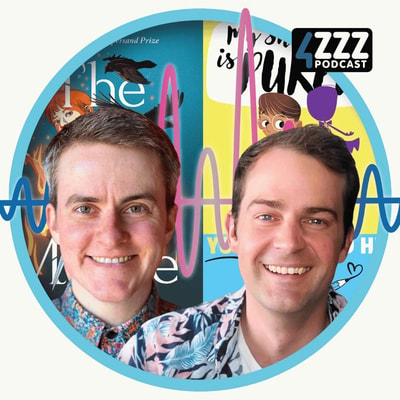
Rae (they/them) chats with Scott Stuart (he/him) about You Are Loved Here (youarelovedhere.org), a website where you can write letters of support to the trans community. Scott also talks about his bestselling gender inclusive kids books. Rae also catches up with Kai Ash (he/him) to talk about his debut book The Boy Maeve, about writing trans characters, and the upcoming Meanjin launch on 13 June at Where the Wild Things Are.
Transcript
At 4zzz. We acknowledge the traditional owners of the land on which we broadcast. We pay our respects to the elders past, present and emerging of the Turbul and Jagera people. We acknowledge that their sovereignty over this land was never ceded and we stand in solidarity with. Transmission on 4zzz Amplifying the trans and gender diverse community of Meanjin, Brisbane and
Speaker B:beyond here on 4zzZ 102.1 FM. My name is Ray, I use they
Speaker C:them pronouns and you're listening to Transition. I'm thrilled today to have a jam packed show for you. I spoke last week with two incredible authors, Scott Stewart as well as Kai Ash. So that's coming up a bit later on the programme. But first of all we've got our news segment. Shout out to Hazel for recording this one for us. This is our news for today, 8
Speaker D:June, this Week in Community news and events for June 8th in World News Iceland tops 2026 trans rights ranking A new ranking of the most trans friendly countries in Europe and Central Asia has named Iceland as the top destination for trans and non binary people. The 2026 Trans Index and Map produced by Transgender Europe in partnership with ILGA Europe, measures legal protections and opportunities across a range of areas including legal gender recognition, asylum, hate crime or speech, non discrimination, health and family. Iceland scored 30 out of a possible 32 points, achieving full marks in most categories and maintaining the same high score. For the third year in a row. Malta ranked second with 28 points, while Spain came in third with just over 27 points. Iceland has improved its scores by 18 points since the first first index was launched in 2019, highlighting significant progress in trans rights over the past seven years. In a statement, TGEU said the developments mostly stem from the tireless work of activists and court rulings rather than governments taking proactive steps to advance rights. Despite the visible public attacks on trans people across the region, the lack of political response is alarming in national news Woman led campaign backs trans rights A woman led campaign supporting transgender rights in Australia has surpassed 4,000 signatures in less than a week, with supporters saying that a growing response shows that anti trans voices do not speak for all women. The campaign not now name was launched in response to increasing public debate about trans rights and aims to highlight support for inclusion, equality and dignity for trans and gender diverse Australians. Organisers say the campaign brings together women from a wide range of backgrounds who believe transgender people deserve the same protections and rights as everybody else. We knew that something needed to be done, said NION spokesperson Kylie Bentle Connell the vast majority of women support trans people having the same rights and protections as everybody else, but a small minority are spreading fear and hate for their own political gain. Nion hope that the growing number of signatures will send a clear message that many women support trans inclusion and reject attempts to divide communities. Ballarat Women's Shed reaffirms support for trans members A women's community shed in Ballarat has banned a former board member after alleged anti trans comments were made during a meeting. According to the organisation, the board member was asked to leave after repeatedly spreading misinformation about transgender and gender diverse people and claiming that members were unsafe around trans women. Following the incident, Women's Shed Ballarat reassured members that it remains committed to being a safe and inclusive place for women and gender diverse people. President Sophie Potter said trans and gender diverse people have been welcomed since the organisation was established and the group has received strong support from the local community in response to the incident and now for events Trans and Non Binary Barbeque on the Gold coast the Gold Coast Pride Collective is having a trans and non binary BBQ on Sunday 14 June from 11am at the Cascade Gardens as part of their June Pride Month celebration. They're hosting a free community barbecue for the trans and non binary community along with allies, friends and family. For more info head to gcpridecollective.com board game night Join Trans Joy Meanjin for an evening of board games with trans and gender diverse people and allies. Board Game Night will be held at the board games cafe Meeple and Mug in west end on Friday 12th June from 6pm for more info cheque out transjoinmeangen on Instagram and Mardi Grasberg Pride Party Celebrate Pride Month with us at Banshees for our Mardi Grasberg Party. Can't make it to the Queen's Ball? That's okay. Mardi Grasberg is all about bringing Pride events to semi regional communities around Ipswich and this is a night for us to have a ball of our own. On June 20, local queer performers will take the stage for us to dance, connect and party with bands, a drag queen and a dj. This is sure to be a high energy night full of colour and whimsy. Come celebrate all the best parts of your community in an outfit that feels authentically you. Tickets are [email protected] My name is Hazel and that's all in this week's community news and events.
Speaker C:If you're enjoying the show today, which I hope you are so far, even though we've only had the news, I'd encourage you, if you're not already, to be a 400Z subscriber. You can head to 4zzz.org au support and subscriptions start at $25. If you're under 18 or if you have a pet, concession is $40, full subscription, $80. You can get really enthusiastic, and I know a lot of enthusiastic about 4zzz, as we all should be. And you can look at a passionate subscription and that's $140. And the subscriptions go up from there. We've got ones for super subs if you're super duper enthusiastic. We've got solo artist subscriptions, bands, businesses and household subscriptions. So if you want to subscribe today to 4zzz, go to 4zzz.org to keep shows like Transmission on the airwaves. I had the pleasure last week of chatting with Scott Stewart about you Are Loved Here. And if you want to have a look at that while you're listening to my interview with him, you can go to you are loved here.org and it's a website where you can write letters in support of the trans community. And I'm so glad that I got to have a chat with Scott Stewart about that. And I also got to have a chat with Kai Ash, and I think I'm going to play this interview for you now. Kai and I spoke about his debut book, the Boy Maeve, about writing trans characters, and also the upcoming launch of the book, which is happening on 13 June at where the Wild Things Are. So this is my chat with Kai Ash, he him, about the Boy Maeve. You're listening to transmission on 4ZZZ.
Speaker A:Hello, my name's Kai. I use he, him pronouns. I am a writer. I have a debut novel coming out called the Boy Maeve, which I'm very excited about. It came out last week. What else can I say? I live in Brisbane. I grew up here, but I admit that I left quite young, as in at 16 I bailed. I have come back intermittently to Brisbane for a year or two here and there, but I've returned finally in my late 30s. I won't give the exact age, just in January this year. So I'm back. And that's sort of relevant because the Boy Maeve is set in Brisbane.
Speaker B:Well, well, welcome back.
Speaker A:Thank you.
Speaker B:Look, it's like the. The Ibis and the Curlews are happy to have you here, as am I. I'm really happy to chat with you. Today. And. Yeah, tell us a bit more about your. This is your debut novel, the Boy Maeve. So, yeah, tell me a bit more about it.
Speaker A:Yeah, so it's a. Why a speculative fiction novel? I heard someone describe it as like two parts realism, one part fantasy, and I think that's probably a good way to describe it because it is the sort of book that it's. It is in the fantasy genre, like in that speculative fiction space, but it's sort of written as if. If the events could happen just down the road. Like it's. It's not that out of this world. And the fantastical sort of elements are drawn directly from Scottish Gaelic culture. So my family is descended from a few different places, but also Scotland. And I drew the. The folklore that I based it on from that area of Scotland where we're from, in the very, very far north. Because I. I really like folklore. It's sort of messy and dirty and scary in ways that so much of, you know, the sort of more Tinkerbell style fantasy isn't. In some ways, I like my fantasy a little bit gory, I gotta say.
Speaker B:Look, I support this and I think, like, often, I don't know, I feel like queer and trans narratives lend themselves really well to gore and a bit more of the horrific. Tell me a bit more about. Well, the boy, Maeve, the main character.
Speaker A:Yeah, so the hint is sort of in the title. Maeve is a trans character, a trans boy. He's about 14 years old. The storey, like the. The storey really is about belonging, as in. As so much of ya is finding your place in the world. Maeve's place is complicated both by the fact that he's trans. But actually mostly the complication comes from there are a few families involved because he is adopted, and so there's his adopted family who he lives with, and then there's this other family that sort of arrives on the scene, which really problematizes poor Maeve's situation.
Speaker B:Tell me a bit more about the. If. If you can, like, without spoiling it, the. The kind of speculative elements of it. What can. What can people expect? Will it keep them up at night?
Speaker A:Look, I. I don't think so. But then I also might have a different measure. Isn't. I actually thought that my storey was quite like, you know, fairly sanitised. But then I started hearing people describe it as, like, creepy and gory and like all these sorts of things, and I'm like, oh, yeah, I suppose. I suppose there's a bit of that in it. But I mean, if you, if you know anything about the fae folk of sort of Gallic Celtics lore, so the fairies, effectively, they're really sinister creatures. And so if you know anything about fairies in folklore, that's about the level of, you know, the fear factor in the book because we do have a, a fairy character, although Jeremy prefers the term fae. And so we're introduced to this fairy fae character because this is Maeve's imaginary friend. Unfortunately, the imaginary part isn't, isn't so accurate and Maeve discovers in a day that, oh, other people can see Jeremy too. And it causes quite a few problems. So that sort of kick starts the actions of the book. Why. Why has Jeremy suddenly decided to stop being imaginary?
Speaker B:Oh, my goodness, I love that. There's so many different layers already that you've told me about in this book. What kind of sparked the, the idea to, to write this book?
Speaker D:So.
Speaker A:So the book is actually based on a short storey that I wrote about 13 years ago. And it's, it's one of those things that, you know, you just sort of stop working on something and then you come back to it later. And the problem is, because I wrote the short storey so long ago, it's quite hard for me to remember what sort of inspired it. It's sort of like a whole bunch of different things. But I do remember because originally the character of Maeve was not sort of actively trans, so to speak, as in, Maeve was always genderqueer. But the book is set in 2002 in Brisbane, and to my mind, in 2002 in Brisbane, because I grew up in, at that time in Brisbane, and I was not out as a trans male. And it never occurred to me that that was a possibility. Now, on reflection, I know there were plenty of trans people in Brisbane at that time, just not where I was living in the outer suburbs. I didn't even know trans existed. And so I suppose that when I started writing this storey, it, it sort of seemed beyond me, like, no, no, Maeve couldn't know that he was trans and be like, actively, you know, using he, him pronouns for himself and stuff like that. That seemed like a step beyond. But then at a certain point when I was writing it, it was just like, Kai, you're writing a fantasy and you can like imagine like this trans boy knowing that he's trans in 2002 in Brisbane. So I had to shake myself a little bit there and just be like, come on, let's be real, like, we can do this.
Speaker B:I feel like a lot of, with fantasy, like a Lot of times people, yeah, they don't want to take that step and, and kind of think beyond, you know, gender norms or, you know, anything like that. And they, you know, there's so much possibility when it comes to fantasy. And also I was thinking I was also trans in Brisbane in 2002, but I didn't know it. So, you know, like mood.
Speaker A:There you go.
Speaker B:Yeah, that's absolutely fantastic. And I'm so excited for the trans rep and the storey from a local author. Like that makes me really, really, really happy. Tell me a bit about the. The launch that's happening in Brisbane at Avid Rito.
Speaker A:Yes. So Avarita there, where the Wild Things Are Kids in YA sort of site. I'm going to be having the Brisbane launch there on Saturday, June 13th and I'm just trying to remember the time. I think it's 4pm but I don't want to swear to that. But it's definitely in the afternoon on Saturday 13th of June and it should be good. I've asked my mother, Margie Brown Ash, to sort of launch it with me in conversation and because the sort of the family themes in the book, it made sense that I'd have family do that. And also, I mean my mother is like an actor, director, performer, as in like the being in the limelight is not. Is not strange for her. And so it seemed appropriate to ask.
Speaker B:Gorgeous. I love that so much. Yeah. What can people expect from the launcher? It'll be in conversation and. Yeah, what else? What else will be happening?
Speaker A:Yeah. So I mean, I suppose that it's the funny thing about launches because people come and they've not read the book and then particularly as a debut author, the likelihood, like I've written chapters in things like in Someone Like Me, that anthology and stuff like that, but it's unlikely that people would have read much of my work. And so it is funny, like you said, like, what do you talk about? So me and Mum will just be talking sort of more generally about like themes of gender. Also autism comes up. Family. I mean family is complex as anything. I. In my day job I work as a psychologist with the predominantly with the gender diverse and neurodivergent communities. So pretty much my communities. And so I suppose in some ways the how we envisage the conversation is that yes, it'll be touching on the book and the ideas of the books and the writing process and things, but it'll also be looking more broadly at these sort of ideas both because, you know, I'm an autistic trans man. Who went through that whole transition. My mother was along for that ride. And it's also an area that I work in, so bringing in that sort of more academic focus. But, you know, we'll see what happens. It's. It's not scripted, so, you know, we'll see what comes up on the. On the day. And also very open to questions and comments and such like. Like that. But it'll be it. It'll be on that sort of. That sort of vibe. Gender neurodivergence. Writing Brisbane,
Speaker B:What's happening for you next? Like, are you writing anything at the moment or are you kind of just focusing on. Yeah. Promoting this book or what.
Speaker E:What's.
Speaker B:What's happening?
Speaker A:Well, I mean, promoting takes up a lot of energy, I have to say. It's. It's not my natural. What do you call it? Like, it's not what I love. I didn't go into marketing for a reason, but it's a big part of writing, which is funny, because writing, you couldn't really get more of an insular, sort of introverted job. So I'm taken up with that and I'm learning how to do that, like, walking into bookshelves and being like, do you want me to sign those books? This is really random, but. Hello.
Speaker B:Like, hello, I wrote this. Would you like me to do something about it?
Speaker A:Yeah, I know.
Speaker B:And I'm sort of like, do I
Speaker A:have to show you ID or something? Like, how do you. That's the thing. It's like, I could just be anyone, but I'm giving that a go. I'm doing that, but I am writing. What I actually really hope is that I will be able to publish a sequel to this book. It's. It's written in a way that it can be a standalone. You don't have to, you know, read on, but I'm hoping that there will be enough interest because I really like Nave's Storey and there's like a whole bunch more that. I'm a big planner. And so I planned out this whole. This whole thing in universe and, like, years of content, stuff like this. So I'm really hoping I can use it.
Speaker B:Oh, my gosh. Fingers crossed. Because that would be. That would be fantastic. If there's any listeners who are, like, keen to start their writing journey and especially, like, trans, you know, people who. Of any age, who are wanting to start writing, what would you. What kind of advice would you give? Loaded question.
Speaker C:Yeah.
Speaker A:Yeah. Well, I suppose speaking specifically to the trans experience, I think maybe probably the best advice I Can I can give is know thyself. As in the more we can sort of reckon with ourselves, the easier it is to write. Like, I found it really funny doing the. Because I transitioned as an adult, I was like, you know, quite repressed for a very long time and I was doing writing during that time. But I gotta say my characters weren't. Weren't flying as in they, they. They weren't being believed. Like I remember in particular I did this one storey for. Oh, what was it? I can't remember. Aurora magazine, maybe. I. I can't remember but I submitted it and the com. It had a female assist female main character who. And that's how I was presenting at the time as a CIS female. And the comment came back being like, is the author a man? Which was very affirming in some ways. But I was not ready for that. I was still very repressed at the time. And so really I found that knowing myself, coming to terms with my own gender and also my neurotype because I also didn't know I was autistic for a very long time and it took a lot of failing at a lot of things for me to reach that point. And once I got that, it was actually so much easier for me to write characters for other people to understand because I stopped assuming knowledge. I was more like, oh, that might actually be an autistic thing. So I might have to give a little bit of an explanation of that like in the, in the prose. Whereas that wouldn't have occurred to me before because I'm like, no, that's normal. Like, of course that happens to everyone. It's like, no, Kai, you're just very
Speaker B:autistic and if listeners want to. Well, listeners should read the book where can they find the boy Maeve and all. Also, like, where can they find more of your work and follow you on. On social media and all that?
Speaker A:Well, you can find the boy Maeve at a lot of places, I'm happy to say, but one of the coolest places you can find it is at Bridgman Library. The Brisbane City Council libraries have it, which I was so tickled for to see because I loved the library growing up, that was my place. But yeah, lots, lots of bookshop have. Have it including, you know, like Avid, where the Wild Things Are and. But yeah, sort of like Dimmix, qbd, all those places. In terms of following me, I am on social media. I'm not necessarily a massively savvy social media person, but I'm learning this is all such a Learning journey. And so you'll see new sorts of style posts coming up and you can be like, oh, Kai discovered Canva. And yeah, I did like a month ago. And so I'm sort of experimenting with new things. But that's on Instagram. That's where you'll find my Canva posts. And that's Kai Ash writes. And then I'm also on Mastodon. I don't know how many people are on Mastodon, but I was part of that exodus from Twitter to Mastodon. So I'm on there again. Kayash. Kayash Rice, I think Kayash. You know, if you Google it. Yeah, certainly. I have a website that you have links to the social media. So if you look up the website of Kayash and I think it might even be Kayash writes. I mean, amazingly enough, then you'll be able to find it there. If you put it in Google, it's usually not too hard to find. But make sure you put Kai Ash in quotation marks. Because of course, something I didn't know when I picked my pen name is that I couldn't. I've. My name is effectively trans man. Trans man, as in Kai and Ash are the two most common trans male names in existence. Like, every time I go on to Red. What's the most common trans names? The guys Kai and Ash. And I am Kai Ash. So there you go. Make sure you put them in quotation marks or you won't find me.
Speaker B:I will say, when I saw your pen name, I was like, oh, that's. That's beautiful. That. That's very poetically trans, like.
Speaker A:And I was completely oblivious to it because Ash is legitimately my surname and then Kai is a nickname taken from my full name and so it sort of was ranked. So I was sort of like, oh, I want a pen name. I didn't want to go fully with my legal name. And someone that I was with at the time was just like, oh, Dukai. But see, they also didn't know about the trans thing because they're a German speaker and so they just knew it was a name that was really popular in Germany. Had no idea of this trans connection. I stumbled very organically into being a big trans representative with my name.
Speaker B:Big trans rep with your name. Big trans rep with your book. I love it. Oh, thank you so, so much for chatting with me.
Speaker A:Yeah, thank you. It's been awesome.
Speaker C:My name is Ray.
Speaker B:I use they.
Speaker C:Them pronouns. And you're listening to trans mission on 4zzz. I'm thrilled now to play for you an interview that I had with Scott Stewart, who uses he him pronouns. First up, we talked about you are loved here and if you go to you areloved here.org you can cheque it out. It's a website where you can write letters of support to the trans community. And this is the first part of my interview with Scott.
Speaker E:My name is Scott Stewart. My pronouns are he, him. I am mostly a children's author, but I have been working on a project called you'd are Loved Here, which is essentially a platform where people can write letters of support and love to the trans community. And it launched maybe a week and a half ago. And since then there's been your letters written from people all over the world, which has been absolutely beautiful to see. And the letters are just so beautiful and so heartwarming, it's almost tough to kind of read them every morning because some of them are just so beautiful that come through. So yeah, that's me. I think the thing that kicked this off was tickle versus giggle. I remember the that coming across my feed. I hadn't heard of the case before, I had only seen the decision. And I remember thinking, oh, this is such a fantastic piece of news. Like, this is so incredible. Like the community must be really, really happy to hear this. And then I think within an hour like my feed was already being flooded by so much vilification and harassment and politicians promising that they're going to make a change. And I think in that moment I had this thought, wouldn't it just be so nice to wake up and open your phone and be able to see something that's supportive rather than just like, for lack of a better word, hate filled and yeah, so that's kind of where this was born. I then spent a few, I, I built it quick and you know, with a few things I was very, very conscious of. I was very, very conscious of the possibility that there might be difficult messages coming through and messages or letters that are non supportive. And I'm so, so happy to say there has not been a single one. It has all a hundred percent letters that are just purely supportive and loving, which is so fantastic. And so, yeah, so I, I started working on this project, I built it, I launched it and I was like, I was hoping to have, you know, 10, 20 letters written in the first day or two to be able to show, hey, there's your letters of support out there. It was hundreds and hundreds of letters. And yeah, still every morning I wake up, there's letters coming through every single, single day. So yeah, it's been such a beautiful response to this and in a time where it just feels like it's needed,
Speaker B:you know, I think it is. And I think there's a lot of people who, as you said, like, they open up their phone of a morning and there is such horrific news and information and vilification of trans people and it's, it's exhausting and it's relentless and like, especially for young people, you know, throughout so called Australia, it is an incredibly difficult time. And so yes, a project like this is, is so beautiful and so important and I'm just so glad that it's, it's got the, the reception that it has. If people want to read their, like read these letters and, or write their own letters, how do they go about that?
Speaker E:Yeah, so you just go to you are loved here. Here.org the name of the project is you are loved here. And anybody can write a letter. They are manually reviewed before they are put up into the library. And occasionally they are lightly edited simply because sometimes a message of support also includes acknowledgment of a lot of difficult things. And so we really want to make sure these are purely support supportive and accepting letters. And so we do a light editing and then they go up onto. We have a library of letters which we are currently trying to expand. At the moment it only shows 20 you at a time. I'm trying to expand it up to like 100, 150 at a time so that you can kind of see what you're looking to find and maybe by categorization, but that's things that we're trying to work on at the moment. But you can also sign up to receive a letter sent to you every week. We tend to, I try to put together two to three letters in the email that obviously all supportive but say different things, you know, that aren't just saying I'm so happy you're here three times. You know, they're saying something different because we all need different things at different moments. So trying to make sure that you hear the thing that maybe you need in that moment. There's no ads, no sponsors, no promos, it's just letters. And it's very intentional that there is nothing commercial attached to it. So you know that you're just receiving a pure letter of support. One of the things that I have really, really enjoyed seeing as the letters have come through is that they are so human in that some people are writing one single sentence. So as an example, I have a letter from Claire here which is I'm so happy you're here. Thank you for shining your light and sharing your joy with the world and that is it. And maybe that is something that somebody needs to hear in such a short little bite. But other times we have, for example, a letter from Megan that's a lot longer. You don't know me, but I want to say thank you. Thank you for doing the hard, messy, scary work of finding the truest version of yourself. Every trans friend I have is a beacon in my life, always reminding me that choosing ourselves and each other is worthwhile, beautiful and sacred. They consistently give me hope that if we keep pushing, we can co create the world we need and have always needed. So thank you for being here. Thank you for sharing your truth as you feel safe enough and have the energy. I love you, Megan. So such a different kind of letter. I have a letter from Saskia here which is, you are loved, you are beautiful. We need more people like you, humans who know who they are and who they're not. Humans who dare to acknowledge their authentic selves and therefore allow others to do so too. Our differences make us complement each other. We are a team, each of us with our own beautiful properties. We're here to lift each other up and allow each other to fully shine in a way that only they can shine in the way that only you can. From Saskia. So everybody is writing so as humans so differently, everybody has something different that they want to say. Chilu has a beautiful letter here to you. You, the most beautiful sparkly piece of human perfection. You are divine and so loved exactly as you are. I embrace you with all my heart. You offer so much to the world and you make the world richer just by being in it. You are brave and courageous and deserving of respect and love. Stay strong. Know that you are not alone and know that I walk with you. Some people are writing you. I am a 42 year old mum from England and here's what I would like you to say. Some are talking about their own experiences as a grandparent, you know, some are talking just you. There was one that came through and I found this one just so beautiful and interesting at the same time because they said, I have never met a trans person, but I want you to know that you are loved, you know, and I just, I was so beautiful and human. So yeah, I think the things that make such a fantastic letter, sincerity, you know, over trying to write a perfect letter. There are so many imperfect letters that are perfectly human, you know, coming through, you know, a few genuine sentences One genuine human sentence will always be a perfectly constructed. Your letter. And that's something that we're really seeing. We're seeing messages, messages that are really written from the heart and, you know, that they want to share with, with the community.
Speaker B:I agree that a perfectly constructed sentence. Love that. Fantastic. Good for you. But to have those, to have those beautifully human sentences, I think that's one of the things that I like when, you know, people really embrace writing poetry, is that often they'll have these, you know, strange, messy, cathartic poems that they've written that are so imperfect but therefore perfect. And it's. Yeah, it's beautiful. And I love the, the line about co creating a world together.
Speaker E:Oh, it's so lovely, isn't it? Can I say on that? Imperfect. I get a lot of emails of a day, and I get so many that are so obviously written by a robot trying to sound very perfect. And the ones that I really respond to and love receiving are like, so imperfect, you know, but you can tell a human is just trying to, like, put themselves out there and write something. And I almost always respond to those.
Speaker B:Yeah, no one's looking to, to win an award for these letters. They just want people to know that they're loved. And I think it's so hard to, to see that a lot of the time, I know a lot of people wake up and they're like, you know, they don't know what the point is at the moment, and it's such a hostile world for trans people. But it's also, there's all these wonderful people writing letters. And often it's also those people that have written those letters are on your commute and they're the ones that smile at you on the train, and they're the ones that like, walk past you on the street and say, I really love your dress, or whatever.
Speaker E:One thing that this project is giving people, which I have seen a couple of times come through, is people say, you know, I want to support, but I don't know what to say. And I don't, like, I'll see somebody who. I want to compliment them and. But I also don't want to, you know, and I don't know what, what to you do. And this is kind of giving them opportunity to be heard by people in the trans community and express their support in a way that's very safe. The number one thing that I am really hoping for is that you can feel like when you open up your phone or your email, you can have a moment of true human Connection where, you know, that it's. That it's one human writing to another and find warmth in that interaction. I think that sometimes we forget, all of us, you know, forget sometimes how deeply we are loved by those we know, but also those we don't know. And I think having a reminder of that, especially when you are part of a community that often experiences the off, the opposite of that, I think it's really, really, really powerful. I have been, you know, on the Internet for a while now and I have often spoken about. I am raising a son who loves things that are outside the gender stereotype of what we have culturally called masculinity. And I know that there is so much support for both me and my son. But I also recognise my privilege, you know, in how I come across you. I'm a straight white dude. And so if I can help with a project like this and if some of the ignorance and that can come my way instead of somebody else's way, I'm very happy to receive that so that that connection and human connection can come across.
Speaker C:More
Speaker E:I write children's books that are primarily. Occasionally they're just for fun, but primarily they are focused around helping kids feel more empowered to be fully and truly themselves. My first major book was a book called My Shadow Is Pink, which is based around a young boy who has a pink shadow, whereas everybody else in his family has a blue shadow. And that's kind of representative of the gender stereotypes that we place on our children. And that was followed by up by a book called My Shadow Is Purple. And the reason I wrote that book was because I was in this book reading at a library and I wasn't reading my book, somebody else was reading my book, which was already awkward. But, you know, it is what it is and awkward for me because I don't like hearing my own words. And they finished the book and they turned to all the kids, kids that were present and they did the same thing that I always do. They say, you have a think about what colour your shadow is and you always get the most incredible responses. I will always remember the. The yellow shadow with a unicorn horn and a rainbow sparkly tail. That's the one child made. But this particular educator said, you everybody have a think about what of kind colour your shadows are. Are they blue or are they pink? And every kid in the room immediately just went into that binary of, well, am I blue or am I pink? You know, which one am I? And so I really wanted to create something that speaks to. There are more colours in the rainbow than blue and pink. And so that kind of birthed My Shadow is Purple, which is about specifically a non binary child who has a purple shadow. And the book kind of culminates in a host of children all having different coloured shadows. And I have another book, My Shadow is Blue, which is about a young girl who feels like that she is kind of being held back because she has interests that we traditionally associate with boys. But this year I actually have another sequel coming out called My Shadow is Pink Halloween. And this is born from. For many years of my son's early life, he was always a witch. For Halloween he would dress up as a witch and he was always asked what wizard he was and he was always like, no, I'm a witch. And some people got it and loved it and other people like, you can't be a witch, like you're a wizard, you know. And so this book is around that experience and how Halloween kind of gives everybody the opportunity to be somebody else, you know, for a moment. And yet in that moment sometimes, sometimes we still like, limit who they can be. And so this is a really joyful, loving storey of the young boy from My Shadow is Pink exploring the costumes and the people around him exploring the costumes that they would like to try on.
Speaker B:I love that so much. Halloween is. I feel like Halloween is very queer generally, but also. So I do agree, like there is that it's like that one night where a lot of the time people feel like it's okay to brush off those gender stereotypes and actually they might not necessarily examine a lot of stereotypes, but they also, yeah, they're more likely to. To dress, you know, differently and maybe do some exploring. I feel like there's a, you know, I'm definitely CIS to oh, I dressed up for Halloween. I might be non binary kind of pipeline. That happened
Speaker E:for sure. Yeah.
Speaker B:When's that book coming out?
Speaker E:That one's coming out in September, so just in time for Halloween. It's a little hard to keep track of because I have another book coming out in September and this one is called. It's a poem, affirmation poem written from a parent to a child. And it is called I love you and I like you. And it really is that exploration. We say I love you so much, but how often do we say that we like our kids, you know, for who they are. And this was kind of born from. My wife always says to our son, you know, I love you and I like you. And I didn't really realise how rare that statement is. And I remember Reading this poem, I love you and I like you on my Instagram, and the amount of one people saying, I wish my parents had ever said that they like me. I know they love me, but they don't. It doesn't feel like they like me. But then also so many people saying, why do I need to say I like them? Of course I like them. They know I like them. And then when you see the contrast of I wish they'd said I like me versus, of course they know I like them, I like this. This book was kind of born in that intention.
Speaker B:And I feel like there's a idea that there's like a hierarchy of you kind of like, you hate someone, you like someone, you love someone. And it's not. It's not as simple as that. It's way more nuanced.
Speaker E:Yeah, they're different things. Yeah. Like, I love people in my family, and sometimes I don't like them much, but, yeah, it's. You know, there is a big difference between love and light.
Speaker B:I think that's gorgeous. And I'm so, like, chuffed that you've got two books coming out in September. That's awesome.
Speaker E:I know. Halloween is somehow my. My time right now.
Speaker B:I was like, Halloween's just gonna be like. You won't have time to, like, get a costume together, or everyone will just be doing, like, book launches and stuff. It's gonna be.
Speaker E:We. And this is mostly driven by my wife because. Because she is a huge, huge Halloween fan. But we have one. We throw a massive Halloween party every year. We. Our entire. Like, last year, our entire house was, like, an 1800s apothecary with, like, huge, like, trees and stuff brought inside. Yeah, we go kind of all out for Halloween. So, yeah, there will. There will be time, because it will be made.
Speaker B:You don't live in. In Brisbane, do you?
Speaker E:Because I was like, no, in Melbourne.
Speaker B:Oh, my God. I was gonna say. Otherwise I'd be like, I'm so. I'm just gonna invite myself to your Halloween party.
Speaker E:Funnily enough, we actually live in this little pocket of Melbourne, which is extremely Halloween enthusiastic, you know, and we recently moved here a couple of years ago. And, yeah, as soon as Halloween hits, there are so many kids out on the streets, and it's just so fantastic and so fun. I love it.
Speaker B:That makes me so happy. And I think it's. It's one of the reasons that I love kids books and, you know, like, I love writing kids books and stuff is that there's. I don't know, there's such a beautiful sense of play around Halloween that both like adults and kids get to do that we maybe like don't do necessarily as adults or that we often, like kids are encouraged to, I don't know, start thinking of their like, business plan or their future when they're in kindy. Whereas at Halloween you can just play.
Speaker E:There is this incredible quote and I'm gonna butcher it. So, you know, and the quote is essentially, as I got older, I put away the need for childish things and people often kind of stop there. But the rest of the quote is including the, you know, thought that things are childish, you know, in the first place. And I am so such a believer in that. I think that firstly I think that middle grade fiction is the best fiction books of all. I think you have the most incredible complicated storeys written in somehow a simple way. But people kind of like, oh, that's a, that's a kid's book. I think picture books managed to explain, explore such complex experiences and feelings and do it in a way that is wrapped in beautiful metaphor and storytelling and only like 400 words. How do you do that? You know? Yeah, I think we need far more play in our world and I'm so glad that at least we have that opportunity of Halloween. But something my wife often says because a lot of people are you Halloween. Like I'm a grown up, like I don't care about that. And it's funny how we kind of only put that disclaimer around events that are for kids, you know, because we don't worry about like St. Patty's Day. Like, like you're like, well, Halloween's you American. Like St. Patty days are Irish and we still celebrate that here in Australia. Yeah, but that's, that's for us as grown ups, you know. And so I feel like we put away the childish things, not realising just how much they are needed by us as adults as well.
Speaker B:Thank you so much for chatting with me.
Speaker E:It's been my absolute, absolute pleasure.
Speaker C:My name is Ray. I use they, them pronouns. And you are listening to transmission on 4Z. Z shout out to both of my guests today. Thanks so much for chatting with me, Scott Stewart and also Kai Ash. And yeah, I'm just, I'm so thrilled that I got to speak to two fantastic authors and, you know, people who are really creating change within the trans community. My name is Ray. You're listening to transmission on 4zzz.
Speaker A:Thanks for listening to Transmission.
Speaker E:Catch us Every Monday live on 4zzz
Speaker A:from 10am or listen to our podcast on the community radio. Plus that.
Host: Rae (they/them)
Recorded Live on 4zzz every Tuesday morning. Tranzmission brings you the latest in trans community news, events and discussion. Tranzmission's mission is to amplify the trans and gender non-conforming voices of Meanjin/Brisbane and is brought to you by a diverse team of transqueers.
Rae (they/them) chats with Scott Stuart (he/him) about You Are Loved Here, a website where you can write letters of support to the trans community. Scott also talks about his bestselling gender inclusive kids books. Rae also catches up with Kai Ash (he/him) to talk about his debut book The Boy Maeve, about writing trans characters, and the upcoming Meanjin launch on 13 June at Where the Wild Things Are.
🔗 If you'd like to listen back to the unedited episode - with the music - head to our On Demand website. And don't forget to follow our socials at Facebook and Instagram.
Timestamps and Links:
- 00:00 - Acknowledgement of Country
- 00:20 - Welcome to Tranzmission
- 01:02 - Community News and Events
- 05:24 - Support 4ZZZ by Subscribing!
- 07:03 - Kai Ash Interview - Part 1
- 16:57 - Kai Ash Interview - Part 2
- 24:06 - Scott Stuart - Part 1
- 30:06 - Scott Stuart - Part 2
- 37:26 - Scott Stuart: My Shadow is Purple - Part 3
Community News and Events Links
- Pink News: Iceland ranks top in 2026 map of most trans-friendly countries in Europe by Poppy-Jay St. Palmer
- QNews: Women led campaign backing Australian trans rights hits over 4,000 signatures by Dean Arcuri
- QNews: Women’s Shed in Ballarat bans member over anti-trans comments by Jordan Hirst
- Trans & Non-Binary BBQ @Cascade Gardens Sunday 14 June, from 11am
- Board Game Night @Meeple and Mug Friday 12 June from 6pm
Support Services
- QLife - 1800 184 527
- QC LGBT Mental Health Services
- Open Doors Youth Services Inc.
- LifeLine - 13 11 14
- Beyond Blue - 1300 22 4636
- How to Support Transgender & Gender-questioning Youth
- Transgender Map
Get Involved
4ZZZ's community lives and creates on Turrbal, Yuggera, and Jagera land. Sovereignty was never ceded.
Produced and recorded by Rae at 4zzz in Fortitude Valley, Meanjin/Brisbane Australia on Turrabul and Jaggera Country and audio and cover image edited by Tobi for podcast distribution for Creative Broadcasters Limited.