What We Talk About When We Talk About Puberty Blockers
This week Ez (he/him) and Bette (she/they) are in studio discussing "What we talk about when we talk puberty blockers." I know another episode on these dam blockers! But don't worry we're trying to help you and your potentially cis allied crew with some ways to combat the hate and dis/misinformation war on trans kids. Bette and Ez mention some resources that can arm you with tools to fight back. Such as the Trans Justice Projects - Anti-trans disinformation handbook and Puberty Blockers Overview of the Rese
Transcript
At 4zzz, we acknowledge the traditional owners.
Speaker B:Of the land on which we broadcast.
Speaker A:We pay our respects to the elders, past, present and emerging of the Turbul and Jagera people. We acknowledge that their sovereignty over this land was never ceded.
Speaker B:And we stand in solidarity with.
Speaker A:Transmission on 4zzz, amplifying the trans and gender diverse community of Meanjin, Brisbane and beyond. You're listening to transmission on 4zzz. Transmission, all about amplifying the trans voices of Meanj in Brisbane and beyond. My name's ez, I use he, him, pronouns.
Speaker B:My name's Bet. I use she, they pronouns.
Speaker A:And yeah, you may have if you've never listened to the show before. We specialise in broadcasting music from artists who identify as trans or gender diverse. The way that we know this is because we stalk them. No, I'm kidding, we don't do that. They submit music to 4zzz and they can tick a box that says that they can self identify with a. With a variety of labels and tags and one of them is gender diverse or gender non conforming the options there.
Speaker B:So you mean I've been stalking them for nothing?
Speaker A:I mean, I don't know, for nothing.
Speaker B:Waiting outside the public toilet.
Speaker A:Are you trans? Can I play your music?
Speaker B:Sorry.
Speaker A:And they're like, bet, no, let me play your music. So, yeah, if you're a trans or gender diverse artist yourself and you're making music, Please submit to the 4zzz database. You can head to the 4zzz website, 4zzz.org au There's a music submissions page on the tab on the side. Click that, follow the instructions and you can upload music to our database. How I see your music because I go through there every week and I cheque it out and see which artists are submitting. So please do that. We love hearing your voice.
Speaker B:Yeah, yeah.
Speaker A:And this week on Transmission, Bert and I are going to catch you up on some weekend community events and news, especially because it is that miserable time of year where everyone is full of cheer. So we're going to be going through some events that you might like to attend to help you feel more miserable or less miserable. I don't know. It's a weird time of year.
Speaker B:Is everyone full of cheer? Is anyone not full of cheer? Maybe the young. The very young.
Speaker A:Maybe if you're full of cheer, let us know whether you're Yay cheer or Boo cheer.
Speaker B:Yeah, but like, incidental cheer doesn't count. It has to be cheer because of this time of year.
Speaker A:Oh, it has to be specific, specific, seasonal Cheer Happiness. Yuletide happiness.
Speaker B:Yeah. Yeah, I've never experienced that.
Speaker A:No, neither.
Speaker B:Like year three or something when I got like a Luke Skywalker figure and that X Wing fighter. Oh, I'm quite excited about that.
Speaker A:That's a year of cheer for Beck, for sure.
Speaker B:It was a few minutes of cheer and then it wore off when I was like, what do I do with this thing? You look at was a big dopamine spike.
Speaker A:Anyway, so if you're getting your Star wars fix this, you'll. Your season. Congrats. But first, let's get right into some community news and events. So, first of all, we've got. We've got some news. So the Australian Bureau of Statistics has confirmed that updated questions about sexual orientation and gender will be included in the topics being considered for the 2026 census, making a significant step toward better capturing data about the LGBTQIA plus Australians after years of advocacy and PR emissions. This follows community feedback that previous censuses made many people feel invisible due to a lack of questions on sexual orientation and gender identity. The ABS's own consultations and testing efforts on how to best frame these questions. So they're still ascertaining how they're going to have the questions. There have been political debate about the inclusions of these questions, including earlier government hesitation and re scoping. But the latest update indicates that questions on sexual orientation and gender will be part of the census questionnaire, which will provide more detailed demographic data to inform public policy and services for LGBTQA plus communities. However, there still appears to be no questions that will include the intersex community at this stage. So they are just gonna ask. Yeah, yeah. So there's nothing. There's nothing been said about that. Tragic and still disappointing. But.
Speaker B:So there was that huge report that came out recently about intersex surgeries in the intersex community. Equality Australia was. Was involved in it. I'll look it up. We can put it in the show.
Speaker A:Yes, that's what I was reading this morning. All right, there are. They have got some proposed questions. It doesn't seem. It doesn't seem to me that the questions are finalised, so I wasn't going to read them out. But they'll. They'll look something along the lines of, do you. You'll have like, tick boxes. And then there's also ones that select a field that you can type in or like write in. So which is good. I want to be able to write people, you know, particularly if you have a particular gender identity. That's a label outside of These binary labels that they're likely to be using. Yeah, you'd be able to write that in. So. But yeah, hopefully we can get something around for the intersex community. People with innate variations of sex characteristics or intersex people won't be counted in the next census after the ABS did not recommend the question for testing. So that's what from. Equality Australia will keep working in support of intersex organisations for full inclusion in the future. So this is one of those things where it's like two steps forward, one step back, you know?
Speaker B:Okay, yeah.
Speaker A:Anyway, there's an update on census for 2026 also. Transgender women and girls banned from Girl Guiding and Women's Institute in the uk. Two major UK women's organisations, Girl Guiding and the National Federation of Women's Institutes, have announced they will no longer allow transgender women and trans girls to become members. Girl Guiding has already restricted new youth membership to those assigned female at birth and the WI said it will stop offering formal memberships to trans women from April 2026, decisions both groups described as being made with in quotations regret after a UK Supreme Court ruling earlier this year interpreted the legal definition of woman in the Equality act as based on biological sex, prompting legal advice that necessitated the policy changes. The organisation stated they will still seek ways to support and include trans people outside formal membership and will keep most volunteer roles open. But their moves have sparked criticism and protests from the trans rights communities, who argue the exclusions are harmful, which they are required and are not required by law, with some suggesting the shift reflects broader political pressure and confusion over the ruling's implications. Following this ban in the uk, Girl Guides Australia has stated Girl Guides Australia's mission is to empower girls and young women to discover their potential as leaders of their world as girls. All girls, cisgender and transgender are welcome at Guides Australia and we support their personal journey.
Speaker B:That's super sad, the UK situation. And I think even in the States, Girl Guides still lets. I don't know if it's in every state in the States, but Girl Guides are still in. They still have trans girls in them in the States.
Speaker A:Yeah. So we'll see how this all domino effects usually.
Speaker B:Yeah.
Speaker A:But I'm really proud of Girl Guides Australia. Thank you for making a statement and making your position clear. That will be. That will make a world of difference for those young girls who'd like to be a part of, you know, orienteering and things like that. It is such a wonderful and beautiful part of life to be able to know landscapes and move through scouting and all those useful skills. So, yeah, fantastic. Also, in a little bit of side note, some little positive news from an ally. Hayley Williams from Paramore calls out transphobe, saying, you're not welcome at my shows, which is great. It's nice to know which musicians are standing with us. So continue smashing some Paramore on your speaker boxes out there.
Speaker B:Okay. Can I play Kendrick? He did talk about transphobia in a song.
Speaker A:Oh, did he?
Speaker B:Yeah, he did. It's on Mr. Morale and the Big Stepper album. Get what it's called.
Speaker A:And we find it, we will play it.
Speaker B:But I don't think he's called out transphobes in a big way, though.
Speaker A:Yeah, he's too busy fighting Drake. He's got other battles.
Speaker B:Drake phobe.
Speaker A:Oh, yeah, I'm a Drake phobe.
Speaker B:Yeah.
Speaker A:Anyway, we're gonna go through some community events now, so Shandy Gala. Roll on down to the End Bar for the salty sirens. 2025 Shandy Gala featuring a shipload of musical guests in Sail Sale. A bration of another year of shanties at the End Bar. Get your sea legs and your singing voices ready for a night of sea shanties. Sea shandies, Seas, sea songs. Oh, my goodness. And the old land shanty, too. Sapphic sailors and their ragtag crew will lead you on a musical journey through traditional and modern nautical folk songs. Tales of ship work, daring adventure, defiance and debauchery. With nine returning special guests, musicians who joined us throughout the year. It will be heaving, it will be fast, it will be loose, and there will be plenty of defiance and debauchery. So that press release, I'm not sure, but it's fantastic. Tuesday, 16th of December from 7pm $25 tickets presale, $30 on the door. Go cheque it out. Go have some fun.
Speaker B:When is that again?
Speaker A:Sorry, tomorrow. Which is. Yeah, Tuesday, 16th of December. Sorry, podcast listeners, you've missed it. The End Bar in West End. Yeah. And would you like to read out this one here?
Speaker B:I can hardly see it. Oh, the Horrorboros Homecoming Dance. The Cave in Woolloongabba, Thursday 18th of December. Better with glasses.
Speaker A:Or not, I'm not sure.
Speaker B:From 6pm 15 online or $20 on the door. It's a homecoming dance. Horrorboros are back in sunny Queensland for their final gig of 2025 with friends. What is that?
Speaker A:Gash Hound.
Speaker B:Gash Hound. That's a good one. Whose party? And modern clicks. Clicks.
Speaker A:Okay, I did read that as Modern Clits earlier. Whoa, my eyes. Maybe I also need glasses. The cave in 18th of December. Go cheque it out. Horrorboroughs are amazing. Huge fan.
Speaker B:And what's that one?
Speaker A:And then. Yeah, and then the next next event coming up. If you're looking for a place to be for that festive cheer or festive, not cheer a Bush as KRampus bash number four, which is on the 23rd of December, Tuesday from 7pm again at the Cave Inn. It's completely free. Hello. All this time of year is upon us. Once again for a Bush Daz Krampus bash. Once again we set against the powers of the Yuletide wickedness with the power of folk, punk and togetherness. Song and performances will be had. Present will be such fine musicians as Siege Cabo Clover Love joining Bush poetry for an annual countercultural Christmas spectacular. So, yeah, hot pizza and cold beer, that's what you want on the 23rd. Cool.
Speaker B:Yeah.
Speaker A:Those are all the events.
Speaker B:Okay.
Speaker A:You'll have seen a transmission on 4 triple Z. My name is EZ he him bet she they.
Speaker B:Thank you.
Speaker A:And we are all about amplifying the voices of trans people. And we are trans people ready to talk about some things. Our voices are amplified and our voices are transmitting.
Speaker B:Yeah. So I thought we might call today's episode what we talk about when we talk about puberty blockers.
Speaker A:Great.
Speaker B:Something along those lines. Because I feel like there's this constant conversation about puberty blockers going on, but it's not really always about puberty blockers. Puberty blockers are a part of it. But often if you meet someone who's expressing concerns about puberty blockers, they're not really concerns about puberty blockers, when you kind of dig down to it.
Speaker A:But they're so harmful, they're harming children.
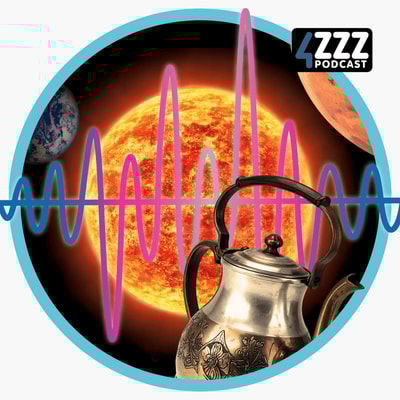
Speaker B:That's right. Apparently pandemonium. And that is the central claim that they're causing harm. But I wanted to address that. I wanted to bring up something that I heard at the OSPATH conference from a researcher who I quite liked, called Daniel Wright, and he brought up Bertrand Russell. So Bertrand Russell is a philosopher who came up with the concept of an invisible teapot or orbiting the sun. Now, stick with me here. This is relevant. So transphobes claim that there's this widespread harm, but they can't actually point to any evidence of it. Right. This is the same as Bertrand Russell's invisible teapot orbiting the sun. Russell was actually talking about this in the context of God and why God couldn't be proven or how God can't be proven. He said that if he were to Assert without any proof that a teapot too small to be seen by telescopes orbits the sun between the Earth and Mars. No one could prove him wrong. So imagine true. Imagine if there had been a 10 year disinformation campaign by rogue astronomers to promote this theory of the teapot orbiting the sun. And now thanks to a teapotist takeover of the USA and the uk, they had succeeded in infiltrating. NASA and the mainstream media were now both sidesing the teapot debate. That's where we are with puberty blockers and gender affirming medical treatment. The other side, when they're asked what are the actual harms attributed to puberty blockers, they say, like Hilary Cass says, they say, well there may be this harm and there may be that harm. They can't actually point to any specific harms. There is some evidence of potential harms and we can go into that, but they're not, they're not serious or life threatening. And as we've said before, all medication has potential side effects. Right? Yeah. So I think that's important to get to establish from the outset that when we get into this debate, we're really being drawn into a ridiculous debate about whether or not there's a teapot orbiting the sun.
Speaker A:Do you think this is a scapegoat from the real thing though, to distract you with this, with this teapot? I mean, because like, because saying, oh this may be this or this may be that, which is this argument. Like there may be the potential for harm, it's like, but there isn't.
Speaker B:Well we, that's the thing is we can't prove that there isn't. And that's the genius of the argument.
Speaker A:Right, okay.
Speaker B:The same way you can't prove that God doesn't exist. And that's why Bertrand Russell used that analogy, because he's saying, well look, you can come with, come up with tonnes of theories that I can't prove that they're not true. So what he's saying is that the burden of proof lies on whoever is making the unfalsifiable claim. So an unfalsifiable claim is like the existence of God. You can't falsify that, you can't prove that it's not true. Then again, you can't prove that it's true either.
Speaker A:Right.
Speaker B:So that's where we're at. Hillary Cass and people like her are saying, well there could be these harms and there could be these harms, they can't prove them. And then for some reason because of the media climate and because of the amount of disinformation and how hard it's being rammed down people's throats, we end up being the ones who have to prove that these claims are, aren't true. But how can you prove that a claim isn't true when you don't even know what the claim is? It's insane.
Speaker A:Yeah, it's like, it's kind of like it's a catch. It's a trap, essentially.
Speaker B:Yeah, it's a trap. And basically the other side has been telling us for a good 10 years that there's going to be a wave of young people regretting gender affirming care. And they've been telling us this for a while and that wave just doesn't materialise.
Speaker A:I can't see the wave. I'm still waiting with my surfboard.
Speaker B:So again, now if you say that, they'll say, well, but maybe they're not coming out because they're scared of the trans activists who are going to attack them. Or, you know, they're scared of being vilified by the trans community. Well, like maybe. And maybe there's an invisible teapot orbiting the sun as well. Sorry to distress that.
Speaker A:I'm right there with you. I'm right there with you, I think.
Speaker B:And one last thing on that. Even if there was a wave of young people regretting their transitions, and when I say a wave, I mean if, if the rate was increasing, but it doesn't appear to be, of course there are always going to be a few young people who regret it the same as there are always a few people who have bad outcomes from any medical treatment. Very few in this case. But even if there was a wave, why would you blame puberty blockers? Puberty blockers are reversible pretty much entirely apart from some possible minor side effects that we'll get into. But they definitely don't make any long term changes to your secondary sex characteristics. So why are they the problem? If you think people are going to change their mind, then puberty blockers are perfect because they pause them in that state and give them a chance to change their mind. The reality is hardly any of them do.
Speaker A:They're kind of like, puberty pauses.
Speaker B:Puberty pauses. Yeah, I forget. Oh God. There was a good way they described them in the Osparth Convention and I have completely forgotten. It's probably in my other notebook. I'll find it by the next.
Speaker A:Okay, that's fine. But if you got it, you know, I feel like if you're gonna believe you Know the teapot that you can't actually prove, Is there or not? There's really only one thing that I can guarantee.
Speaker B:From the calm waters of the Temple of Snootology, Snooty shares the message that everyone deserves to swim free. Trans rights are human rights, and in Snooty's waters, all are welcome. May Snooty swim forever in your heart. Authorised by the Temple of Snootology, Brisbane.
Speaker A:It's pretty much the only thing we can guarantee.
Speaker B:That's all we can say. So, again, folks, I did ride a manitou here this morning. I do it all the time. I come up the river from Newfound, get off at the wharfs.
Speaker A:This is how trans people get around, in case you're wondering.
Speaker B:Yeah. So. But I did want to say, though, generally, if. If someone, a CIS person with not much knowledge at all of puberty blockers comes to you with concerns and says, you know, oh, well, you know, I support trans people, but I'm a bit worried about puberty blockers. I think the first thing to say to them is, oh, really? Why? Like, what is it exactly that worries you? And chances are that I reckon in half of cases, they're not actually going to know. They're not going to have any specific claims that they're thinking about. And I think that you could summarise their feeling with a kind of, where there's smoke, there's fire analogy. Like, they're thinking, well, I don't know what I'm scared about about puberty blockers, but where there's smoke, there's fire. So there wouldn't be all this fuss about them if they weren't dangerous. Do you know what I mean?
Speaker A:Yeah, yeah.
Speaker B:And I think it'd be worth putting people on the spot about that sort of saying, oh, you're concerned. Oh, what are your concerns? And if they're like, oh, well, I don't know, but there's just so much fuss about them. And then you could say, well, so you're kind of saying, where there's smoke, there's fire. Right. And if they say yes, then you could say, well, did that apply with the climate crisis when there was all that disinformation around that, all the. The smoke around the climate crisis proved that there really was a fire in terms of that it wasn't true. Do you know what I mean?
Speaker A:Yeah.
Speaker B:Losing you.
Speaker A:No, I hear.
Speaker B:Did it. Did it apply with COVID vaccine? Just because a lot of people were saying that the COVID vaccine was so dangerous, did that mean that it really was that dangerous. Did it apply with QAnon? Because a lot of people thought that there was this Pizzagate controversy and all that nonsense. Did that mean that that was true? Like, just because a lot of people are talking about something doesn't mean anything.
Speaker A:Also information just, just people get really confused by this. There's a difference between information and knowledge. Is it, you know, there is, there is an innate difference. And when you're online, it's not a resource of knowledge. That's what. So when you go to university, when you go to, even when you're in school, they teach you about the difference between searching for like confirmation bias, like how you can type a question into Google to like literally reinforce your own thinking. Because the thing, the whole machine, the whole system is designed to confirm you, it's tailored for you. So you need to learn how to ask questions in the least biassed way you can to get facts. Because you have to sift through information to find knowledge. And this, all this stuff, all this, you know, puberty blockers are harmful for children. We're irreversibly harming them. First of all, that is not a fact. That's information you've heard. And information can be refuted and can be and argued because that's the whole point of information. It's almost opinion. It's like opinion, you know, and we've got to, we've got to start working towards like understanding our language. So what we're looking for is knowledge and facts around puberty blockers. And what there is none of them, none of them have shown any conclusive evidence that they harm children. They're used on children still to this day, whether they're trans or not.
Speaker B:And that's the other thing that you can say straight away, which we say all the time is, well, look, if they're that dangerous, how come they're, they're used on CIS kids for, with precocious puberty. They have been used for them since the late 1970s. Now when you say that, please also say they've been used for trans kids since the late 1980s. I'm really tired of people just saying this medication isn't experimental. It's been used for CIS kids for decades. It's been used for decades for trans kids as well. Okay, just make that clear. The. But you know, it's interesting because they come up with all these fear mongering claims, but ultimately they don't care at all about them being used on CIS kids. Not at all. I haven't seen any controversy about that from these people at all, then, then.
Speaker A:The real question, I suppose these, these, these gender scared people might need to be considering, what is it about the whole debate, the whole conversation around transness that is making you so scared and agitated?
Speaker B:Exactly.
Speaker A:Ask yourself what's coming up for you, because these transness and gender is so unbelievably personal that for you to have such a reaction, or for a transphobic person have such a reaction over someone else and their sense of self is really confusing to me.
Speaker B:Well, as I've said before, I think it's important to approach especially. So, okay, someone comes to you with concerns about this, I think it's important to not immediately roll your eyes and immediately presume the worst of them. Yes. They might be working from a place of transphobia, they might not be. They might just not be very well informed. Right. And so I think it's important to empathise with the media climate that they're in. So, like, you were just talking about doing a search online and how you can kind of bias the search inadvertently. But I did a search for puberty blockers on YouTube yesterday just to see what was there. I just wrote in puberty blockers. So it was a completely neutral term. Now, it may be my algorithm, because I do chase up transphobic shit, but I also chase up good information. Right?
Speaker A:Yeah.
Speaker B:So I would have thought my algorithm's probably got both. Well, it does, but I would have thought it'd be roughly equal or maybe tending towards the pro trans side. But what I got was one positive video which popped up because. Because I've watched a lot of videos by that creator and then about 10 negative scaremongering videos about puberty blockers. And that was with a neutral search term. So this is the climate that people are coming to us in. And so. And as I've said before, I think, look, imagine there really was an epidemic of doctors harming kids by giving them bad treatment. Like this often gets compared to bi transphobes. Again, gets compared to the opioid epidemic. Now that's ridiculous because in the case of the opioid epidemic, there were easily provable harms. Right?
Speaker A:Yes.
Speaker B:But that is what it's being compared to and that is what some parents or people might have seen. Right. And so if they're coming to you with that in their mind, then it stands to reason that they are worried about children potentially. And they're not just meddling with other people's body bodily autonomy. That. Because ultimately, you know, I mean, when kids are put on Puberty blockers. They're often 12. If they were dangerous drugs, then I think it would be important for society to. Or for someone to stop these rogue doctors from doing this experimental, dangerous treatment. If that was the case. But it's not the case. Yeah, but I'm just saying that if we have empathy for the fact that some people might believe that's the case case, then I think we can proceed with trying to reach those people rather than just rolling our eyes and going, oh, you're another transphobe. Do you know what I mean?
Speaker A:Yes. And then we're also, you know, they're painting this picture of them and us and very black and white, which is not actually going to help us get to the real solution, which we can all agree on, which is that we care that kids live a long, healthy, happy life. Because that's actually the thing that we all have in common here.
Speaker B:Yeah, apart from a few manipulative anti trans campaigners who don't give a shit about that, I don't think. Yeah, but they're very few. I think people do care about.
Speaker A:Those people are red pilled snowflakes. How many genders are there? I don't know. I just got here. You're listening to transmission on 4 triple Z, where we play music specifically by transgender diverse artists for two hours every Monday, 10 till 12. My name is EZ. I use HE, him, pronouns.
Speaker B:My name's Bet, I use she, they pronouns. And I am stuck in a never ending toxic love slide. Oh, yeah, it's a good phrase. I only just really woke up to that phrase then.
Speaker A:Toxic love slide.
Speaker B:Yeah. Hi to Mickey and Melanie. Love you both.
Speaker A:Hi. Big fans.
Speaker B:Yeah. Toxic love slide. Jesus Christ. That's like being on Grindr. Yeah. Except I don't even know if love enters into it, of course.
Speaker A:It's just toxic slide. Wish I had a slide guitar on me right now for a nice little. Yeah. Anyway.
Speaker B:Okay.
Speaker A:Transmission. We're talking puberty blockers. And the discussion around that. Well, we are. It's necessary.
Speaker B:It's an ongoing thing.
Speaker A:It is ongoing.
Speaker B:Yeah. Look, we do have another episode. Episode on puberty blockers. And the reason why I wanted to do this episode was because I've been asked a couple of times recently for a simple summary of the evidence around puberty blockers or of what they should say if someone comes to them with concerns about puberty blockers. So I listened back to the podcast episode that we did and I was like, yeah, that ain't it. Because that was more. It was more for within the community, sort of interrogating some of the. Our. Our forms of messaging around wasn't so much for CIS consumption. So this one's supposed to be a bit more broad reaching. I still don't know if I'm there yet.
Speaker A:This is for everyone.
Speaker B:Another one in six months.
Speaker A:If you're sis, you can tune back in.
Speaker B:Or if you're trans and you're training to interface with CIS people, which I encourage.
Speaker A:Yeah, no, you should, you should if you can, if you can, and with capacity. And don't forget to touch grass and drink water and that stuff too.
Speaker B:But when you do that, when you do interface with the CIS community, I wanted to say, I think so. I have the tendency, as you would know, as of kind of getting in the weeds sometimes and getting bogged down in facts and evidence. And I'm going to be honest, I don't think that facts or evidence usually win an argument or maybe they win an argument, but, like, are you trying to win an argument or are you trying to reach someone?
Speaker A:Yeah. What's the goal here?
Speaker B:Yeah, and so, like, facts are evidence to me. I think of them in two ways. One is, well, if you're, if you're interacting with someone and there are other people watching and this person turns out to have drank the transphobic Kool Aid, then you want to be able to neutralise their nonsense effectively. An evidence can be good for that and it shows that you know what you're talking about. But the other one is, I think of it as kind of like the special sprinkles, like the special seasoning on top of your argument. If you kind of, if you approach the, the topic with empathy, maybe you bring in some interesting or funny analogies or metaphors like the teapot, a bit of humour and you think about what, what is it that the person's asking you?
Speaker A:Yeah.
Speaker B:And try to work out, well, what do they actually want? What are they looking for here? Obviously we're not just going to tell them what they want to hear, but there will be some particular kind of information that they really want, but they don't always know how to ask me.
Speaker A:Yeah, it kind of makes me think of like, so many, many years ago, acupuncture, acupuncture was considered like a pseudo science thing. It wasn't like, you know, quote unquote, a real medical practise or whatever. And, and therefore it didn't, it wasn't covered by private health, um, because it wasn't whatever, proven enough to be effective or legitimate. Um, however, my mum My late mum, she used to get acupuncture, probably all my life. Like, I've known her to go get regular treatment. Um, and she would be like, it works for me, it works for me. It's amazing. It helps me so much. Um, and I feel really good. My life is so much better because of acupuncture. And then I remember showing her this article being, you know, some kind of devil's advocate teenager that I was, and being like, well, it doesn't actually work, Mum, because there's no evidence for it. And I remember her saying, well, whether there's evidence or not, I feel better and I'm happy and it's helping me. So f you. That's what she said. And then later. Later, surely enough, of course. And now it is part of private health and you can. It is a legitimate medical practise and has been legitimised in the West a lot more and we. We have more conclusive evidence. But really the point that I'm trying to make is that in that moment where I was trying to be some. Poke my mum about this, I realised that if it's helping someone, if this thing is genuinely making someone's quality of life better, why would you try and destroy that?
Speaker B:I guess if you didn't. If you didn't believe that it was making their quality of life better. So someone who didn't know your mum so well and didn't trust. Didn't trust her own opinion, might have thought, wow, well, it's just a placebo effect and therefore she's just being fleeced by some unscrupulous.
Speaker A:Even if it was a placebo effect, and we know this about placebo, even if it was placebo effect, it still helps.
Speaker B:Sure. But I don't want to get too far into saying that puberty blockers are a placebo effect, because actually, well, they're not.
Speaker A:Yeah.
Speaker B:I mean, they clearly do work for what they're intended to do. The problem is that people assess their effectiveness in terms of things that they're not intended to do. And we can get into that in a sec. What I did want to say, though, another silly metaphor perhaps, is that I'm going to take. So I enjoy martial arts analogies sometimes and I think we should today at least take a karate approach rather than a Brazilian jiu jitsu approach.
Speaker A:All right.
Speaker B:Meaning that we're not going to take this to the ground unless we have to.
Speaker A:Yeah.
Speaker B:And taking it to the ground is like getting in the weeds, right?
Speaker A:Yeah.
Speaker B:So if we encounter an opponent who Is insists on taking it to the ground by citing a whole lot of statistics and stuff, then we may have to engage on that level.
Speaker A:We may have to get the jiu jitsu out.
Speaker B:Yeah, but we're going to aim for a karate approach and that's going to be that we're going to maintain our distance, right?
Speaker A:Right. Yes.
Speaker B:We want to be within striking distance. We're not going to run away from a plane, but we're not going to take it to the ground if we can avoid it. Okay, so in other words, we're going to, we're going to zoom out a little bit today and not get so deep in the weeds as I sometimes would. But I think that we have to get a little bit in the weeds just to address what are likely to be people's main concerns. As I said, probably in many cases they don't know what their main concerns are, but in some cases they're going to be a bit more informed and their main concerns are going to be one, bone density, as we've all heard before. Two, cognitive development. Three, the fact that there is supposedly only low quality evidence to support the use of puberty blockers. And this kind of ties in with the acupuncture thing because there probably was some evidence, but it was probably seen as low evidence. Low quality evidence. Sorry. Um, and the fourth would be that they think that it's just a phase and that kids are going to change their minds. Now, as I've already said, let's, let's deal with the fourth one first. It's simple. If kids do, do change their minds while they're on puberty blockers, no freaking problem. They just stop puberty blockers. Puberty resumes as, as if it's never been paused. Life goes on. Yeah, there may be some small side effects of bone density perhaps, probably almost certainly not anything to write home about. Nothing too serious, but there isn't going to be any life changing, irreversible changes. So puberty blockers are perfect if you think that kids are likely to change their minds or that this is just a phase. Now, I don't personally think that. I don't think that very many kids are changing their minds. And so I personally, and this is. So I am conflicted here arguing for puberty blockers. I personally don't think they're always the best treatment for kids.
Speaker A:Yeah.
Speaker B:And we can go more deeply into that in a minute. But basically I think the puberty blockers are used so often for kids who want to medically transition because that's what the government says. That's what the law says. Now, in some parts of the world, like in the States, United uk, kids literally have to have been on puberty blockers for a year before. Well, this was before they were banned. Sorry. So even in the quote unquote, good old days when there was a functioning gender service for kids in the uk, those young people would have to be on puberty blockers for a minimum of a year before they were even allowed to access hormones. And that would apply for anyone under 18. So you had this ridiculous situation where 16 year old trans folks were going on puberty blockers when they'd already been through puberty and all that was happening was it was causing menopause symptoms, giving them terrible mental health side effects and some physical side effects, and then that's.
Speaker A:Where you have real negative impacts of blockers. Exactly.
Speaker B:And then, and then that would show up in UK studies which were cited by the Cass review, as in if the problem was the drug and not the ridiculous arcane bureaucracy that was administering the drug. So that is first thing, that's completely ridiculous. The second thing is, if there are potential side effects for bone density, and I'll be real with you, there are, then don't keep young people on puberty blockers indefinitely. In the UK they were kept on them for up to 10 years.
Speaker A:Oh my goodness.
Speaker B:Because of that arcane, ridiculous bureaucracy. Now that's just crazy. You know, they might have gone on at 10 or 12, they're still on puberty blockers at 20 or 22. Their body hasn't developed in any, hasn't developed any secondary sex characteristics like their, their peers have developed in that time. They're going to be outcast among their peers potentially. They're going to have physical side effects from that. You can't survive without sex hormones indefinitely. It's complete insanity. And that is partly why that showed up in the evidence and made it look as though there were these potential side effects. Well, a lot of those side effects can be easily avoided with more reasonable rules around how kids access this care.
Speaker A:Right, yeah.
Speaker B:Now even here, some young people are made to wait until 16 between before going on HRT because they generally require the consent of both parents unless they are 16, so that sometimes they can get on at 14. And to me that makes a lot more sense. Now the only justification for. Well, there are two justifications for putting young people on puberty blockers. One is that they supposedly need time to think and time to mature before they are ready to make this Big life altering decision of going on hrt. I call BS on that. Yes, sometimes. Sometimes they do. Very rarely, I would say. And in the case of, as we very often see young people, especially trans femmes, who have identified this way openly with, with their parents since they were four or five, they're not going to change their mind. Like they get to 12, puberty starts and I'm just saying 12, it's different for everyone. But just as an example, they've already identified that way non stop for seven years without any lapse. They will not change their mind. So why put them on puberty blockers? I think, and I've spoken to some physicians about this who work in this field and they agree with, with me that there would be no harm in putting them on HRT straight away. Then they can go through their puberty at the same rate as their CIS.
Speaker A:Peers and then they'd be less distressed. You have less incidence of mental health and also probably physical health. The amount of young people, trans young people with eating disorders to try to control their bodies as a result of this unnecessary delay in treatment and care is actually so harmful. It is far more harmful than this whole puberty blocker debate to begin with.
Speaker B:Yeah, totally. And well, and this is the other thing. We have these very long waiting lists and in the uk the waiting list, as I've said before, was up to five years for a young person trying to access jids, the Gender Identity Development Service through the nhs. Here we had like one to two years at the QC cgs, the Queensland Children's Gender Service. That's. It's a terrible thing like that. Their clock is ticking, their biological clock is ticking at that point. Can you imagine the trauma of being made to wait even two years before you can even see someone to even start discussing accessing treatment?
Speaker A:Yeah.
Speaker B:And I wanted to say, actually this is a bit of a digression. Oh no. Maybe I'll bring it up later if I have time. All right, don't go too far in the weeds. Bet. Stop it.
Speaker A:Okay, we'll get out of the weeds. You're listening to transmission on 4 triple Z. My name is EZ, he, him, bet she or they. And we're gonna have more chats around some. We're talking about puberty blockers, but also how to like just navigate discourse around conversations with people who are like, this is harmful. And we're going, well, actually, what do you, what do you know about it? You know, so we're having these conversations and thank you to Stacy for messaging in who Made a suggestion on some resources for essentially approaching the ways that trans people are stigmatised in a similar way to people who have alcohol and drugs, drug use or substance use.
Speaker B:So it's called the Common Cause. Australia is the org. And it's. It's called the Drug Stigma Message Guide. We brought it up.
Speaker A:Yes. And we've had a. We've had a peek, we've had a look. Yeah, we had a proof. It's not. It doesn't all completely apply, I think, but there are definitely some good messaging in there. Some good messaging in there and some good notes that we can take from it.
Speaker B:One thing I really liked is it says, point seven, put the people who perpetuate the stigma in the frame.
Speaker A:Yes.
Speaker B:Which is how. And, and actually I meant to do an acknowledgment of country and history at the start of all this in which I would have said, look, yeah, this conversation takes place on stolen land. Also, there's a genocide in progress currently, which we're all aware of. It's being live streamed. Also, climate change is a thing and it's pretty damn scary. And also, this conversation takes place about 10 years, years into the War on Trans Kids, an ongoing disinformation campaign that is specifically designed to design to deny trans young people this health care. And. And looks like it is going to be expanded to try and deny that health care to trans adults as well. So I'm all about putting the frame on those people who are at war with trans kids. I want to do that more and more often and I'm always trying to spread that message.
Speaker A:Yeah. And it is a war. It is a war on children. And it's really.
Speaker B:It's awful.
Speaker A:It's so awful.
Speaker B:Do you want to read your poem yet?
Speaker A:I do, I do. I can read my poem. I did. I did want to lead into with it, but that's okay.
Speaker B:Oh, do you want to do it at the end?
Speaker A:No, no, no, no. We could do it now.
Speaker B:Okay.
Speaker A:Yeah. Okay. So just because, like, you know, I like a little bit of injection of hope and, and love here. And I'm going to be reading from. I've read from this book before on transmission, although it was a different time slot. This, this is an anthology of queer and trans black writers of Latin American descent. And it's called When Language Broke Open. And this is edited by Alan Pelez Lopez. And the particular poem that I'm going to read is called Proximity, Intimacy, Togetherness by Dora Santana. And. Yeah, well, let's get into it. The Masters they woke up in the same house and they did not know her. They woke up and ate her food, but they didn't know the taste of her dreams. They woke up and told her child to be quiet, but they didn't know the sound of her anger. They woke up and told her to be awake as if they didn't know she needed sleep. The mother she woke up under the same sheets but didn't know her child Tied the fabric around her waist into illicit dresses. She woke up in the same house, but they didn't know the smell of the house she longed to have as her own. She woke up in the same house but they didn't know her waking up was her rebellion. The lover he woke up in the same bed but he didn't know the texture of her heart. He woke up in the same bed but didn't wake up again. He woke up in the same bed but he didn't know the actions to I love myself and I love you. The child she woke up in the same house but they didn't know the child was a girl. She woke up in the same house but they pretended she was not there. She woke up in the same house and they didn't know her imagination was her playground. She woke up in the same house but she didn't know she would come from the future to hold her own hand. They all knew the closeness of distance. In my attempt to get closer, I asked mama, what did you do when your eyes were heavier than the world outside of your body? You wake up, my child. You wake up. There you go, Dora Santana. And it's about time that we all woke up. I don't understand. You know, there's a whole anti woke thing and I'm like, why don't you want to be awake? Like people are like, oh, woke. Okay, go back to sleep then because you're really annoying.
Speaker B:Yeah, yeah, it's strange.
Speaker A:Yeah.
Speaker B:Ray just said. Oh my gosh, I love the poem you just read.
Speaker A:Ah, you're welcome. There'll be more. There'll be more poems coming throughout time. I do. I'd like to have bit more injections of things like this. So yeah, got the time, the breathing room. So. Okay, so what else, what else is going on?
Speaker B:Oh well, I'm briefly going to go.
Speaker A:To the floor Brazilian Jiu Jitsu.
Speaker B:But you wanted to mention the Anti Trans Disinformation handbook which we will link in the show notes for the podcast.
Speaker A:Episode and also on the transmission socials at Transradio with a Z. The anti disinformation Trans Anti Trans Disinformation Handbook was put together by Transjustice Project and it is a really. It's a simple guide for media, civil society and governments for combating any trans disinformation and it's quite a hand. Like it's handy. It's a handy handbook. That's the whole point of it and it's quite concise. It will give you some nice direct points as well to touch on. So yeah, that'll be around too. You can also head to transjustice.org au go to their resources page. There's a few things there, not just the hand the Disinformation Handbook, but there's also CASS Review fact sheet if you wanted to look at some actual facts, including Queensland Trans Health Review fact Sheet. This was back in June though, so it's a little dated now. However, it is still relevant. There's information there is still relevant. So you can take a look at. All that can recommend is a great resource.
Speaker B:I am also going to link and maybe we want to put it in the socials, going to link to Cal Horton's blog, Puberty Blockers, an overview of the research. Now it's. It's pretty dense but it's the best. It's the best resource I can find at the moment. If you want to look at the facts, as we've said, facts are always, not always going to help you in these conversations, but they're there if you want to brush up on them. Briefly though, I did just want to briefly go to the ground for a quick bit of grappling with some facts. So the bone density claim, there's a study that follows the Dutch cohort, so called the Young People. Actually there's a couple of studies that follow them, have followed them since the mid-1990s. These are the first young people in the world who trans young people who were put on this treatment. There is no report of any adverse effects around bone density in any of that cohort. So absolutely, I think that's good. However, the risk is well known. Dense bone density is monitored. Australian Standards of Care recommend HRT earlier if it is a problem. Doctors know that this is a potential problem, they're watching out for it. And again, if we weren't stigmatising kids for going on hrt, if we weren't making out that HRT was this huge and dangerous thing, then we would probably just put them on earlier if we noticed that there was a problem with bone density because we are monitoring it. So again, it's not a big Risk cognitive development. There's only a few studies on it. There was a systematic review into cognitive development and puberty blocker usage. Every study except one out of 16 were on CIS kids. The one that was on trans kids was actually only on a single trans patient. So there has been one other study since then. Arnold, arnoldson et al. 2022 looked at IQ prior to gender affirming medical treatment, that's blockers and hormone therapy and educational achievement after treatment, and it concluded that the association between those two things, between your IQ before you got treatment and your education, educational attainment after treatment afterwards, appeared to be similar to the general population. Now, I'll be real with you, I don't think that that study is super well designed. I'm not a physician, though, so, you know, don't take me as gospel. I think we could do better. But as Cal Horton says, do we want to do defensive practise? Do we want to base all our studies around debunking stuff that the other side comes up with? I don't know. In this case, I think maybe cognitive development might be worth looking at. It doesn't appear to be a huge problem, though. Again and again, if we think that it is potentially a problem, the answer would be to put kids on HRT sooner. So I'm getting off the floor now. That's enough bjj. It is interesting to note, though, I will say again, that they're not at all worried about cisgender kids with precocious puberty. Even though the systematic review that looked at IQ that showed some, not generally, not statistically significant reduction in IQ for CIS kids that went on blockers, so that is a potential thing, but they're not worried about CIS kids. It's amazing. So clearly this is just another.
Speaker A:It's interesting, though. I think you could, I guess when we talk about arguments, one of the things you could say is, you know, oh, well, puberty blockers, oh, they're terrible. Oh, they're harming kids. All this damage and you go, well, they're giving them to CIS kids like they're giving them. They're still giving them to kids, like it's not.
Speaker B:And that really brings us to what they're really worried about, which is something that is entirely unevidenced. There is no evidence for it, and that's that puberty blockers are supposedly trans in kids that they're, quote, unquote, locking in a trans identity. Now, I'm not going to go into debunking that. Debunking doesn't always work. Anyway, there is an episode that we did or that I did called the 80% desistance myth. Look it up in the podcast, people. Pretty much it's all. We're going back to that. That is a central claim that the other side has, that if you don't medicate trans kids, that they will just grow out of it. If there's any truth in that at all, it would be because of minority stress. Once they have missed the window to avoid their endogenous puberty, the changes that would happen with that, that maybe some of them go in the closet because they think they're never going to pass. Maybe that's true. There is no evidence for that. So, yeah, yeah. The last thing I wanted to address, the last claim that you're going to get is that there's only low quality evidence for puberty blockers. And this is probably, this is said very often. It might even be the most likely claim that you're going to get. There's only low quality evidence to support the use of puberty blockers for trans young people. As I've said before, that's a scientific term. It relates to a particular way of assessing studies in a systematic review. It's true. If you assess studies using this particular system, the grade system, then the research on puberty blockers is rated as low quality because it doesn't include any random controlled trials. We've spoken before about why RCA are unethical and won't work for this cohort. And we're going to see that play out in the UK if they go through with the ridiculous and unethical and frankly terrifying puberty blocker trial that they have slated for, I think 2030 or 2031. We're going to have a lot of suspense waiting for that one, and it is almost certainly going to be disastrous. So I actually hope it doesn't happen. But in terms of, I mean, there is another problem with the way they. They weigh up the evidence is the questions that they ask in these systematic reviews are not relevant questions. So, like, they ask, do puberty blockers reduce gender dysphoria? No, people, they don't. That's not what puberty blockers are for. Think of puberty blockers. And this bit's important. Okay, if you have not listened to any of my babble for the last five minutes, this bit's important. Puberty blockers are like inoculation. They're like getting, you know, a COVID vaccine shot. They are designed to prevent against gender dysphoria. They're not designed to cure gender dysphoria that already exists. Why would they do that? If you have gender dysphoria already, they're just going to pause you in your development, where you are. So if you're one of those poor young people, people in the UK, who went on blockers at 16 or 15, and you already had all of the changes associated with your endogenous puberty, you already have a lot of gender dysphoria about that, and puberty blockers are not going to do a damn thing to fix that, because they don't change your secondary sex characteristics. Also, there's another myth that puberty blockers are a treatment for distress. Again, if they are, it's only because if you've had to wait on a waiting list and go through a rigorous selection process and evaluation process to get on them, then you're probably pretty damn stressed out because your puberty is progressing at the same time. And when you finally get on puberty blockers, yes, it's going to relieve your distress, but the distress was just artificially created by this artificial scarcity because the bureaucracy wouldn't let you have the treatment earlier. Does that all make sense?
Speaker A:Yeah. You can pinpoint stigma, you know.
Speaker B:Yeah. So what do puberty blockers do? To summarise, puberty blockers pause puberty, end of storey. Why is that a useful thing? Because it helps to prevent against the catastrophic negative effects on dysphoria and distress and depression that could occur in that young person if we don't pause puberty, that's it. And the other thing they do is they fulfil government requirements. They fulfil what the bureaucracy wants. The bureaucracy wants trans kids to not go on HRT when their puberty first starts. So trans kids are not allowed to go on HRT when their puberty first starts, so they have to wait. And puberty blockers are the solution for that. I'm being real.
Speaker A:Yeah. Big love to our trans young people in our community at the moment. It's a really hard time out there and there are lots of us trans adults and allies, neighbours, friends, family out there that are trying to fight for your rights and defend your right to live exactly the way that you want to live. Open Doors Youth Service is a Southeast Queensland support service for lesbian, gay, bisexual, transgender and intersex youth aged 12 to 24 and their families. Open Doors believes that all young people have the right to explore, experience and express their gender and sexuality in safe and supportive environments and offers a range of programmes and counselling Services as well as support services for parents of LGBTI youth and community education and training. For more information, visit their [email protected]. sponsors of 4zzz. Yours in Transmission on 4zzz. My name is Ez He. Him.
Speaker B:Bet she or they. Thank you.
Speaker A:Or they. Yeah, yeah. I was watching the new Stranger Things recently and there's an. In one of the episodes, I'm not. This is not a spoiler. I'm not spoiling anything. It was just, it was just a line and I had a laugh to myself because I'm so trans. There was one of the characters goes, I can feel them, they're coming. And I was like, oh, the Demogorgons uses they them pronouns, but it was just multiple. So whoops, my mistake.
Speaker B:Anyway, so you started to hear plural they as singular.
Speaker A:Now, occasionally it depends on like obviously context is really important when it comes to pronouns.
Speaker B:But yeah, well, be careful because if one day someone says, here they are, the Nazis are coming or something, they are non binary, you might be like, oh, it's one non binary Nazi is coming.
Speaker A:Well, I think you could probably use your powers of deduction here with that.
Speaker B:Plural of Nazis, I guess. But yeah, there must be a way to make it more confusing.
Speaker A:Them Nazi, you know, they be coming.
Speaker B:That's right. Single non binary Nazi.
Speaker A:It's okay.
Speaker B:I did want to say before we go. Yes, Another reason why I'm not too keen on my episode or on the episode that we did of on puberty blockers earlier this year. Now when I listen back is that I use the term gender dysphoria a lot. And I think that's because I was citing a bunch of articles that used, used that term and I just got used to using it. I'd really like to move past using that term. I mean, yes, it sometimes is necessary. If you want to talk about the distress that arises from gender incongruence, then it's a good term for describing that. But if you're describing the diagnosis necessary for young people to get treatment, then I really want to not focus on dysphoria because I don't want to physicians to think that a young person has to be experiencing distress in order to deserve treatment.
Speaker A:Yeah, it's a bad metric.
Speaker B:Yeah. And. And there is that. There is that floating around out there that like, well, if these young people aren't in distress, then we shouldn't be helping them. And that, that to me is just a very western prevention cure kind of thing going on where like in the west we Kind of don't believe that prevention is better than cure. We go for cure in the medical system, so we wait for problems to arise and then we try to fix them. Right. But if we did things like getting people to eat better and stuff like that, then we'd be kind of working on prevention instead. And in the same way, if. If a child has gender incongruence, and gender incongruence is a recognised diagnosis, it's in the IC CD 11, the World Health Organisation publication, and gender incongruence is the diagnosis that we should be working off. Gender incongruence does not require distress. It just requires a strong feeling that your gender identity does not match the gender that you were presumed to have at birth. That's all. We don't need to be talking about dysphoria all the time unless we are specifically talking about distress. I just wanted to make.
Speaker A:And also for any listeners out there who are unfamiliar and just tuning in with trans issues and bodies. Trans bodies. Trans people are not born in a wrong body.
Speaker B:Oh, God.
Speaker A:I really dislike this narrative that, that trans people like, I'm a trans person. My body is not wrong. My body is doing everything it is supposed to be doing for me. Right. And I went and sought medical treatment to help align more. Align myself with my body. It has nothing to do with my body being wrong. We don't think our bodies are wrong. We have an incongruence, which is why that word is being used. It is something that is misaligned and something feels off. And that was kind of the majority of my life I have been going, something feels just slightly off or wrong about me and I don't know what it is. And that's what gender, trans affirming, gender affirming medical care has done for me. It has aligned what I see of myself and of myself inside myself with the body I have. It is not. I am wrong. There is nothing wrong about me or wrong about any trans person for that matter. Even the trans people who choose not to take medical interventions to help them align themselves either. They do not need to do that. It is not a requirement and we do not need to be in distress to do so.
Speaker B:Thanks for saying that. Because I encounter that born in the wrong body thing all the time.
Speaker A:Constantly. Yeah.
Speaker B:And it's mostly coming from the other side now. The other side has picked up on it and they.
Speaker A:That's because they know we don't like it.
Speaker B:Oh. It's not just that. It's because they know that it, it's. It's this unfalsifiable thing. Like if I say I'm born in the wrong body, then there it's, it's just like. Well, what does that even mean? Like, it's, it was only ever intended as a metaphor to help CIS folks understand us to begin with. I don't think many people literally thought that they were born in a quote unquote.
Speaker A:Well, I hope so. That's what I wanted.
Speaker B:Unfortunately, it's filtered down to young people now and young people sometimes say that, but you're right, it's. It's actually stigmatising in itself. You're not born in the wrong body. You're born in a body which you would like to change a little bit.
Speaker A:And your body will change whether you're trans or not. Puberty changes you regardless of gender identity, age, ageing, menopause, all of these things alter your body forever and change it in a completely different way. Because all of our bodies are constantly in transition and constantly in flux. Whether that's hormones that you produce naturally, hormones that you take, hormones that you're given, hormones that happen because of stress, because of societal pressures, hormones that change every 10 to 15 freaking minutes because your body is just a sack of meat and chemicals. That's all we are. And, and we can alter that however we want. Because isn't that the powers that we have as humans to choose what we put in our bodies and how we are influenced? You know, we take caffeine, we take alcohol, we take nicotine, we take all these things. They're all chemicals that alter and we now know change our, the fabric of our minds.
Speaker B:Well, interestingly enough, when we take oestrogen or testosterone, we're not even taking chemicals. We're taking things that are already in our bodies. We're just changing the ratio of those hormones in our bodies.
Speaker A:Oh, my God. We're just modifying our body just like anyone. And what we all do all the time. They're just body mods. Trans people. Body mods. That's what we're talking about.
Speaker B:So I hope I didn't muddy the water even further for you people with today's show. When I listen back, I'll be very critical, I'm sure. And next time we talk about beauty blockers in another six months, I will endeavour to do less BJJ and more karate and to not indulge in any teapotism.
Speaker A:Yes, yes, go cheque out that teapot theory. You've been listening to transmission on 4 triple Z. If you'd like to listen back to any of our other broadcasts, you can listen to the full broadcast with music and all that good stuff on the 4 Triple Z website 4zzz.org au head to our programme page Transmission. You can go back and listen to a whole bunch of episodes that way. You can also head to the Community Radio plus app and listen to our podcasts which are nice, condensed, sharp versions of the show, minus the music of course.
Speaker B:And if you're interested, the 80% desistance myth episode is relevant. And the other one probably is the D word that's about so called D transition, which I think I succeeded in not mentioning at all today except just now.
Speaker A:Oh, there you go. So you can choose to listen to that and ignore that last word by Bet if you'd like.
Speaker B:It's just the D word.
Speaker A:Just the D word. Yeah. Head over to the Foot. Also, we will share a bunch of things that we've talked about on the Transmission socials at Transradio with a zed follow us on the social media.
Speaker B:Oh, we forgot to mention our SIS head.
Speaker A:I was just about to give a shout out thank you. Thank you to Pete for messaging in your love of the broadcast and how as an ally you have learned a lot through the show.
Speaker B:Thanks so much, Pete.
Speaker A:Yeah, and everyone else who has shown support for the broadcast. We're genuinely so grateful and to you just generally for Triple Z listener, thank you for supporting trans people. Thanks for listening and oh, and there's.
Speaker B:One last thing I wanted to say. If there are any other kind of left leaning sensitive guys out there, preferably kind of fit, I mean like. But anyway, if you see a six foot one long legged trans femme having coffee, just chances are it might be me. Um, don't be shy to say hi.
Speaker A:Yeah. Bets looking. Is Bets dating?
Speaker B:No, I never am dating because I never meet the lefties. It's all these conservative dudes on Grindr.
Speaker A:Lefty heterosexual men. Bets looking for you. You can Text in on 042626733. Love you all. You're amazing. Stay true. Trans power.
Speaker B:Yeah, keep it real.
Speaker A:Keep it real. West Coast. Thanks for listening to Transmission. Catch us every Monday live on 4 Triple Z from 10am or listen to our podcast on the community radio plus applause.
Hosts: Ez (he/him) and Bette (she/they)
This week Ez (he/him) and Bette (she/they) are in studio discussing "What we talk about when we talk puberty blockers." I know another episode on these dam blockers! But don't worry we're trying to help you and your potentially cis allied crew with some ways to combat the hate and dis/misinformation war on trans kids. Bette and Ez mention some resources that can arm you with tools to fight back. Such as the Trans Justice Projects - Anti-trans disinformation handbook and Puberty Blockers Overview of the Research.
Ez also updated you on community events and news such as The Australian Bureau of Statistics and the 2026 Census, and in the UK Transgender Women and Girls banned from GirlGuiding and Women’s Institutes. Ez later in the episode reads a poem by Dora Santana - 'Proximity, Intimacy, Togetherness' from the book 'When Language Broke Open: An Anthology of Queer and Trans Black Writers of Latin American Descent'.
Timestamps and Links;
- 00:00 - Acknowledgement of Country
- 00:20 - Welcome to Tranzmission
- 03:24 - Community News: Census and Girl Guides - Links Below
- 08:46 - Community Events: Shanty Galan, Whoroboros Homecoming, and Krampus Bash - Links Below
- 12:03 - WWTAWWTA: Puberty Blockers - Links Below
- 41:18 - Poetry Break: Dora Santana - Proximity, Intimacy, Togetherness from When Language Broke Open: An Anthology of Queer and Trans Black Writers of Latin American Descent ed. Alan Pelaez Lopez
- 44:21 - WWTAWWTA: Puberty Blockers - Links Below
- 56:10 - Terminology: Moving Past Gender 'Dysphoria'
Support Services
- QLife - 1800 189 527
- QC LGBT Mental Health Services
- Open Doors Youth Services Inc.
Community News and Events Links:
- The Australian Bureau of Statistics and the 2026 Census
- UK Transgender Women and Girls banned from GirlGuiding and Women’s Institutes
- Hayley Williams Interview
- SHANTY GALA with The Salty Sirens @The End Bar Tue, 16 Dec, 7pm - 10pm AEST
- Whoroboros Homecoming Dance @The Cave Inn Thu, 18 Dec, 6pm - 10pm AEST
- A Bushed AS Krampus Bash IV @The Cave Inn Tue, 23 Dec, 7pm - 10pm AEST
WWTAWWTA Links and Research
- Temple of Snootology
- Common Cause: Drug Stigma Message Guide
- Anti-Trans Disinformation Handbook
- Association between pre-treatment IQ and educational achievement after gender-affirming treatment including puberty suppression in transgender adolescents
- Experiences of Puberty and Puberty Blockers: Insights From Trans Children, Trans Adolescents, and Their Parents
- Dr Cal Horton's Blog: Puberty Blockers – Overview of the research
- WHO - Gender incongruence and transgender health in the ICD
- Debunking the 80% “Desistance” Myth
- The 'D' Word
📸 ID: A teapot floats through space around the sun between Earth and Mars. The Tranzmission logo is in the mid ground with the 4zzz Podcast logo in the top right foreground.
4ZZZ's community lives and creates on Turrbal, Yuggera, and Jagera land. Sovereignty was never ceded.
Produced and recorded by Ez at 4zzz in Fortitude Valley, Meanjin/Brisbane Australia on Turrabul and Jaggera Country and audio and cover image edited by Tobi for podcast distribution for Creative Broadcasters Limited.
Backing audio and sound effects provided by nicolasdrweski - guitar slide.wav and Music Word - Poetry