Methodologically Robust
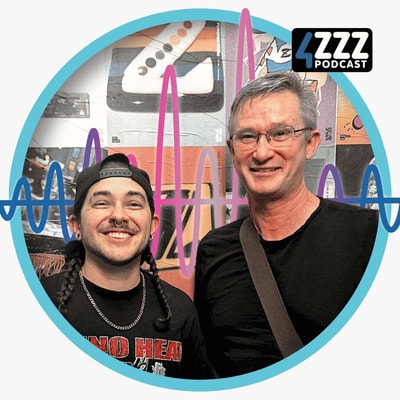
Hosted by Ez (he/him) and Bette (she/her) with Special Guest Dr Stuart Aitken (he/him)
Transcript
At 4ZZZ, we acknowledge the traditional owners of the land on which we broadcast. We pay our respects to the elders past, present, and emerging of the Turrbal and Jagera people. We acknowledge that their sovereignty over this land was never ceded, and we stand in solidarity with them. You're listening to Transmission on 4ZZZ, amplifying the trans and gender diverse community of Meanjin, Brisbane, and beyond. You're listening to Transmission on 4ZZZ, and we only play trans and gender diverse musicians and artists. And recently I had a couple of artists email me directly and ask if I would please play their music. And I have in quotations both of these bands saying, None of our members are trans or gender diverse, but we're allies and we still would love you to play us. Um, no. That's not how platforms work for amplifying those voices. I'm really glad that you're trans supportive and that you support trans musicians and trans people in those spaces. However, this platform is specifically for those artists, and I'm glad that you're an ally. Unless a trans person is texting in and requesting a song, I'll play any request. from a trans person because a trans person has asked for it. But, um, if you are not yourself trans, um, I will not be playing your music. Um, nice try, but there are plenty of other shows on 4ZZZ that you're welcome to submit your music to. We obviously love local musicians and local artists, and we want to platform you. So by all means, keep sending your music in, and I'm happy to flick your music onto an appropriate show as well. Uh, but also, in some other news, uh, it is the week of tit Coming up. If you don't know what that is, that's okay. I'm gonna push this button.
Speaker C:Get your tit together for a great cause on Thursday, the 23rd of July at the Cave-In. Transmissions Together in Transition fundraiser, a night of noise and solidarity. There's raffle prizes to be won such as gender-affirming packs, Shelf Lovers books, gay skate merch, and autographed vinyl. We have performances from The Snouts, Emmy Hour, Soft Cunts, all raising money for Project 491, supporting trans kids to access life-saving gender Grab your $20 tickets or free concessions and BIPOC tickets from Humanities. Transmission is a part of the team at 4ZZZ.
Speaker D:Woo!
Speaker B:Tit!
Speaker A:That's right, it's this Thursday, uh, at the Cave-In. Please, please, please come along. I just checked, um, how many tickets are left and there's about 50% of tickets left, so you should grab them. Every single dollar, every single cent is going towards Project 491. We are going to get more trans kids healthcare. We're going to get them access to healthcare. We're going to save literal lives. So if you could please grab a ticket, I really, really encourage it. And also because we have such epic lineup, I've decided to play music from every single band today that is contributing to TIT or is performing at TIT. Whoo, transmission. I'm sweating because I thought we didn't have any news, but we have news. I found it. We've got it. Let's hit play.
Speaker E:My name is Rae and I use they/them pronouns. This is your week in community news and events for the week of the 19th of July, 2026. In international news, Amnesty International UK temporarily withdrew a report examining what it described as the UK's growing anti-rights movement after criticism from J.K. Rowling and several organisations that had been included in it. The report argued that a range of groups and public figures had contributed to a broader rollback of LGBTQ+ rights, particularly following recent legal and political developments affecting trans people in the UK. Amnesty International UK later said the document had been published without completing its normal internal review process, removing it from its website while maintaining that it still supports both women's rights and trans rights. This controversy reflects the increasingly hostile climate facing transgender people in the UK, where restricting trans inclusion continues to have real-world consequences for access to healthcare, legal recognition, and public participation. In national news, Tasmania is the only Australian state yet to ban conversion practices, but advocates are hopeful new legislation will finally change that. The proposed laws would prohibit attempts to change or suppress a person's sexual orientation or gender identity, with supporters saying they are needed to protect LGBTQIA+ people from practices widely regarded as harmful and ineffective. The proposed ban is an important step toward affirming that transgender people do not need to be fixed and deserve legal protection from coercive or abusive attempts to deny their identities. All LGBTQIA+ Tasmanians should be able to live openly and safely. A psychiatrist who was suspended from the Queensland Children's Hospital 3 years ago for criticizing the facility's gender service is no longer employed by the hospital. Dr. Gillian Spencer was stood down in April 2023 after criticizing the service over its treatment of children and adolescents with gender dysphoria. In a statement posted to the Children's Health Queensland website, the hospital and health service said its disputes with the child and adolescent psychiatrist have now been settled and all matters have been resolved by mutual agreement. Rainbow Families has recently responded to an increase in online criticism of LGBTQIA+ parents by highlighting the everyday realities of rainbow families and challenging the common myths spread on social media. The community responded that negative claims are based on misinformation rather than evidence, emphasize that children thrive in loving, supporting homes, regardless of their parents' gender or sexuality. We'll continue to advocate for the inclusion and respect of our diverse family structures, especially in the face of unfair comments, says Petria Field from Rainbow Families Queensland. We are thrilled by the outpouring of supportive comments from allies around the world. In events, every week Trinket Trove in Indooroopilly hosts a bunch of inclusive events including arts and crafts, beading, crochet and origami, body doubling, games nights, pizza nights, and more. Head to @trinkettroveindro on Instagram for more info and to check out the weekly event schedule. On the 23rd of August from 5 PM at Skate Away Albany Creek, Gay Skate are celebrating and supporting rainbow and trans young people for Wear It Purple by creating a safe and inclusive community. No booking, Pay at the door, all ages and all welcome. Head to gayskate.com.au for more information. Join Trans Join Meandrin for an afternoon of crafts, games, and community with trans and gender diverse people and allies at New Farm Library meeting room on Sunday the 26th of July from 1:30 PM. You can bring a craft to work on or bring your favourite board game to share with the group. For more info, check out @transjoinmeandrin on Instagram. My name is Rae, and this has been your week All right.
Speaker A:Thank you so much, Rae, for this week in community news. There's been a lot happening as usual. But we're all holding together, we're all sticking together. Trans people are still as unified as ever. I'm just— yeah, hang in there. Hang in there, kitty. We're gonna listen to a track. And when we come back, we're going to be chatting to Dr. Stuart Aitken. And we're gonna be talking about research. We're going to be talking about the gender clinic. We're gonna be talking about Lots of things relating to research and what's out there in community, and a little bit about Stuart and his history in his roles. My name is Iris, and you're listening to Transmission on 4ZZZ. Subscribe or donate to keep community radio alive. Keep community radio alive. Subscribe to 4ZZZ. Head to 4ZZZ.org.au/support. You're listening to Transmission on 4ZZZ. My name is Ez, and I use. he/him pronouns.
Speaker B:My name's Bet, I use she/they pronouns.
Speaker A:And we are joined in studio by the one and only Dr. Stuart Aitken. Hi, how are you doing?
Speaker D:Hi, I'm really hoping I can match your energy level.
Speaker A:I would bring it down a little. Just hold on, I'm working on it.
Speaker B:We didn't get Stuart's pronouns.
Speaker A:Yeah, what are your pronouns?
Speaker D:I'm he/him.
Speaker A:Great. I think I knew that, but no one else did, so I'm glad, I'm glad we said something.
Speaker B:We need to establish it.
Speaker A:It's true. I'm going to give— I'm going to read this little bio here that I've formulated for Stuart. Dr. Stuart Aiken is a specialist sexual health physician who works exclusively, predominantly in gender diversity and has been practicing gender medicine since the year 2000. He is a senior staff specialist at the Queensland Children's Gender Service and has held roles across adult and pediatric gender services nationwide. Stuart's focus is gender-affirming endocrine care, and collaborative developmentally informed practice. He is a member of AusPATH and WPATH, a regular conference presenter, and a longstanding advocate for safe evidence-based care for trans, non-binary, and gender diverse people. Please welcome Stuart.
Speaker D:Woo!
Speaker A:So glad to have you here. And we're gonna be chatting about a whole bunch of different things today, from research to a little bit about how the gender clinic started and what got you into this work and all these sorts of things. So we should dive straight in.
Speaker D:Go for it.
Speaker A:Okay. So tell me, what— when— why are you in this field of work? Why, why, why did you gravitate towards this kind of—
Speaker D:So I— it wasn't a purposeful thing. It was by and large an accident. Um, so probably the biggest thing was that when I took on a role at a public sexual health clinic, they had an established small cohort of trans people. I really hadn't much experience with trans medicine, or working with trans communities, or doing endocrine therapies or any of that. So I was thrown a little bit in the deep end. But what I really quickly came to understand is that this is really satisfying medicine that— and I was perplexed about why nobody else was doing this care. You got to interact with this lovely population of people who got a really raw deal from the rest of the medical profession for no good reason that I could see. They were entirely lovely to work with and really grateful for, you know, such simple basic medical care.
Speaker A:Well, that says something.
Speaker B:Yeah.
Speaker A:Well, glad we have you. And so how did— over your career, you've obviously been like, well, these are really nice patients, and there's a need. When and where in your career did you end up with the gender clinic at the Children's Hospital? How did that come together?
Speaker D:So I've been there for the last few years now. So I wasn't there right at the very start. I'm a relative latecomer, but I've still been there for about 6 years or so. So I was invited to apply for a job, really to give some adult experience to the children's gender service. So predominantly, my initial work was in adults. But as time went on, we started dipping our toe more into the older adolescents and then the medium adolescents and your sort of roles just sort of expand as you develop more confidence and you become aware of more need in different communities. So it was a sort of slow evolution into more paediatric practice.
Speaker A:And is the gender clinic, it's multidisciplinary, right? Like it's got an inclusive, like a variety of different specialists that work there?
Speaker D:Yep, heaps. So there's child and adolescent psychiatrists, pediatric endocrinologists, psychologists, social workers, speech pathologists, nurses, and one dorky sexual health physician. It's me.
Speaker A:And how— what's the— after the ban came through in January last year for puberty blockers through that public system, What's the vibe like there? How's it going?
Speaker D:I think the thing that keeps the Gender Clinic going is the amazing team. It really is a spectacular, cohesive, friendly, supportive group of health professionals. It's hard to imagine a better team of health professionals to work with. And I think that's what keeps a lot of us attached to a system that has otherwise not valued the importance of pediatric gender care.
Speaker A:Yeah. And what, um, yeah, well, before the clinic existed, what, what was it like? What was the reality for trans kids and their families before?
Speaker D:There were very little options. So there were some interstate clinics, and people might have the resources to, say, access somewhere that was interstate. Out in the private sector, we could handle, you know, a small trickle of young people and their families. But trying to replicate that robust, multidisciplinary, developmentally informed, you know, child and family focused team is really difficult in private practice, especially, you know, a few years ago. It's getting easier now.
Speaker A:But yeah, there were very few pathways for young people to access medical care and Do you think it's gotten better since the gender clinic and even through the ban, like with accessing gender care? What do you— what's your sense?
Speaker D:I wouldn't say it's gotten better through the ban, but it certainly has really expanded and solidified some of the non-hospital pathways of care for people. So it's forced the private sector to respond Um, in a way that, um, you know, amps up our capacity for steering young people and their families through gender-affirming care.
Speaker A:Yeah. And, uh, you know, we've got— there's other private clinics opening up too. Like, you're a director at Gender Health Australia, um, and there's also other private clinics that are around too. Like, we know about Stonewall Medical, and there's been Holdsworth House, which I believe still exists, but they're reforming There's a few.
Speaker B:Gladstone Road as well.
Speaker A:Yeah, Gladstone Road.
Speaker B:And I know Dr. Darren Russell from the Cairns Clinic will do telehealth consults at Prism Health in Victoria. So he's happy to do telehealth consults for Queensland kids affected by the ban.
Speaker A:Yeah. And, you know, if you are unable to access private healthcare as well, and you're a family, maybe you've got a trans kid yourself, or maybe you are a trans young person yourself, You can also access support through Open Doors Youth Service. They have pathways to help you access care, as well as Project 491 through AusPath.
Speaker B:Oh, and I forgot Dr. Nick Transman at Pulse Algester, I think it's called.
Speaker A:Oh, great.
Speaker B:Yeah. So he's kind of new. I don't think he's new to providing this care, but he's becoming more confident and spreading the word. Yeah, that he can prescribe.
Speaker A:And the more the merrier. If you're someone, if you're a clinician and you're looking to support trans people accessing gender-affirming care, whether that's young people or adults, you can actually head to the AusPATH website and you can sign up to be a member with them and, and work with them. And you can get, you can go to cool conferences and meet all the cool trans people. Like the AusPATH conference, which I believe is next year. We've got another year to wait for that one. But yeah, do you have any tips, Stuart, for if there's a clinician or someone out there who's like, how do I get into this kind of work? How do I support trans people?
Speaker D:Definitely reaching out to the clinicians who are established in the area is really important. It's a very supportive, collegiate sort of area of medicine to be working in. Auspath is an excellent place to find out who's in your area. There's also here in Queensland, there's the Gender Affirming Network of Queensland, which meets periodically for educational dinners and networking. Another excellent local network, as well as there are some social media platforms as well. So there's a GPs Down Under is a sort of suite of topics, and there's one for gender affirming care, which is an excellent—
Speaker B:Yeah.
Speaker D:has turned into a really excellent platform for knowledge sharing and tips and debriefing amongst medical professionals.
Speaker B:I didn't know that's what it stood for, so I just looked up GPDU. That's the one we're talking about, isn't it?
Speaker D:That's the one.
Speaker B:Yeah.
Speaker D:Okay.
Speaker B:I didn't know it was Down Under. I'm in that group, but great.
Speaker A:Peter Sterling, the only man in the world who's given birth to a child. Someone might say, um, Are you a bit of a queer?
Speaker C:Then they'd be right.
Speaker A:And we're chatting to Dr. Stuart Aiken, who is a specialist in sexual and gender health and has been in this field for over 20 years, and also just a really wonderful dorky guy, apparently.
Speaker B:I just want to say too, I mean, that every now and then your name will come up in community, Stuart, and I've never heard of negative word about you.
Speaker D:Oh, you need your ears checked.
Speaker B:And I've heard a lot of positive things about you. So yeah, you're all right in my book.
Speaker A:And one of the many musicians that I am playing today used to be a patient of yours as well. And they're like, oh my gosh, I'm so excited, Stuart coming in.
Speaker B:So you were holding it down in the Gold Coast for many years, is that right?
Speaker D:For a long period of time, I was in private practice on the Gold Coast. So And at the time that I started doing that, there was very little for trans people in northern New South Wales. So there were lots of people coming up from Lismore in New South Wales. So I sort of feel that I personally treated a gigantic portion of Southeast Queensland and northern New South Wales.
Speaker A:The Northern Rivers trans community is all supported by Dr. Stewart.
Speaker B:But let's say it how it is.
Speaker D:You transed Can I put that on my CV? Yeah, for sure.
Speaker A:Have you got a trans insurgency shirt coming?
Speaker D:Mine's on order.
Speaker A:Yeah, it is. Excellent, excellent. Love to hear it. Um, and because you've been doing this work so long, and, um, I, I feel like you've been through a lot of iterations of, uh, I guess, public scrutiny in terms of like the, the gender care And, you know, how— I guess the question I'm asking is, how have you been surviving all this political pressure and the public misunderstanding? Like, how have you been handling that over the last so many years doing this work?
Speaker D:I can't say that there's not stressful elements to that. But, and it sounds a bit trite to say, but the clinical satisfaction of doing this work and working in this community easily outweighs all of those negatives. And the clinical certainty of seeing people going from often really poor situations and thriving as young trans people who are, you know, working and studying and having relationships and doing all of the things that young adults are supposed to be doing is incredibly satisfying. And to see that happen, following people through those journeys, over and over and over again. It's clearly, you know, a no-brainer, excellent intervention to be doing as a, as a clinician.
Speaker A:Is there a young person or a story that you can share that was like really touching? I'm sure there's probably so many, but is there one that really impacted you over the years?
Speaker D:Probably the, the one that really hit— there's so many, but one of the ones that really hit home to me was somebody who was in custody and was brought in by, you know, several security staff who were apparently required to be in the room for an assessment. The young person, you know, was coping reasonably well, and we were both sort of getting through assessment and, you know, talking about this person's, you know, experience of dysphoria and talking about the effects that that had had on their mental health, what it was like going to school, you know, difficulties with getting dressed and brushing your teeth and all of that sort of stuff. And she and I were just sort of powering through all of this stuff and got to the end. And then we both looked up and saw that both of the guards were crying. That is so sweet. They were so affected by this young person's story of like, oh, I had no idea that that's That's what that journey has been like for you.
Speaker B:When you say that she was in custody, you mean child protection?
Speaker D:I probably shouldn't say that, just so I don't identify anybody.
Speaker B:Yeah, yeah, fair. I just, I touch on that because I only realised recently that if a young person is in the custody of child protection, and their parents are no longer their legal guardians, then actually it becomes easier to prescribe for them. At least potentially, because the parents aren't there to say no. And so if it's legal and they're under— they may be under 16, so long as they're Gillick competent, then they can consent to their own hormone treatment. I've seen this twice now.
Speaker D:Correct.
Speaker B:Yeah.
Speaker D:Yeah.
Speaker B:Right.
Speaker D:Sometimes dealing with the minister can be easier than dealing with parents.
Speaker A:Ironically.
Speaker B:So does Does it go down to the minister? So now it might be different with the current health minister that we have?
Speaker D:It'll be the minister's proxy rather than— I imagine the minister might think about involving himself in particular instances, but by and large, it'd be someone who's signing off as a proxy of the minister.
Speaker B:Okay. I wanted to ask you about consent in general. So my understanding is that legally, A young person might be, say, 15, but they're Gillick competent. And even without the consent of their parents, that theoretically they could be prescribed HRT. Is that true?
Speaker D:So that's correct for Queensland.
Speaker B:So yeah, it's different in every state.
Speaker D:Absolutely.
Speaker B:Because it's based on precedent.
Speaker D:Yep, that's right. So for Queensland, the Queensland Supreme Court issued a judgment a few years ago called Re A, which essentially says that gender-affirming care is just like any other medical care. And if the young person has sufficient intellect and maturity, so they have capacity and demonstrate that they can make adult-like decisions, then they can consent to their own treatment.
Speaker B:Now, my understanding, and it may be wrong because I'm not a lawyer, but certainly I would like to see this. Can you tell me if it's puberty blockers and say the young person only has one consenting parent? Say the young person is 12 or 13. Now, puberty blockers in my mind should have a way lower threshold for consent than HRT. So I would think that potentially that might be okay, but I don't know because they're reversible.
Speaker D:It more goes along developmental factors. So often for— if you're thinking about puberty blockers, you're talking about somebody who's very early in their puberty by definition. And so often those are young people who might be 11 or 12 or 13.
Speaker E:Mm-hmm.
Speaker D:And often they don't yet have adult-like capacity to be making those sorts of decisions. And so in that case, we revert back to the national law, which is that we require the consent of both parents.
Speaker B:Do you know, is that the same if a young person was experiencing precocious puberty?
Speaker D:It's not the same at all.
Speaker B:I thought not.
Speaker A:Yep.
Speaker B:Something to work on there. Anyway, I've gone down a rabbit hole.
Speaker A:You're fine. It's a good, it's a good rabbit hole. Appreciate the questions.
Speaker B:Um, yeah, look, there's one other thing is that, but I guess it's kind of academic. If a 15-year-old comes into the clinic, even if they can consent, they generally can't pay for the treatment, I would imagine, because there's going to be like a multidisciplinary assessment that's necessary for them to access that treatment. So unless Project 491 were able to support them, There's a potential gap there, right?
Speaker D:Absolutely. So for a lot of young people, they still require some external adult support with just navigating all of those pathways, paying the clinical bills at the end, organising prescriptions. All of that stuff is really quite complex for a young person who might never have attended a medical appointment by themselves or seen a psychologist by themselves or, you know, know how to get the bus to the clinic. It's— yeah, I'm sure that there's a lot of young people out there who have capacity, but they still can't organise some of the logistics.
Speaker B:And I imagine that even in the days before the ban, they were still unable— I mean, because it was even more effort to get to the— to get on the waiting list for the Children's Gender service to go through that process. It was very long drawn out. It's hard to imagine a young person on their own going through all of that. Did you ever meet anyone who was doing that entirely on their own?
Speaker D:Only a very few. They were few and far between. So most of those young people, yeah, they still require parental or at least adult support in navigating all of those quite complex processes.
Speaker B:But I imagine that you're happy to see those young people if they can make it into the clinic.
Speaker D:Absolutely.
Speaker B:Yeah. Okay. Thank you.
Speaker A:What do you think is the biggest barrier to getting this healthcare?
Speaker D:That's a really good question. And it's, again, that thing of how did we find ourselves in this social and political back alley that we seem to have been swept into?
Speaker A:No longer on Main Street.
Speaker D:And absolutely befuddling as to how the non-trans community has been beguiled by clear disinformation and misinformation. And it's become so prominent as part of our discourse culturally and socially.
Speaker B:It's not a mystery where the money comes from though. It's the Christian right. In the United States.
Speaker A:But anyhow, yeah, and I guess—
Speaker B:Another time.
Speaker A:I guess with barriers too, I mean, a lot of the barriers that I've seen in community relate more to, particularly for young people, is they don't— like we were just saying before, they don't know how to— where to go, what to— how to begin. And if they have never had parents that took them to regular GP appointments, or they've never had a specialist appointment before, they don't even know that you have to see a GP to get a referral to see a specialist. It's, it's just like, oh, I need to see you know, someone who specializes in a particular thing, but maybe they don't even know what that thing is. And it's a lot of word of mouth, Facebook groups, Instagram, talking to friends, peers online. And a lot of time you might be the only trans person that you are aware of around you as well. So yeah, there are quite a few barriers.
Speaker B:I've noticed that a lot of young people and their families don't actually realize that the ban is not universal. all throughout Queensland that you can still actually get care privately?
Speaker D:Yes, yes, that's definitely a common misconception that there are many parents and young people who assume that the ban is Queensland-wide. They don't understand that it's simply restricted to Queensland health facilities alone. So private practice is not affected by that ban at all.
Speaker B:And am I correct in thinking they don't actually need a referral from a GP to come to Gender Health Australia, or am I wrong about that?
Speaker D:Certainly a referral can help in a range of different scenarios, but we do have general practitioners themselves who work at Gender Health Australia, right? And so they don't require referrals. But certainly if you wanted to see me or a paediatric endocrinologist, or if you wanted to access, say, a psychologist, then getting a friendly GP who can organise things like your referral or a mental health care plan can really help with making those costs much more bearable.
Speaker B:Okay, I do meet occasionally, I meet young people who aren't brave enough to tell their family GP that they're trans, right? So if they can come to you guys and tell your GP, that might be easier.
Speaker D:And we see quite a few people who access our GP simply so they can get the referrals within-house. Yeah, because they're safe, which is, you know, a real indictment of healthcare that people need to feel that they have to go to a particular service to get respectful care.
Speaker A:And you can do that with a number of the gender-affirming medical clinics that we mentioned before, like Gladstone Road, Stonewall, as well as whatever iteration of Holdsworth eventuates over the next few months. We'll keep you in the loop, people, about that as well. But yes, we mentioned it already, I think.
Speaker B:I mean, there's going to be a second, uh, branch of Stonewall, and it's going to be in the Valley.
Speaker A:Oh, there you go.
Speaker B:Sure. So I think Fiona Bishop will be there.
Speaker A:Great.
Speaker B:Um, Victoria Featherstone's gone elsewhere. I can't remember where.
Speaker A:Great. Well, we'll keep you in the loop. You're listening to Transmission on 4ZZZ, all about amplifying the trans and gender-diverse voices of Meanjin Brisbane and beyond. And my name is Ez, he/him.
Speaker B:Bet, she/they.
Speaker D:Stuart, he/him.
Speaker A:And Stuart, you are an exceptional specialist in sexual and gender health. And we've been chatting to you this morning about your career and what's happening with accessing gender-affirming care and your experiences and having a great time. But we are now— Bet is taking the wheel because we're going to be talking about some fresh, actually piping hot bun research. It's just straight out. It's right here.
Speaker B:We must say was actually Olivia Donaghy and co.'s research. So Stuart is just a representative today because Olivia can't be with us. Is that correct?
Speaker D:That's correct. So shout out to Olivia Donaghy, who has completed a series of research projects as part of her PhD.
Speaker B:And it's referred to as GEMS. I can't remember what that stands for. I'm trying to find it here. But it's a longitudinal observational cohort study, which has been going since 2017 through the Children's Gender Service. So what it basically is looking at long-term outcomes.
Speaker A:GEMS starts for Gender Mapping Study.
Speaker B:Right. Oh, yes, I did see that. And yeah, the outcomes look really fantastic and seem to basically affirm what we already found from the famous West Australian study.
Speaker D:Absolutely. It's very encouraging to see these results coming out. And the researchers actually worked closely with the Western Australian researchers to make sure that data was captured in a similar sort of way. And there'd clearly be some utility there in being able to compare those populations directly.
Speaker B:Yeah. And gather more information with joining those studies together, potentially to increase the statistical power of those studies and And I'm sure the part that the trans community is probably going to quote the most is the treatment satisfaction rate of 98% in young adults who received puberty suppression and/or gender-affirming hormones as minors. They reported no regret, with qualitative accounts describing marked relief from psychological distress, improved gender embodiment, and a consistent desire for earlier access to hormone treatment.
Speaker E:Yeah.
Speaker B:access to treatment. So that's very much like, that is the 2% rate of re-identification with gender assigned at birth that you saw in the West Australian study, right?
Speaker D:Very similar results to the Western Australian study and the handful of other studies that have examined regret and re-identification with birth sex appears, does appear to occur But it does occur at a very low rate. And that matches what we see as clinicians as well. We see that people are satisfied with their treatment. We see that people's gender identities may do a little bit of drifting and changing here and there. But re-identification with your sex assigned at birth is very uncommon.
Speaker B:Yeah, I like the metric of re-identification a lot better than I like the word detransition because it actually describes something much easier to define. Would you agree with that?
Speaker D:Absolutely. And it doesn't have the same negative emotional sort of context to it as well. And it's interesting when you're working with people who are re-identifying with their assigned sex, and going through with them what their experiences have been. I guess, you know, the media has some sort of fantasy about that it's all a disaster and there's lots of regret.
Speaker A:Mm-hmm.
Speaker D:But by and large, we're much more likely to see that people reflect on their medical treatment and say, I still think that that was the right decision for me and I had to do it at the time. And now I'm making a different decision and that's right. for me as well. It doesn't happen very often, but it's also not an absolute disaster as well.
Speaker B:One thing I find interesting on that topic. So recently, I've met a few young people who have kind of displayed indifference to the concept of gender. And so one of them actually said to me, oh, gender is just a word. All I want to do is change my body. So in a way, they fall outside of the scope of that question about reidentification, because they're not identifying— I mean, it's not their identity that is at stake here. Do you ever encounter young people like that? Or is it generally— do they generally follow the more, I guess, traditional route of identifying as a certain gender?
Speaker D:I guess most Most young people would have that more sort of traditional gender identity ticker box sort of thing, but certainly we do see people who no longer conceptualise gender in the same sort of way and really will constantly get back to, I don't necessarily want to feel that I'm being pathologised because of my gender experience. And I just want to talk about what I need from the medical treatment.
Speaker B:So I noticed— so we should say, I guess, that GEMS comprises 4 studies and that only one of them has been published so far. Well, actually, on that note, do you know when the other 3 are due out?
Speaker D:So another 2 have been submitted for publication and one is about to be submitted for publication. So we'll be able to tell talk a lot more about the findings of all of these studies once they've formally been published. So we do have, you know, some preliminary data from 2 of the main studies that are very exciting.
Speaker B:Yeah, okay. So I read the one that had been published. And it's about this thing called the GPSQ, the Gender Pre- Occupation and Stability Questionnaire. So is this— I guess you'd— part of this, it wasn't you, it was Olivia and co., but part of the study was establishing this first so that they had a metric to measure, for want of a better word, persistence with or outcomes with. Is that what the purpose was?
Speaker D:Yes. So that first study looked at taking a pre-existing study called the GPSQ-2 and validating it. So making sure that it was reality-based for young populations. So it's an adult scale—
Speaker B:Right.
Speaker D:That had previously been validated for adults, but not robustly validated for young people. So because we wanted to use that study to look at whether people's dysphoria had changed over time, we needed to validate that study in a young population and also to validate it over repeat measurements as well. So essentially, it was making sure that the tool that we were using for tracking people's amount of gender distress was valid for that population.
Speaker B:So I know I can easily imagine that it could be valid for that. But it's interesting that— so in the study, it compares it to multidisciplinary assessments. And it scores quite high in terms of there are very few false positives, but there is a high false negative rate. So can you imagine it ever being useful as a screen? So it mentions in the study, I think, that it could be potentially useful for GPs, for instance, to screen young people before sending them to a specialist. But that It worries me a little bit with that high negative rate. Is there— are there other measures that GPs could use as well as that scale that would make it, I guess, more accurate?
Speaker A:Just wanted to check when you— what you mean by a questionnaire with your GP. You mean like something like, you know, when you get your, like, a mental health questionnaire or something like that?
Speaker B:Yeah, that's— yeah, what— that's what we're doing, dealing with. I think it's 14 questions that are about the young person or about the trans person. Yeah, potentially. Yeah.
Speaker D:So the study showed that this screener tool was really good at picking up if you were trans or not. It wasn't as good at sorting out the people who weren't trans. So it's a good way of screening young people of, could you be trans?
Speaker E:Mm-hmm.
Speaker D:But it's not the be-all and end-all, that there's a proportion of those young people who score highly on that test but aren't actually trans. So you still need to do some assessment of those young people. But this could be a good tool for saying, is trans in your makeup? Oh, I think this little questionnaire, and we can sort of see how things pan out.
Speaker B:I think I got that backwards then, because I thought that the false negative rate meant that there was a, whatever it was, a 27% chance that the doctor might think that they weren't trans when in fact they were. Have I got that backwards?
Speaker D:I think we might have to have a look at the paper.
Speaker B:Yeah, here's when we need Olivia.
Speaker D:I think it was about 97% of the people who were deemed by multidisciplinary team to have gender dysphoria were picked up by the—
Speaker A:right, by the screener, by the GPS-Q2.
Speaker B:We're getting too far in the weeds. weeds anyway. That's typical of me. What it did make me think about, and we're going— well, actually, to return to the research, I wondered about the loss to follow-up just in the GEMS research. Now, I think it wasn't a big problem, but there always is a little bit of a loss to follow-up in these kinds of studies.
Speaker D:Yeah, I guess recruitment for those, that second Yeah.
Speaker B:So when they've already received the treatment and then—
Speaker E:Yep.
Speaker B:And following up. X number of years later.
Speaker D:Yeah, years down the track. So trying to find young adults, most of whom are in their early 20s, can be quite challenging. The recruitment rate that we did get for this study was similar, the sort of recruitment rate that you would get from this type of study. several years after in a young person population. Recruitment could always be higher for these studies. And yeah, it's always worthwhile. However, some of the further studies that were done on looking at how representational the people who did—
Speaker B:Right.
Speaker D:Go for their second time interview, they appeared to be just the same population. population as the ones who were missed out. So it doesn't appear to be that there's one, you know, a really skewed portion of our population that attended. It appears to be just the same young people, just we got some and we didn't get others. But there's no outrageous differences between the 2 populations.
Speaker B:To return to the old argument about quality in studies or certainty, was the I mean, what measure of certainty on the grade, using the grade system, might this study or series of studies have, would you say? Or are you not sure?
Speaker D:So the things that would be in this study's favour is that this was a prospective longitudinal study. So the research questions were planned back in 2007. 2017 or so, which gives it sort of— it's methodologically robust. So it's not that we're just sort of randomly asking a group of people a question. These were questions that we had intended to ask several years ago. And these people have been followed through time over a long period of time and sort of carefully analyzed to make sure that there are no discrepancies that could be interfering with the results. This is getting towards the higher rates for certainty.
Speaker B:Okay.
Speaker D:The certainty levels here, it's not as high as, say, a randomised controlled trial. I guess the other thing about this research is that the population size is very large. This is a reasonably rare, in inverted commas, condition. So to get populations of this size that were derived from, you know, the first 1,000 patients that were seen at the Queensland Children's Gender Service also adds to the robustness of these data. So this will be, you know, a study that will contribute very well in the evidence base in the higher grade rankings for certainty.
Speaker B:Awesome. Oh, sorry, I just had a thought. What was the thought? Going forward, what kind of research would you like to see more of in this field?
Speaker D:Definitely know more about desistance.
Speaker B:And we use that word in quote marks, everyone.
Speaker D:It's clear we really don't need need any more studies looking at this. It'd be interesting to focus on, just to, I guess, draw the listener's attention to that levels of depression and anxiety for this population still remained significantly higher than the general population.
Speaker B:Although they'd reduced though.
Speaker D:They had reduced, but still were higher than the general population, which I think goes to hint at what else might be going on for young trans people, that getting medical care is not the be-all and end-all.
Speaker A:Mm-hmm.
Speaker D:There's still a bunch of other things that might be affecting your life and that have affected your history that mean that perhaps your mood and your anxiety levels are not the same as your peers. And that's, in my head, speaks towards minority stress, that it's about all of the other things that trans people in the world have to deal with that cis people are by and large oblivious to.
Speaker B:Yeah, I agree. I sometimes think that there may also be something inherently stressful or difficult about being trans, right? Like that. I mean, especially if you have physical dysphoria and then you've had to go through this whole process, um, that's, that's quite a lot of potential anguish or, or trauma there, even in itself without the minority stress, even if the minority stress is the greater portion of, of suffering there. I think, uh, I, and I guess I, I know that you agree with me on this, but it really depresses me when especially young trans people, but all trans people are kind of asked to perform happiness in order to justify their healthcare. Is that something you feel strongly about too?
Speaker D:Absolutely. That treating these medical interventions as some sort of mental health panacea for young trans people is problematic in a whole range of different ways. Including that expectation that trans people will perform better to please us. That's not the obligation of trans people to do that sort of thing. But it's— you were asking about directions for future wellness, for future research. And I think exploring those concepts of how do we help young people, young trans people to thrive, What are the metrics of well-being that are important for young trans people? I think they're really exciting topics. And I don't think we can examine those without involving trans researchers and actually going to real-life trans people and finding out what's important to them.
Speaker B:So for all its flaws, one important point that was made by the Vine Review was that they— I think they said, now I may be mis-citing this, so I think they said that they didn't find any studies that had had any input by trans people into their design when they were doing the systematic review that backed up the Vine Review. Now, even if I'm exaggerating that, they found very, very few. So are you advocating for increased involvement of trans people in study design?
Speaker D:Absolutely.
Speaker B:Yeah.
Speaker D:It's very nice that the ARCTYC collaboration, which is a national collaboration, very much includes trans voices and trans researchers themselves. Yeah, the design, the implementation, the analysis of their suites of studies that are coming our way.
Speaker A:You should check them out as well. ARCTYC is A-R-C-T-Y-C which is the Australian Research Consortium for Trans and Gender Diverse Young People and Children. And that's where Dr.— I mean, Olivia Donaghy is an investigator with them.
Speaker B:And I think that GEMS is going— has— is part of ARCTIC now, is that right?
Speaker D:So the GEMS data will go to contribute towards ARCTIC's data as well.
Speaker B:Okay. What are we expecting from And what's the outlook going forward? Like, is there a timeframe about their release of research?
Speaker D:There's a whole suite of—
Speaker B:Yeah, I heard it was huge.
Speaker D:Topics. It's enormous. And because they are higher quality studies, they will take some time to do. There are many of the components that have those longitudinal prospective elements to them. So very frustratingly, that really good high quality research just takes a long time for it to become available, sadly.
Speaker B:So can we expect these studies to come out slowly over the next decade, perhaps?
Speaker D:Absolutely. There's every chance that Arctic will be giving us a sort of fire hose of high-quality literature for decades to come.
Speaker A:That's what we want! A fire hose of research by and for trans people. And I'm very, very excited. And we're going to be chatting now more. I mean, we just spoke a bit about research and things that are happening. There's a lot of research coming out in the future that is obviously methodologically robust, which we like, so to speak. And the future—
Speaker B:We also spoke about The X-Files, though.
Speaker E:Well, did we?
Speaker A:Oh, well, off air.
Speaker B:Yeah.
Speaker A:Yeah. Which is that Olivia and Stuart are Mulder and Scully.
Speaker B:The Mulder and Scully of the gender-affirming care world.
Speaker D:We now have a whole brand of social media.
Speaker A:Yeah, it's a series that I work on.
Speaker B:I wanted to ask, how did that develop? How long have you known Olivia for?
Speaker D:So Olivia and I did some teaching together quite a few years ago now. When And a group of us identified that there was so little teaching aimed at health professionals about how to be a gender-affirming clinician, that we decided to do some workshops.
Speaker E:Yay!
Speaker D:So we cobbled this stuff together, and then advertised it. And we were just swamped with how many people wanted to do— it was a weekend course. And we had people coming from interstate, we had people, you know, coming from the far north and all over the show. And Olivia was one of our invited speakers. And I thought, she speaks really well, she knows her stuff, and she knows how to present. And I thought, I think we need to know each other more.
Speaker A:Yeah.
Speaker D:So we've been We've been doing work together. Olivia and I worked together at the Queensland Children's Hospital for several years.
Speaker A:Wow.
Speaker B:And Olivia was one of the founding members of the QCGS, is that correct?
Speaker D:She was, she was the founding team leader at the Queensland Children's Gender Service, and largely responsible for most of the setting up of that team and the sort of processes and structures. that have gone into that, as well as the research that's now sort of embedded in the very existence of that gender service.
Speaker B:How did she come to that role? She must have had experience already in this field?
Speaker D:Yes, she'd been working as a psychologist with young people with particular experience in LGBTIQIA+ communities, and had been working in— was one of the few clinicians to be working in that space of supporting young trans people. So my understanding of the origin story is that Stephen Stathis, who was one of the other original founders, a paediatrician and child psychiatrist, became aware of Olivia's existence and invited Olivia to join to set up this new clinic as the funding became available. So together, they nutted out how to make the clinic work as well and as safely and effectively as possible.
Speaker A:And I guess, what the heck does activism look like inside these spaces? Like in hospitals or health spaces? How— I mean, I think the work that you do is activism, just innately what you're doing. But do you think that there's a— how do you navigate and do this kind of work? Like, what keeps you going? Because it's hard. I imagine it's hard.
Speaker D:It can be hard. But again, like the clinical work is absolutely delightful, refreshing, energising. Actually, that sort of brings me to some other research that I was peripherally involved in by another psychologist researcher called Nia Franks. So she and I were sort of discussing why aren't there more clinicians in this field? It's an entirely pleasant field to work in. It's very clinically satisfying. What gets people into this field and what keeps them in this field? So we devised some research where we got a bunch of gender-affirming general practitioners and essentially interrogated them about what made them tick. They had their own assessment. Yeah, good.
Speaker B:I think trans people should assess GPs actually now. We should have an assessment process. We should work out what the protocol is.
Speaker D:Absolutely.
Speaker A:Interview panels.
Speaker D:Sort of your multidisciplinary team.
Speaker B:What was the result of that approach?
Speaker D:Well, the result was that a big chunk of what kept GPs in that area was how clinically satisfying it was, that it was the antidote to the burnout that they were experiencing in a lot of the other clinical areas of medicine. So they enjoyed doing gender-affirming medical care, enjoyed working with the population. And you, when you're doing it well, you get a real sense that you and your patients are working in the same direction for the same thing.
Speaker A:Literally see people like transform in front of you, both mentally and physically, you know, like their whole quality of life turns. It's like, it would be such a rewarding thing as a, as a, as a healer, as a health person, as a health professional, a doctor. You know, like, I think that would— that's the dream, right? To be a doctor and save lives, make lives better, and, you know, improve people's health.
Speaker D:Absolutely. I think one of the things that I find most satisfying is steering those families through where often, you know, the young person is champing at the bit to get started on treatment, and the parents are still wavering in the background and are full of anxiety and concern. And then to see those same families come in after getting started on treatment, and for the parents to look like different people, and they're relaxed and they're happy. And they say, I don't know what we were worried about, that, you know, everybody's life is so much better.
Speaker B:Yeah, I think one thing that I see a lot is that parents go on a journey. Almost all parents that I've ever met had to have some adjustment adjustment process to accepting that this was going to be what was going to happen to their young person. Um, it can be a very short adjustment process or it can be a very long one. Is that what you see as well, that there's this journey? It's kind of like the family has to transition in a sense as well. They have to transition their understanding of the young person.
Speaker D:Absolutely. I would agree with that. And yes, some families are more adaptable than others. And often, you know, parents go into, you know, the assessment type processes, and they're really not sure what to expect. You know, they're really worried that we're going to trans their kid or—
Speaker B:Well, you are.
Speaker D:Now that you point that out.
Speaker A:Damn it.
Speaker B:Sorry, everyone. I can't resist. I have a dark sense of humour.
Speaker D:So sometimes we're working with the parents, and sometimes even the most affirming parents just have to get the really unaffirming stuff out of their head. They need to go through a little process, preferably without the young person being in the room.
Speaker A:Yeah, yeah, definitely.
Speaker D:But to organize a little bit of time with parents just to say, you can ask me anything that you want.
Speaker B:Totally.
Speaker D:And yeah, most parents sort really appreciate that.
Speaker A:And parents are the key, right? Because, you know, if you look at what's happening in the United States as well, particularly some of those really red states, uh, with some of the harshest, um, almost genocidal laws against trans people, um, it's parents who are particularly impacted because they're, they're the ones that are being targeted by a lot of the laws and legislation when it comes to quote-unquote transing their kids or just supporting their children. And And, you know, we've had— they've had mass migrations to other states, that there's hundreds of thousands of families that have moved across the United States since 2017. And I guess, you know, supporting parents is a really big thing. That's going to be the future, really, is making sure these parents have a sense of— I mean, they probably have a greater sense of the suffering of their child going through this gender dysphoria than a lot, a lot of other people. Yeah.
Speaker B:Look, if a parent is supportive, then they— and open-minded, then they do, they have a better understanding than anyone except the child, I think.
Speaker A:Yeah. They're the closest.
Speaker D:Absolutely. But I think for parents, they often don't have many outlets about how they go about finding information, how they go about explaining and exploring their own experience of their young person's gender transition. It's not the sort of thing that is necessarily safe to just, you know, talk to the person over the back fence or—
Speaker A:Yeah.
Speaker D:Turn to the person at the bus stop next to you and talk about what's happening for you and your family. So having safe spaces for parents to go to where they're also not prone to, you know, being peddled disinformation, because that's the other wormhole that parents often find themselves in, and the pathway is often really clear online. There are some very predatory disinformationists with their eyes on trans parents.
Speaker B:I think you've got exactly the right approach if you're saying to them, ask me anything. That's what I try to do too, and what I hope to do more in the future. It's a big part of my ambition is to reach more of these parents who do have doubts that maybe are holding them back from consenting or even looking into how, how gender-affirming care could progress for their young person. Um, but I've always thought, yeah, the ideal is that you walk into the room with the parents and you say, ask me anything, and they get to kind of purge themselves of all of these doubts and you get to reassure them because, as we know, the evidence is on our side.
Speaker D:Absolutely. And parents generally respond respond very well to that process of purging. And then it can be very liberating to let all of that stuff out, and the person that you're doing that with stays calm and relaxed.
Speaker B:Exactly.
Speaker D:Gives you some information and some reassurance.
Speaker A:And it's also okay to not know things. It's okay to have learned something that you then later have to unlearn. That's life. You know, we all go through systems that tell you one thing and then turns out to be a different way, and that's okay.
Speaker B:Well, it's— and it's totally understandable in the current political climate.
Speaker A:Absolutely.
Speaker B:There is so much nonsense out there.
Speaker A:Totally. Have you seen Pauline Hanson?
Speaker B:She's got a nice hairdo.
Speaker A:We can debate that another time. But Stuart, before you go, and, um, in the same vein really, you know, what, what message would you give to trans people today and, and their families It's been a really difficult time of late, but—
Speaker D:and I'm sure that I speak for my fellow clinicians— while we can't, you know, control everything that's out there in the world, please be assured by those of us in the clinical community who work with you that we have your back. We're not going anywhere, and we look forward to continuing to work with community. for the foreseeable future.
Speaker A:Yes, that's right.
Speaker B:Do you foresee any backlash against that stance? And have you experienced any death threats or anything like that around this?
Speaker D:I strangely have had very little, but that might be the whole old white male doctor thing. I've got multiple rings of protection, possibly.
Speaker B:Right. They can't penetrate your privilege.
Speaker D:It has its uses.
Speaker B:But has Olivia received any threats?
Speaker D:Not that I'm aware of. Although, it's maybe talking out of school, but we are planning to have a protester box at our clinic that has all of the things that we need for if and when we get protesters. So we're thinking, you know, can we have some sort of clinic flash mob process? Can we have some—
Speaker C:Pop-up DJ?
Speaker B:Yes.
Speaker A:Yeah, you know, you've got to have a really fun system. You know what, leave that with me, Stuart. I have some ideas and I know some people.
Speaker B:We could invite Maganjin People's Pride to come and play hand drums.
Speaker A:Yeah, well, look, love it. Any kind of protest that's framed in a— in a— with fun, yeah, is a fantastic way to protest, um, because trans joy is at the center of all of this and, um, we don't want to squash it. We want it to be as loud as possible. We want it to be as euphoric as possible. And thank you so much, Stuart, for being a part of that.
Speaker D:My pleasure.
Speaker B:Yeah, thanks for your service, Dr. Aitken.
Speaker D:Scully.
Speaker A:And thank you so much for tuning in to Transmission. If you'd like to support 4ZZZ, you can head to 4zzz.org.au/support. We also have podcasts and things for Transmission, so you can head to our socials @transwith A Zed Radio, um, on Instagram and follow us there. We also put all the links up for our podcasts and things like that. So all the stuff that we've mentioned today, we'll put links in so you can take a look at the research, you can take a look at Project 491, you can take a look at GEMS, you can take a look at Arctic, you take a look at all of the things that we talked about, um, including some of those, uh, medical practices and those clinics that we talked about earlier as well. Everything will be there, and we'll see you all next week.
Speaker B:Trans liberation now, y'all.
Speaker A:Trans Trans liberation now. Join the trans insurgency.
Speaker B:Your country needs you.
Speaker A:Your country needs you. Thanks for listening to Transmission. Catch us every Monday live on 4ZZZ from 10 AM, or listen to our podcast on the Community Radio Plus app.
Hosts: Ez (he/him) and Bette (she/her) w/ Special Guest Dr Stuart Aitken (he/him)
This week on Tranzmission, Ez and Bette speak with specialist sexual health physician Dr Stuart Aitken, one of Queensland’s most experienced clinicians in gender‑affirming care. Stuart reflects on the origins of the Queensland Children’s Gender Service, how the first multidisciplinary gender clinic for trans youth was built, and what it took to shift a health system that had never been designed with trans young people in mind.
Stuart also discusses current research connected to the establishment of the gender clinic, including work from psychologist Olivia Donaghy’s PhD — a series of four studies developed alongside the clinic’s creation GeMS: Gender Mapping Study 2017–2021. Bette & Stuart explore how this research fits into the broader evidence base and why it matters for young people and families seeking care.
It’s a thoughtful, in‑depth discussion with one of the country's leading clinicians who helped shape the landscape of trans health in Queensland, and a look at what comes next for young people, families and the community.
🔗 If you'd like to listen back to the unedited episode - with the music - head to our On Demand website. And don't forget to follow our socials at Facebook and Instagram.
Timestamps and Links:
- 00:00 - Acknowledgement of Country
- 00:20 - Welcome to Tranzmission: Where Trans Voices Are Welcome
- 02:01 - T.I.T. Together In Transition - There's Prizes!
- 03:24 - Community News and Events
- 08:29 - Dr Stuart Aitken: Introduction
- 11:12 - Dr Stuart Aitken: Origins of the Gender Clinic & Early Landscape
- 15:51 - Clinician Pathways: AusPath, Gender Affirming Network, GP's Down Under, and Other Local and Supportive Clinicians
- 17:40 - Dr Stuart Aitken: Career Journey, Motivation & Personal Commitment
- 21:45 - Dr Stuart Aitken: Ministerial Consent, Puberty Blockers, and Barriers to Care
- 30:59 - Research w/ Bette: 'Screening adolescent transgender-related distress: Gender preoccupation and stability questionnaire demonstrates excellent criterion validity with multi-disciplinary, pediatric gender specialist assessment' - Donaghy, Cobham, Lin (2024) and ARCTYC
- 49:47 - Dr Stuart Aitken and Olivia Donaghy's Partnership
- 52:44 - Dr Stuart Aitken: Activism, Advocacy, & the Future of Gender‑Affirming Care - 'Fostering Gender-IQ: Barriers and Enablers to Gender-affirming Behavior Amongst an Australian General Practitioner Cohort' - Franks, Nia et al. (2024)
Clinics Mentioned in Podcast
- Gender Health Australia
- Gladstone Road Medical Centre
- Stonewall Medical Centre and Sexual Health Clinic
- Holdsworth House Medical Brisbane Closure and future Stonewall Medical Centre in Windsor
Community News and Events Links
News:
- Star Observer: Amnesty Removes Anti-Rights Report After Backlash From JK Rowling And Gender-Critical Groups by Patrick Lenton
- Q News: {Hopes for new Tasmanian ban on conversion practices}(https://qnews.com.au/hopes-for-new-tasmanian-ban-on-conversion-practices/) by Rodney Croome
- ABC News: Queensland hospital settles dispute with psychiatrist Dr Jillian Spencer over gender care by Janelle Miles and Emma Pollard
- Q News: Rainbow Families set the record straight, perfectly unpacking online hate by Dean Arcuri
Events:
- Trinket Trove's Instagram in Indropilly
- Gay Skate Wear It Purple @Skateaway Albany Creek, Thursday 23 August, 5pm
- Trans Joy Meanjin @New Farm Library Meeting Room, Sunday 26 July, 1:30pm
- T.I.T. Together In Transition @The Cave Inn, Thursday 23 July, 6 - 10pm
- INBD: I’m Not Binary Day community celebration @Newmarket Hall Sunday 4 October, 2 - 10pm
Support Services
- QLife - 1800 184 527
- QC LGBT Mental Health Services
- Open Doors Youth Services Inc.
- LifeLine - 13 11 14
- Beyond Blue - 1300 22 4636
- How to Support Transgender & Gender-questioning Youth
- Transgender Map
Get Involved
💿 This week's playlist:
- Baby Mullet (@baby_mullet) - Never Knew
- LXRP (@lxrpforever) - Pinata
- The Snouts (@thesnoutsband) - Sunset
- Pearly Stars (@pearlystarsband) - Sympathy
- Kitty Of The Valley (@kittyofthevalley_) - Krautrock
- My Guardian Angel (@myguardianangel333) - Bluebird
- Spice World (@spiceworld_____) - Connie
- Laura Jane Grace (@laurajanegrace) - Shelter In Place
- Rae Spoon (@raespoon) ft. Cassia Hardy (@cassia.hardy )- Can't Fail Me
- Maddie Morris (@maddiemorrismusic) - Live Off Roses
4ZZZ's community lives and creates on Turrbal, Yuggera, and Jagera land. Sovereignty was never ceded.
Produced and recorded by Ez for Tranzmission at 4zzz in Fortitude Valley, Meanjin/Brisbane Australia on Turrabul and Jaggera Country and edited by Tobi for podcast distribution for Creative Broadcasters Limited.