Evolution Eletrolysis
Transcript
At 4ZZZ, we acknowledge the traditional owners of the land on which we broadcast. We pay our respects to the elders past, present, and emerging of the Turrbal and Jagera people. We acknowledge that their sovereignty over this land was never ceded,
Speaker B:and we stand in solidarity with them.
Speaker C:Transmission on 4ZZZ, amplifying the trans and gender diverse community of Meanjin, Brisbane and beyond.
Speaker D:Good morning, Meanjin. Oh, you're listening to Transmission on 4ZZZ. I wanted to just give a special shout out to all the people who came to Transmission Live out at Ipswich last week to see Hazel and I, as well as Still Full from Lunch, Selma with her latest musical creation, Two Mouth, And the community panel that we had with Felix from The Cave-In, as well as Al from Banshee's Bar and Art Space, it was absolutely so delightful to be there with Studio 18. Big thanks to Melt Festival and all the crew that helped set up the stage. And it has been many, many, many months in production to get this show together. And it was just as wholesome, just as wonderful as we thought it would be. And we met lots of new people from the community, particularly out Ipswich way. Had no idea. that so many of you enjoyed the show in Ipswich. And some of you as well said this was the first community event outside of going to Banshees Bar that you'd been to, and you just felt so warm and welcomed. And I'm thrilled that you had that experience. So yeah, big thanks again to everyone who came. And we look forward to doing more projects with Studio 188. Wink wink, if you're listening. Love to be out there again. Love Ipswich. And also, the usual culprits for Transmission. We've got the Week in Community News brought to you by Rae this week, uh, and, um, the news is surprisingly positive, so we're gonna enjoy that. And, um, when we come back, I'll give you some more community updates as well. Uh, you're also in Transmission. My name is Ez. He/him. Let's do it.
Speaker E:The Week in Community News and Events, November the 9th, brought to you by Gender Health Australia. In international news, US Republicans spend millions on anti-trans election advertising. New figures from data firm AdImpact show Republicans spent an estimated $183 million on transgender-focused television advertising in the final weeks of the 2026 midterm elections, with around 217,000 ads airing nationwide by the 25th of October. Texas attracted the largest share of that spending, with roughly $58 million devoted to more than 50,000 advertisements, including one campaign targeting Democratic candidate James Talarico that aired nearly 17,000 times. These ads were also amplified at campaign rallies, with Donald Trump using highly inflammatory rhetoric about transgender young people during an event in Mississippi. Despite the scale of the advertising campaign, an October poll conducted by the Associated Press and NORC found that only 12% of registered voters considered transgender issues to be among the most important election concerns, compared with roughly 85% who prioritized the economy and 84% who cited the cost of living as major concerns. LGBTQIA+ leaders celebrate historic US election results. As the final results of the US midterm elections have been confirmed, LGBTQIA+ candidates have secured a series of historic victories across the country, with several trans, non-binary, and culturally diverse leaders breaking new ground. Sarah McBride has been re-elected in Delaware after making history as America's first openly transgender member of Congress, while Bentley Hudgens has become the first trans and non-binary member elected to Georgia's state legislature. In Montana, Zooey Zephyr, the state's first openly transgender legislator, was returned unopposed. The election also delivers significant victories for LGBTQIA+ representatives from diverse backgrounds, including Sharice Davids, the openly LGBTQ+ Ho-Chunk congresswoman from Kansas; Emily Randall, the first openly LGBTQ+ Latina elected to Congress; Ritchie Torres, Congress's first openly gay Afro-Latina member; and Robert Garcia, the openly gay Peru-born congressman from California. Also making history was JoAnna Mendoza, an openly queer Marine veteran who flipped a Republican-held seat in Arizona. Together, the results represent a significant expansion of LGBTQIA+ representation in American politics, particularly for trans people, people of colour, and leaders from communities that have historically been unrepresented in government. In national news, University of Tasmania cancels queer art exhibition after opening night. A solo exhibition by queer Palawa Pakana artist Cody Smith has been shut down after just one day at the Hobie and Ali Arts Festival, sparking criticism from artists, curators, and community advocates. The exhibition, titled Radical Faggotry, explored queer identity, culture, and politics, and was hosted at the University of Tasmania's Centre for the Arts. According to organisers, complaints were made about the exhibition before it opened, with the university later closing the show following concerns of artworks visible from the street and alleged workplace health and safety issues. Gangl Smith and festival directors have questioned the decision, arguing the closure raises serious concerns about censorship, curatorial independence, and the treatment of queer artistic expression within public institutions. The cancellation has reignited debates about artistic freedom and the visibility of LGBTQIA+ voices in Australia's cultural spaces. In local news, Meanjin Brisbane creatives encouraged to apply for new funding opportunities. Brisbane artists, performers, and creative workers are being encouraged to apply for 2 funding opportunities now open through Brisbane City Council. The Creative Sparks grant program is offering up to $15,000 for individuals and organisations to create and present new work, while the Lord Mayor's Creative Fellowships provide up to $10,000 for professional development opportunities for emerging and early career artists. Applicants must have an ABN and be Australian citizens or permanent residents, with projects scheduled to begin from March 2027. Creative Sparks applications close at 3 PM on the 9th of November, today as of broadcast, while the Lord Mayor's Creative Fellowships close at 3 PM on the 16th of November. Organisers are encouraging Brisbane's creative community to take advantage of the funding to bring new ideas to life and invest in their artistic development. For more information and application details, visit Brisbane City Council's Creative and History Grants page. In events, More Than OK Trans Awareness Week webinar is happening online via Zoom on Wednesday the 18th of November from 6:30 PM, organized by Transcend Australia. What does it take for trans and non-binary and gender-diverse young people to truly flourish? So much public conversation about trans young people focuses on the challenges they face. This Trans Awareness Week, we want to shift that focus to joy, belonging, and the futures we want for our kids. Join for More Than OK, a hopeful conversation bringing together parents, carers, and members of the trans, non-binary, and gender-diverse community to explore what helps young people thrive. We'll talk about the people and places that help young people feel supported, what a joyful and fulfilling future can look like, and what we'd love to see become ordinary for the next generation. Moderated by Transcend CEO Suzanne Prosser, she/her, the conversation will include a range of lived and professional perspectives with time for audience questions. questions. Whether you're a parent, carer, or community member, we'd love you to join us. To register, head to Transcend Australia events on Eventbrite or head to the show notes. Zine making with Queer and Free Collective and TSAC at Echo and Bounce, Saturday the 14th of November from 12 PM. Are you an LGBTQIA+ person or ally in Meanjin, Brisbane? Do you feel kind of jaded given the collective bin fire of a year we've all had? Do you long to bring forth queer futures that radiate shine and glisten with joy and radical transformation? Come to our Queer Utopia zine-making workshop. This is a free, all-ages zine-making event on Saturday the 14th of November from 12 to 2 PM at Echo and Bounce. We are delighted to bring you this event in collaboration between Trans Social Arts Club Meanjin and the Queer and Free Collective. Please RSVP via the Queer and Free Collective Eventbrite page or head to our show notes. This has been your news and events for the week of the 9th of November. My name is Rae, I use they/them pronouns, and you're listening to Transmission on 4ZZZ.
Speaker D:Thank you so much, Rae, for the week in community news. Gosh, it is so positive. Uh, when, uh, things go well in the US, it goes well for us too, generally. Uh, it's a nice flow-on effect. Um, yeah, so It's all exciting and lots of community events and things happening as well. I'd also like to mention things that I— we were unable to prepare before we produced the news this week. But there's also more trans, non-binary, and Two-Spirit legislators who've come into power in the US as well. That was not mentioned in that section of news. So including Alish Kozlowski, who's the first openly trans non-binary legislator for Minnesota and the only Two-Spirit legislator in the United States. So big congratulations to them too. So many wonderful people. I'm going to put a link, um, I'm going to share a link on the transmission socials. You can take a look at all of them as well at Trans Radio with a Z. Also in community events, there's an event coming up called Faces, which are portraits by Jesse Jones with ekphrastic poetry by Ray White. So if you head to Wollongabba Art Gallery between the 24th and the 28th of November, there will be some— there'll be an exhibit there. So you can take a look at that. Closing night party will be Saturday the 28th of November from 3 to 6 PM. So go check that out as well. I'll put links for all that in the show notes. And, or you can check out, yeah, the Transmission socials. We are going to go to some music. But just to tease you with who's my guest today, it's going to be A lot of electricity happening here in the, uh, in the studio. And we're going to be talking about how the heck do you get hairless as a trans person maybe looking for gender-affirming care. We're going to be talking all things electrolysis, uh, with Sarah from Evolution Electrolysis today. Um, I'm so excited. There's so many things to know and so many things I didn't know, and I'm very grateful to have them in studio because we can actually go through a bunch of stuff and do some community you know, frequent— frequently asked questions and things.
Speaker F:How many genders are there? I don't know, I just got here.
Speaker D:You're listening to Transmission on 4ZZZ. My name is Ez, he/him, and I'm in studio with—
Speaker G:Hello everyone, my name is Sarah. My pronouns are they/them, although at this stage in my journey, any pronouns are fine as long as you are kind and respectful.
Speaker D:Great. Also, so good to have you here.
Speaker G:Thank you very much for having me. So yeah, I am the principal electrologist at Evolution Electrolysis in Brisbane. I have a very diverse background. I've spent over 10 years inside academia and university studying various sciences. I've worked in IT for over a decade, manufacturing operations, business development, marketing, you name it, I've had a crack at it. So
Speaker D:an all-rounder.
Speaker G:Yes, absolutely. I love trying new things. And that eventually led me into the wonderful world of electrolysis.
Speaker D:And I guess one of my first questions is how— for listeners who haven't come across electrolysis, what is electrolysis?
Speaker G:So electrolysis, very simply, is permanent hair removal. That's it in a nutshell.
Speaker D:Get out!
Speaker G:Very, very, very simple. However, Electrolysis can be a complicated thing to understand. There are a lot of nuances within electrolysis, and I often find that I spend a lot more time educating about electrolysis than I do actually doing the work. So from a day-to-day perspective, removing the hair is a very boring and laborious task. It is about the most boring thing you can possibly do on the planet. However, there's a lot of organization and a lot of specialty that surrounds the actual treatment process.
Speaker D:Okay, and how long did it take you to become a professional with electrolysis?
Speaker G:So I've sort of been dabbling in electrolysis for about 4 years now. 2 years of that was fairly formal, and a lot of that time was spent with actively training as well as performing lots and lots of free electrolysis on people while I got my bearings and understood how people's body reacts to treatment, how people emotionally react to treatment, and all sorts of things like that.
Speaker D:Okay. And your business, Evolution Electrolysis, obviously proudly LGBTQ+ run. Why was it important for you to create a service with that community focus?
Speaker G:So it was really important because when I got my electrolysis done, or rather when I started my own journey, there wasn't actually many Gender diverse individuals that were in the field, and I was very fortunate to have a strong ally who supported me through my own journey. However, there there's just this feeling of comfort and safety that you can only get when you are being treated by someone in a clinical environment when they have the same lived experience as you.
Speaker D:Yeah, that again, that makes sense, right? Yeah. It's like you get it and you've obviously— and, you know, you've suffered for your transition, quote unquote, you know, like, like we're working hard here and sometimes things take a long time. And a big part of what you said before, too, was like you spend more of your time educating than you do necessarily doing the sessions of electrolysis sessions. Why is that?
Speaker G:So electrolysis is expanding. And one of the reasons is because as we've seen over the last decade or so, the gender-diverse community is sort of being able to express themselves more. There's a lot more talk about what's going on. There's a lot more people accessing resources and gender-affirming care. And so there has been quite the explosion. And I believe that in order for us to keep up with the rate of demand of services, that it will be necessary for more and more electrologists to take time off of the tools and start becoming educators to train more people into the industry so that we can have that continuity of care into the future.
Speaker D:Yeah, great. Oh, that's awesome. And many people are familiar with electrolysis, but they also know about laser hair removal. Is there a difference between those 2?
Speaker G:Absolutely. There are some common factors between laser hair reduction and electrolysis. The way that laser works is that it uses short pulses of very intense light, and that light is absorbed into the dye that is actually inside people's hair. So the pigment that's in there, and what happens is there's so much energy that it actually causes the hair to burst. Basically, I want to say burst into flames, but that's not accurate. It effectively vaporizes, and hair and the hair follicle contain a lot of water. That water flashes, it turns into steam, it gets very hot, and we're talking, you know, thousands of a second that this is occurring. And when that happens, it's basically transferring all of that energy from that steam into the walls of the follicle. The walls of the follicle have stem cells in them. They are cells that trigger the next hair growth cycle to occur. The differences between laser and electrolysis is that Laser is much faster and it treats a larger area at once, so your overall session time for laser can be very, very, very quick. Electrolysis, however, is much, much, much slower because we treat each hair individually, one at a time. And that's why I said before it's a very boring process because we're, we're going in being very, very, very accurate with a tiny piece of wire. And that wire is thinner than a human hair, and we actually mechanically manipulate that into the hair follicle and apply energy in order to selectively damage the tissue inside the hair follicle to stop it from growing. So laser tends to use a lower energy and has a better safety profile. Electrolysis tends to have a— it's more aggressive in some sense of the terms, so your operator needs to be more careful to avoid overtreatment and damaging the skin. However, electrolysis is aggressive enough to be considered permanent hair removal, whereas laser, it can do a pretty good job for some people. But the reality is, is that almost 50% of people that have laser will come and do electrolysis afterwards because it just doesn't complete the job, so to speak.
Speaker D:Ah, so electrolysis is very— it's a much more targeted approach, really.
Speaker G:Absolutely. This is a very crude analogy. I'm looking for a better one, so let me know if you have one. When someone goes to get laser, it's almost like you're firing a bazooka or a shotgun to the skin. So you're, you're talking about spreading some energy across a very large area. Electrolysis is more like getting in the trenches with a sniper rifle. You're literally going into each individual target and addressing that target specifically to its needs.
Speaker D:I feel like this is— I feel like trans listeners are like, yes, this is the analogy I wanted. Wow, that's really cool. And are there any particular hair types or treatment areas where electrolysis has advantages over laser?
Speaker G:Absolutely, absolutely. So the sad reality of laser is that it does require pigment inside the hair to be effectively black or brown. Even people with light brown hair will struggle with laser, and certainly people that have red hair or have clear or Or grey hair, laser will be 100% ineffective. Right. The treatment is a waste of time if you have these hair colours. And you can't even get away with dyeing your hair a dark colour because when you're dyeing your hair, you're only dyeing the hair above the surface.
Speaker D:Yeah, I was about to say, it's not gonna go into the follicle.
Speaker G:Exactly, exactly. So there are some people who will go to a laser clinic and they will find out very quickly that they are completely incompatible with the treatment and must seek out electrolysis anyway.
Speaker D:Wow. Okay, well, that's good to know because I'm sure there's loads of people who've spent a lot of money getting laser treatment and it being very ineffective.
Speaker G:Unfortunately, yes.
Speaker D:Okay. And also, like reading through your information pack, which you have this amazing information pack, FAQs. If anyone's interested, you can always reach out to Transmission and we can send it to you. Super handy. It seems there is a lot of misconceptions around hair removal, and one of the biggest myths about electrolysis What's one of the biggest myths about electrolysis you'd love to bust?
Speaker G:The absolute biggest myth that I would love to remove from electrolysis is that electrolysis is this extremely painful and traumatic experience. Unfortunately, this ideology gets promoted a lot. I see it on online forums, I see it on Discord, I see it in local communities. I sadly even see some electrologists themselves sort of claiming almost that there is this desire or rite of passage of trans folk to experience pain in electrolysis. It's quite a, quite a horrible philosophy that people have adopted. And one of the main problems that we find in these communities— well, there's actually 2 main problems. The first is online reviews. People who have a bad experience are significantly more likely to complain. They are going to go online and say, I had a terrible experience, it hurt, this and that. The other problem that you have specific to electrolysis is that almost all people who are seeking electrolysis are seeking it as gender-affirming care. If they have had the most amazing experience they possibly could, they will not post it online because they don't want people knowing that they're trans.
Speaker D:Right.
Speaker G:So you read online, the reviews are absolutely horrible. The other thing is, is that some people are naturally hypersensitive, a very small portion of people. These people will have a lot of difficulty with electrolysis, but what you don't hear is they have a lot of difficulty going to the dentist. They have a lot of difficulty having a blood test. They go to other clinical avenues and they really, really, really have a tough time. So it's not that the electrologist was using the wrong technique or, you know, cranking the power up or trying to hurt them or anything. Anything. It's simply that this person, their nervous system is tuned in such a way that they are incredibly sensitive to certain kinds of sensations. But here's the thing that I want to drive to, to people in order to bust this. Here's some real-world statistics from our clinic. 92% of my clients can lie down on my bed and receive electrolysis for 2 hours or longer with no pain management And they are completely comfortable.
Speaker D:Wow, that's great.
Speaker G:Only 8%, the remaining, are people that actually need some help. And what some help looks like is different for different people. Sometimes it means that we need to do a shorter session because their body just kind of gets a bit fatigued. Sometimes they just need a break. They just need to get up, go to the bathroom, do some jumping jacks, you know, run around the office just to, just to get their adrenaline kind of, you know, either going or not going depending on, you know, their specific situation. And sometimes playing around with different equipment and different settings, different modalities of electrolysis allows us to make them a bit more comfortable. There is a very, very, very small remainder of people who are so hypersensitive to the sensation that they do require medical-grade pain management, which is something that we support people with. That may mean seeing a doctor to get, you know, some fairly strong painkillers or looking at treatments such as local anesthetics that are applied before their session. But I want to stress how few and far between these people are. I've had over 250 people come through my clinic, and I have 5 people at the moment that actually need anesthetic. And if I'm being honest, 3 of them, they just have very, very big pockets and they just want to have a luxury experience. They don't need it.
Speaker D:So it's just 2 people?
Speaker G:Basically 2 people, yes.
Speaker D:I wonder, gosh, when we were talking about pain, like, that's surprising to me that people are hesitant to engage with this kind of therapy, I guess, gender-affirming care, because they're fearful of pain. I wonder if this stems from a lot of the idea that women have to go through pain for beauty as well. You know, like, with waxing and, you know, Brazilians. And yes, I guess laser is in there as well, but all these different kinds of hair removal that cis women go through, and, and that maybe that there is some kind of, like you said, like a rite of passage of pain that you have to go through because being a woman is pain or something like this.
Speaker G:Absolutely.
Speaker D:Do you think there's some overlap there?
Speaker G:I think that culturally, I think you're, you're, you're on the right sort of frame of mind there. And it's certainly something that I would like to dispel. What I have found, and it's, it's not so much trying to change that situation, but I guess support people that buy into that ideology, is that if a person is experiencing some discomfort, you know, we sort of remind them that every, every little zap is a little piece of dysphoria leaving their body. Yes! So that can be a way to kind of, you know, playfully deal with the situation. But sort of, you know, jokes and humor aside, I think that it's very important for us to start to divorce the industry from this concept of being very painful because it is limiting people from having gender-affirming care. And that's a huge thing that we need to be very, very, very cautious about.
Speaker D:Yeah, definitely. No, we want everyone to feel like they can experience, move away from dysphoria and into euphoria.
Speaker G:Absolutely.
Speaker D:Yeah. Why is electrolysis considered the only truly permanent
Speaker G:So in order to permanently remove hair, you have to stop the hair growth at the biological source. So no amount of waxing or plucking or anything is ever going to achieve permanent hair removal. And so you basically have 2 competing technologies, I guess. One is electrolysis and the other is laser hair reduction. Now, laser hair reduction, there's something about it which I will admit is not fully researched in the community. We fully don't— we don't fully understand why, but people tend to become resistant to laser hair reduction treatments around 10 to 15 sessions in. Whatever hair is remaining, even if it looks like it's a good target, so you've got lots of, you know, the correct pigment, good growth phases, it still just kind of stops working eventually. And there are There are some hints that we have as to why that might happen. One of them is that laser has been shown to start a process called photobleaching, where hair will start to grow back with less pigment in it. And while that might sound like a good idea in the short term because people can see the hair less, the problem is, is that the laser is causing the hair to lose the pigment that's required for laser to actually treat hair. Oh my goodness, yeah. So, we do have some evidence of that occurring. The other thing is, it's sort of a push and a pull at the same time, because there is a lot of research showing that light actually stimulates hair growth. And ironically, a lot of the wavelengths of light that are used in hair removal are actually really good at promoting hair growth. So, it's a case of you have to get a lot of energy in there to make sure that you're not actually stimulating the hair growth. And that this can actually present as a phenomenon in really unfortunate people called paradoxical hypertrichosis, where someone will end up hairier as having laser than before they went in.
Speaker D:Oh no!
Speaker G:Yeah, absolutely terrible result.
Speaker D:Does that— unless it's a trans guy.
Speaker G:Unless it's a trans guy.
Speaker D:It's like, I wanna— I want more hair.
Speaker G:And if they do, the better option there is to look into things like LED-based technologies, which can promote hair growth but not give you side effects. much power that you're actually damaging the hair follicles. So there is treatments out there that use light to stimulate hair growth if that's what you're into.
Speaker D:Wow. And for— not a question that I'd set you up with before you came, but if you're on testosterone blockers and estrogen, some of those long-term side effects for hair growth is that it's, you know, it slows down, like the hair slows growing, it's not growing back as fast. Is for the trans people that are on hormones and that blocker, does electrolysis— is that more effective?
Speaker G:So that's a really interesting question. And I'm just gonna put it out there as an unfortunate kind of statement. If you are thinking about taking HRT to arrest hair growth, you will be very disappointed. Yeah. And the reality is, is that if the process has already started, there's not a lot you can do to stop it other than very aggressive treatments like electrolysis. So typically we do find that some people will get a minor benefit where their hair might come back a little bit finer or a little bit weaker, but those really only allow us to maybe make the treatment a little bit more comfortable by reducing the power that's required to treat that hair follicle. What I have never seen in any of my clients is someone starting HRT And basically the HRT is winning in terms of stopping hair growth compared to the electrolysis.
Speaker D:Right. Yeah. So we know where to go now. Yeah. You describe electrolysis as a marathon rather than a sprint in terms of like a lot more sessions over a longer period of time. What do you wish people understood before they began this hair removal journey?
Speaker G:Here is my number one recommendation if you are considering or you are starting electrolysis. is that the best thing that you can do is forget that you're actually having electrolysis. So what I mean by that is, I think that everyone listening today will, you know, wholeheartedly agree with me that dysphoria absolutely sucks. Yeah. And one thing that it can cause is obsessive behavior, especially towards a person's external appearance. What we have found in our clinic is that people who are unfortunately having a, you know, very dysphoric moment in their, in their life, they might have an obsession for a very quick clearance. And that leads to 2 problems. It leads either to the person running out of patience very quickly, because, you know, they have to present with a little bit of hair for us to actually treat, and that makes them feel uncomfortable. They then go, do you know what, I'm just gonna shave, I'm gonna, you know, dip from this whole situation, which is unfortunate. The other thing that can happen is people can become so obsessive that they might go against a clinician's recommendations for the amount of treatment they're getting. And they do what's called operator hopping. So I know of several folks who were so desperate for treatment, and they could only get a few hours here and a few hours there, that they would hop around to different clinics. And they ended up with burns and bruises and, you know, substantial permanent scarring and disfiguration. Oh my gosh. Because they were so desperate it, that they needed it all gone straight away. And so what I tell everyone is you need to find balance, right? Especially if you're sort of officially, formally transitioning, if you want to call it that. There are so many things that you can and possibly will do on your journey there, and I recommend that people don't focus all of their attention into electrolysis. Go out there and do wonderful things. for yourself, and it should be something that happens in the background.
Speaker D:Yeah, and I say, I think very similarly about this in terms of when I talk, do peer work with trans people who are just about to start hormones or looking at the hormone pathway. And usually they're like itching to see results. They're like, I've, I've been thinking about this for years. I've only just recently told someone that I am trans, and now here I am, and I'm looking at my medical pathways, and I want to start hormone treatment. and I talk to them about informed consent model, which is essentially, this is the realistic timeline you're gonna see these hormones create with changes in your body. And generally, a lot of the ones that particularly trans women really want is they're really excited about breast growth. Mm-hmm. And that's the longest one that the hormones gives you, and that can take up to 2 years before you start seeing like really satisfying results. Other things like skin softening can happen a lot quicker. And I always talk about transition is a long game, and not a short, hard and fast bang, you're magically, you know, a princess, if you will, you know. And same for transmasculine people, it's the same thing. They want body fat redistribution, probably more than anything. And that also is the longest thing for hormones to take effect generally. So when we talk about electrolysis, it sounds like it's a very similar thing. It's like, the sooner you get started, the sooner you will see results. But it is still, you know, all puberty, all transition takes 5 to 10 years. You know, like it's a long time that young people will go through puberty, like we all have at some point. And it's the same thing again when you start transition. So I feel like there's a relationship there between like patience and gender-affirming care.
Speaker G:Oh, definitely, definitely. And the other thing as well is that if you are looking in the mirror every day or after every single electrolysis session, you might get disheartened because Because people are not very good at judging what they look like. I know that's— dysphoria makes it worse, right? But the reality is, is that even if you are a professional electrologist, or a trichologist, a dermatologist, someone who deals with hair and skin, even if you remove 50% of the total hair, the person will still think they have 100% of their hair. Yeah. Even an expert can't tell the difference between those 2 different densities. If you're looking every day, you will become disheartened because you'll say, oh, nothing's happening. And this applies not only to electrolysis but every other process. Just forget about it. Go live your life, do some other amazing, wonderful things for yourself, take care of yourself, and then come back and check in every 3 months, 6 months, and then you'll actually be able to see an appreciable difference.
Speaker D:It's like, you know, having a partner that you live with or someone that you live with and they don't notice that you're like maybe losing weight or gaining weight and things like that because you see them every day. So the change is so incremental that you feel like nothing's changed. And then you run into someone you haven't seen in like 2 years and they're like, whoa, you're like, you know, 5 centimeters taller or whatever the change is that you didn't realize because you, you know, you're looking at yourself the most.
Speaker G:Exactly, exactly. Be that long-lost friend that you catch up with 2 years later and go, wow, look how far I've come.
Speaker D:Throw out the mirrors. When we were chatting prior to coming onto the show today, I remember talking to you a little bit about surgery-related hair removal. And particularly for gender-affirming surgery. So why is it important for people who are considering gender-affirming surgeries to start planning years in advance when it comes to electrolysis?
Speaker G:Great question. So the thing about electrolysis, and I make no attempts to lie or, you know, otherwise mislead people, electrolysis is a very slow process. And there's 3 sort of pillars that make electrolysis very slow. The first is biology, right? Most people, when they arrive at my clinic, they think that the hair that is growing out of their face or their arms or legs or wherever is 100% of the hair that they're actually seeing. It's more like less than 5%. There is a lot more hair that is in dormancy and hair follicles that will come spontaneously to life later on in age that need to be dealt with. And so you have this sort of biological limitation of how quickly we can treat someone. Even if I can remove every visible hair that someone has, has in a body part during the session, that is a drop in the ocean compared to the work that we typically need to do to make sure that someone is completely clear. The other pillar, I guess, of the timeline of electrolysis is just resource management. So there are a limited number of electrologists that are available, and a lot of them are very busy. Some electrologists in Brisbane at the moment, if you call them asking for an appointment, they have a 2-year waiting list, as in 2 years from now, they will only be addressing people from today, potentially. There are also clinics that have immediate availability, which is amazing. But you need to be prepared that scheduling your electrolysis is going to be something that requires some active maintenance in the beginning in order to get yourself in a position where you've got a really good shot at getting the clearance, the time that you need to get your clearance. And the third thing is just budgeting as well. Some people, you know, electrolysis is not an issue for them in terms of costs, so they're able to proceed quite quickly. They might be able to get through their clearance a little bit quicker. But there are also some other people who've got a lot of other things going on, and you know, with the current state of the economy, all right. Uh-huh. You know, some people, they might want to take a little bit more time because they've got other financial priorities, especially in their transition, or if they're doing anything else, you know, gender exploration stuff as well. So when you look at those 3 sort of pillars, the reality is that I have never experienced anyone coming to my clinic who has never had any sort of hair, permanent hair reduction or treatment before. Nobody's left in under 2 years, and that's the reality of the situation. There are some cases where people can be out very quickly if all of the stars align, and there can also be very, very difficult situations. Interestingly enough, cis women who are living with PMOS, which is PCOS, polycystic ovarian syndrome, Typically, those unfortunate souls will be around for a very, very, very long time because their body is primed to producing hair. So yeah, the reality is, is that you've definitely got to treat it as a marathon and not a sprint because, you know, you try and sprint and you'll realize you're in a marathon.
Speaker D:Well, and as you said earlier, you may end up with burns or scars or bruising and things if you, you know, push it.
Speaker G:Absolutely. So yeah, I have some folks that are able to tolerate treatment after a few days. So sometimes they can, you know, come in at the start of the week and the end of the week. I also have some unfortunate souls who have very difficult skin conditions where after a treatment session, it's a month before they can come and see me again. And there might be medical or dermatological interventions that are required in order to stabilize their condition while we do our thing.
Speaker D:Yeah. Yeah. And are there particular surgeries that is a good little flag to put next to in terms of electrolysis? Like, is facial feminizing surgery one of those? In terms of electrolysis?
Speaker G:It's actually the least interesting one. Okay. Yeah, so we do have people where we're doing beard clearances and they're also engaged for FFS, and typically it's a very boring outcome for us. We just stop for 6 weeks, that's it. Yeah, right. That's, that's the guidelines usually that, that the surgeons require for us. The more tricky one, which I'd like people to consider, is, is for bottom surgery. And specifically vaginoplasty and associated procedures. And the reason why is that surgeons do a wonderful job at being surgeons, but they're absolutely terrible at discussing hair removal. It's not their wheelhouse, so to speak. Mm-hmm. And I've heard of some absolutely bonkers situations where I actually had someone arrive at my clinic and say that they were they went to a surgeon who said, we're going to do the electrolysis for you. And the way that we're going to do it is once we give you the general anaesthetic, before we actually perform the procedure, we're going to have an electrologist run into the theatre and do their work. Listeners who have had electrolysis before are laughing their head off at the notion that 30 minutes or an hour of electrolysis treatment is going to do bugger all. Yeah. And that just goes to show how little information a lot of clinicians have, even if they are in the gender-affirming care space. They have such little information about the time frames. And for the last couple of years, on average, I have 4 people that arrive at my clinic every year and they leave having a panic attack because their surgeon hasn't given them the right information. I've had people show up at my door saying that their surgeon has said, I need to have a full electrolysis clearance And I say, great, let's get you started. When's your surgery date? And they go, it's in about 3 weeks. And they have to delay their surgery. And that is hugely traumatizing.
Speaker D:Yeah, and massively, a massive hit to your expectation on your journey as well.
Speaker G:Absolutely.
Speaker D:Yeah. What's one thing that we can tell these surgeons? What do they need to know?
Speaker G:Get educated. Mainly, it comes down to the timeframes. And this isn't actually so much a fault of the surgeons, so to speak, But the reality is that we need to amplify the conversations around electrolysis all the way back at the GP level.
Speaker D:Yeah.
Speaker G:Because the reality is that people need to be talking about electrolysis on day one that someone says, hey, I got something going on. That's, that's the reality. And the other thing is that there's some really interesting statistics coming out of our clinic Traditionally speaking, when I've spoken with people and they first, you know, engage a clinic to discuss gender-affirming care, there's a lot of conversations around surgical approaches, bottom surgery. The interesting thing is, is that in my, my clinic, we have about 95% of people are transfeminine or occupying feminine spaces. And of those 100% of people, only 25% of them are actually keen on having bottom surgery of any form in the future. So it begs the question, if I do the math correctly, we need to be talking about electrolysis 4 times as much as we do about surgery. And yet I have a really strong feeling that that's not happening in the community, and I can guarantee you it's not happening in any clinical spaces.
Speaker D:Wow. And also, I think— oh my gosh, my brain, 10,000 things just happened. I think that's also probably attributed to, you know, we're so focused within the trans community, and people outside the trans community are really focused on the hormones and the big surgeries and these really massive, like, so-called irreversible and invasive procedures that trans people go through, because a lot of people don't understand the trans experience. They focus on these big things, including trans people who are first entering or just come out and they're like, oh, what do I do? Where do I go? You know, they're very focused on these really big things. And electrolysis is a big thing, but because it's so less talked about and because it's seemingly less invasive, it might be getting less limelight. Mm-hmm. That's my theory here.
Speaker G:Yeah, absolutely. And I think the other strong important thing to consider as well— and obviously I recognize this doesn't apply to everyone, it is a sweeping generalization— but the experience I've had speaking with my clients is that obviously they might not necessarily feel fully at peace with the current physical state of their body. But there tends to be more of a priority of making sure that other people aren't making that situation worse. And so dealing with hair removal specifically on the face for trans women, you know, continues to dominate the more interesting and prioritized elements of their treatment.
Speaker D:Yeah, gosh, so much to know, so much to learn. You're listening to Transmission on 4ZZZ. I'm Ez He/Him.
Speaker G:And I'm Sarah, they/them.
Speaker D:And, uh, we are talking about electrolysis. Uh, we've been talking about surgeries a little bit too and how that overlaps, uh, but mostly talking about, um, if you've got hair you don't want, how be gone, and all the intricacies of that. And there's so much to learn and is, uh, um, not talked about nearly enough when it comes to gender-affirming pathways and treatments. We need to be talking more about electrolysis, particularly for trans women mainly. Is that right?
Speaker G:Yeah, that's a fair statement. Although I do want to make a shout out there to my transmasculine folk. I love you. I want you to come to our clinic. You're very much underrepresented in electrolysis. But if you're thinking about things like phalloplasty, often surgeons will also require the same kinds of treatment. So yeah, bang on my door and let's have a chat.
Speaker D:Yeah, let's do it. I want to talk to you a little bit about a policy that I saw you had, which is no tears policy, which is quite unique. Can you tell, explain a little bit like what that means?
Speaker G:Absolutely. So the no tears policy is a bit of a philosophy, actually. And it, it's because of the journey that I had in the early days with, with my own clients. And the punchline is that I am a firm believer that nobody should end up in tears. because of having electrolysis, unless it's like happy tears at the end of your journey or whatnot. But there has sadly been some cases where clinicians have encouraged people to kind of push through a difficult situation in the practice. And I've also seen reasonably often clients that are, you know, maybe driven by desperation or have, you know, dysphoria or some other issues going on, and they might be experiencing growing levels of discomfort during their treatment, and they will kind of just internalize. They'll kind of, you know, hold on to the table or kind of, you know, tense their muscles and just say, oh, you know, just 10 more minutes and I'll, I'll be done, or whatnot. And I can tell everyone today that there is literally a 100% chance that if you do that, you're going to make it worse. Nah. And the sad thing is, electrologists, we're often working under microscopes or heavy magnification, so we are trying to be body aware, but we can't really see a lot of time what facial expressions someone might actually be undertaking depending on the angle or the body part that we're working on. And unfortunately, sometimes I've looked over and my client has been crying. And I've been like, whoa, what's going on? I've immediately dropped the tools. And what I have discovered is that each zap that happens with the wire, the probe that we call it, with electrolysis, it's delivering the same amount of energy. So you can kind of theorize, well, then each zap is going to kind of feel the same. The reality is though, is that if you're having hundreds, potentially thousands of these zaps back to back in a session, is that there's a phenomenon where physical discomfort can sometimes build up. People can get a little bit more sensitive, a little bit more fatigued, but also that sensation can kind of be withdrawn from the physical account and deposited in the emotional account. So the thing I like to tell people about electrolysis is it's kind of like going to the gym, right? It's probably a good thing for your goals. You'll feel better in the long term, but going to the gym or having electrolysis isn't really going to make you feel better at the end of the session than when you first started, right? You're going in there to put in a little bit of effort, a little bit of hard yards. And that's not to say that people need to push themselves into, you know, a very difficult situation. You know, you do have to find your, your own sort of boundaries as to what you can tolerate. But the main thing is that if someone decides that they are going to try and be really brave and they push themselves to the point where they end up crying, invariably it will become a traumatic experience for them. They will leave and they will not come back. And the sad thing is that they will create a story, one of two stories. The first story is, I'm weak. I can't do this. That's the first one, which is not true. The second one is that the electrologist hates me, they don't know what they're doing, they're trying to get rid of me by cranking up the power. They victimize effectively. And neither of those situations are at all true. Sometimes people just had a really crappy week and going to electrolysis was kind of like the, the straw that broke the camel's back, so to speak, because there's a lot of intense emotions that can come out when you're in a safe space, you know, having, having a treatment like electrolysis. So the solution, the antidote to this whole situation is just really, really, really good communication. If you're having a difficult time during your treatment, the best time to let your clinician know that something's not going right is 20 minutes before, right? Not at that moment. The next best time is right away. You need to inform your clinician, hey, I feel like I'm spiraling or I'm getting a bit sensitive. We actually get excited when people tell us, I need to stop, because it lets us know that people recognize how they're feeling, and it gives us an opportunity to clear the air. Maybe they get up and go have a bathroom break. Maybe we stop the session because they've absolutely hit their limit, and going further would be, you know, trauma-inducing or not, not safe for them. And no tears is a two-way street. I am a very empathetic person, and our clinicians are also very, very, very caring. A lot of us are gender diverse, and we deeply care about the results our clinicians— sorry, our clients are receiving. And, uh, the bottom line is, if you start crying in my treatment, I'm gonna go home and cry. We're both gonna cry. Everyone's gonna hate it, right? So the bottom line is, um, we lose sleep if we're not able to deliver good care to people. And so we need people to participate in their own electrolysis. They need to be the star of the show. They need to be the ones calling the show. shots and telling us what they need so we can make sure that we don't creep past their boundaries. Because that's the worst feeling and it's the worst treatment outcome you can have, even outside of electrolysis. You've got to maintain those boundaries.
Speaker D:Yeah, and you're paying for a service.
Speaker G:Absolutely.
Speaker D:You're paying for this, um, and so you want to get the outcomes that you want because it's your money, it's your investment, and it's your body.
Speaker G:Absolutely.
Speaker D:Uh, so, you know, speak, speak up. It's important. Um, and it's wonderful to hear that you're creating such a I also, for anyone who's like nervous about or embarrassed or maybe feels a little intimidated about reaching out for a first consultation, what would you like someone to know? Like, what would you like them to know?
Speaker G:So probably the best thing that people can consider is just be curious. The only trend that I've seen in the clinic, body shape, whether someone's had tattoos or not, whether they say self-proclaim to have a high pain threshold or a low pain threshold or any other properties. There is no sort of thing which can predict the outcome of how someone's going to experience electrolysis, except one. People who come in being very curious and asking questions, they tend to have an awesome experience, and they tend to actually have less discomfort because their mindset allows them to go, am I really feeling uncomfortable here, or is it just weird? Because let's face it, it's a weird thing to do, right? And that is the most powerful thing that I've Now, the other thing as well, which I think is really important, is even if someone is seeking, you know, or only interested in, say, bottom surgery preparation, there is no reason why you have to get undressed at your first session. You should find a clinic out there that makes you feel comfortable to the point where you can come in and just have a chat. And if so, maybe you can just zap a few hairs on your arm or your leg or something like that. And routinely, I will have people coming in for genital clearances where I purposely don't have them test in that area. We might say, look, maybe just kind of drop your, drop your pants just a little bit, and we'll just do a couple of like pubic hairs or stomach hairs or something like that. Because people are vulnerable. They don't know who I am. I don't know who they are. They're still trying to figure this stuff out. Yeah. And so the best thing to do is just take it nice and easy. If you're feeling pressured at all, to sign up or to complete or continue any treatment, you are in the wrong place.
Speaker D:Yeah. And, you know, trans people's bodies are politicized and objectified and sexualized so, so much. So being— the fact that the clinicians are also part of the community means it's sort of like there's an underst— there's a mutual understanding about how our bodies are, but also that take your time, you don't have to rush. It's already— it is a long process anyway, so just ease into it. And yeah, curiosity is a great way to approach I think all of gender care, curiosity about, is this something that I like? And you can try it. And if you don't like it, you don't have to keep doing it. But, you know, communication is really important. I've got a couple of last questions for you before— oh my gosh, the time just goes so fast in this place. The future. I want to look into the future.
Speaker G:Absolutely.
Speaker D:And what— is there anything on the horizon for the electrolysis industry? Like, what's exciting coming up? Or what do you know?
Speaker G:Yeah, absolutely. So Electrolysis, believe it or not, has just hit its 151st birthday this year. What? Oh my gosh, that's a long time! Yeah, it is an ancient, ancient technique. And funnily enough, the techniques have actually— or the technology hasn't substantially changed. It's still the same kind of function, I guess. And I think that that is just a permanent factor. But what we have seen through the last 150 years is we've seen some advancements in technologies. So treatment can happen a lot faster in some cases. And also treatment can become more comfortable by leveraging certain biological properties that we understand and using certain kinds of equipment with certain kinds of settings to kind of get around some more difficult situations. The— what I see for the future of electrolysis is 2 things. Right now the industry is kind of a little bit saturated. We've had a lot of clinicians come into the scene quite quickly. But certainly in the next, say, I would say 10, 20, 30 years, I think electrolysis is going to grow. I think it's going to become about 10 times the size it is, especially with trans folk and other gender diverse individuals, not only coming through their own journey, their own gender journey and experiencing electrolysis. But the thing is, is right now electrolysis is dominated by cisgendered practitioners. There's actually not that many trans folk that are clinicians at the moment, and I think that there is going to be a huge shift to folks that are gender diverse becoming operators and owners of electrolysis businesses all around the world because it's trans folks helping trans folks. Yeah. So that's a huge thing that I think is going to happen, not right away. I think it's going to take some time. There's going to be some inertia that has to put behind that. But the, the other thing as well that I'm really passionate about, and what I think is going to really take us to that, that next phase, is having the younger generation coming through with that really, really, really heightened curiosity about the process, especially if they have like a scientific background or an engineering background or something like that. Because the research that has been undertaken into electrolysis from a scientific peer-reviewed standard is garbage. There's almost nothing out there. We understand that it works. We definitely know that. But there's a lot of nuances to biology that we don't fully understand. And I would love to have more curious people coming through because they are the ones that ultimately will run experiments in their practices and they'll start to innovate. They'll find ways of making treatment faster, cheaper, more comfortable, all of these wonderful things.
Speaker D:Get out there and go get a job in electrolysis, people. Help the community. And if there's one thing that listeners could take away from today's conversation, what's that one thing you, you would hope that they could put—
Speaker G:Get out there and give it a go. And I'm gonna, I'm gonna be a little bit—
Speaker D:Plug yourself.
Speaker G:Yeah. No, well, look, the main thing is just start talking about it. Start talking about it more. Amplify the conversation that electrolysis is very, very effective and very, very underutilized. communicated gender-affirming care. Let's start to get that conversation built up in our communities so we can help our friends and our family members get the care they need before it's too late. Let's get the conversation started so that our clinicians, you know, our GPs, our specialists, our surgeons can get the right information to support you on your journey. Make sure they get the timeline right. Just, just yell it to the sky. Electrolysis. We need to keep talking about it. We need to talk about it more. So that's
Speaker D:Amazing. Thank you so much, Sarah. One last thing. There was— there's 2 clinics that I'm aware of in Meanjin, Brisbane that we know— that I know of. Your clinic, which— do you want to share a little bit about Evolution Electrolysis?
Speaker G:Yeah, absolutely. So we, yeah, we are Evolution Electrolysis. Currently we're a team of 3 people, but we might be, might be growing in the future. Currently we have 2 clinics. One is in Camp Hill and one is in Holland Park. If people are looking for more information, certainly contacting four triple Z is a way to go to get some information there. We also have a very, very, very simple website: evolutionelectrolysis.com.au. You can sign up for a free consultation with myself. You'll get a huge information pack that tells you basically everything that's happened here. So if you are a four triple Z listener, you. Your consultation with me is going to be very short because you will already be an expert in electrolysis by the time you, you arrive to me. So yeah, just, just Google for Evolution Electrolysis and you'll find us.
Speaker D:Great. Sounds amazing. I'm so keen. There's also another wonderful clinic called Live More Ethical Beauty. I believe they're in Milton. They also have a cute website too, like a little axolotl or something.
Speaker G:Yeah, they do. Nice graphic design.
Speaker D:Yeah. And Also trans-owned and operated, which we want more of them. So absolutely get out there and do that. And yeah, thank you so much, Sarah.
Speaker G:It's been an absolute pleasure. Thank you very much for having me.
Speaker D:I hope you all have a lovely rest of your day out there. Thank you so much and have a lovely rest of your week.
Speaker C:Bye. Thanks for listening to Transmission. Catch us every Monday live on 4ZZZ from 10 AM or listen Listen to our podcast on the Community Radio Plus app.
Host: Ez (he/him) w/ Special Guest Sera (they/any)
This week on Tranzmission, Ez (he/him) brings you the latest in LGBTQIA+ community news including covering the latest from the US Midterm elections. Later in the show, Ez sits down with Sera (they/any), founder of Evolution Electrolysis, for an in-depth conversation about permanent hair removal and its place in gender-affirming care. Together they unpack what electrolysis actually is, how it differs from laser hair removal, and why it's often considered the gold standard for permanent hair removal. The discussion explores common myths, surgery preparation, informed consent, trauma-informed practice, and the unique role electrolysis can play in the lives of trans and gender-diverse people. Sera also shares insights from their background in science and medical research, offering practical advice for anyone considering treatment and advocating for more inclusive approaches to healthcare.
🔗 If you'd like to listen back to the unedited episode - with the music - head to our On Demand website. And don't forget to follow our socials at Facebook and Instagram.
Timestamps and Links:
- 00:00 - Acknowledgement of Country
- 00:20 - Welcome to Tranzmission
- 02:15 - Gender Health Australia's: Community News and Events - Links in podcast notes
- 12:14 - Sera from Evolution Electrolysis: What is Electrolysis?
- 30:00 - Sera from Evolution Electrolysis: Managing Expectations
- 35:24 - Sera from Evolution Electrolysis: Electrolysis and Gender-Affirming Care
- 45:18 - Sera from Evolution Electrolysis: Comfort, Consent and Trauma-Informed Care
- 53:30 - Sera from Evolution Electrolysis: Looking Ahead
Community News and Events Links: brought to you by Gender Health Australia
- Pink News: US Republicans allegedly spent $183 million on transgender-related TV advertisements by Jasmine Lee-Zogbessou
- Them: Congressional Equality Caucus Chair Mark Takano Wins Reelection by Samantha Allen
- Star Observer: Uni Cancels Queer Aboriginal Artist’s Exhibition After One Day After Complaints by Joanna Yang
- Cr Vicki Howard: 🎨 BRISBANE CREATIVES – THIS ONE IS FOR YOU! 🎨
- More Than Okay: What does it take for our trans kids to flourish? Online Conversation, Wed 18 November, 6:30pm
- Queer Zine Making Workshop @echo & bounce, Sat 14 November, 12-2pm
- faces: art exhibition @Woolloongabba Art Gallery Tue-Sat 24-26 November
Support Services
- QLife - 1800 184 527
- QC LGBT Mental Health Services
- Open Doors Youth Services Inc.
- LifeLine - 13 11 14
- Beyond Blue - 1300 22 4636
- How to Support Transgender & Gender-questioning Youth
- Transgender Map
Get Involved
💿 This week's playlist:
- The Neighborhood Kids (@theneighborhoodkidsmusic) X DAMAG3 (@itsdamag3) - START A FIRE
- Lambrini Girls (@lambrinigirlz) - The Basement
- No Splits (@no.splits) - Falling
- News to Me (@newstomemusic) - Stick it
- Jollee (@jolleemusic) - 199
- Red Hill (@redhillbandnotsuburb) - Sharehouse Blues
- Ruby Gill (@rubymarygill) - Porchlight
- Cygnette (@cygnettemusic) - Saturn Return
- Total Commander (@totalcommanderband) - Horns at the Front
- Worm Girlz (@wormgirlz) - Broken Tooth
- ISIS (@isis_music_bne) - Beautiful Thing
- Laura Jane Grace (@laurajanegrace) - Dysphoria Hoodie
- Midgee (@midgee.au) - Ain't Human
4ZZZ's community lives and creates on Turrbal, Yuggera, and Jagera land. Sovereignty was never ceded.
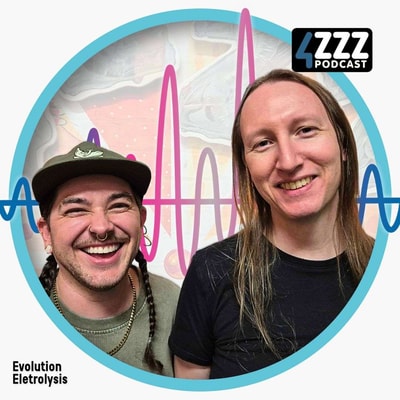
Produced and recorded by Ez for Tranzmission at 4zzz in Fortitude Valley, Meanjin/Brisbane Australia on Turrabul and Jaggera Country and audio and cover image edited by Tobi for podcast distribution via 4zzz Podcasts (@4zzzpodcasts) for Creative Broadcasters Limited.